Running on Empty: The $310 Billion Adaptation Gap and What Cities Do Without It
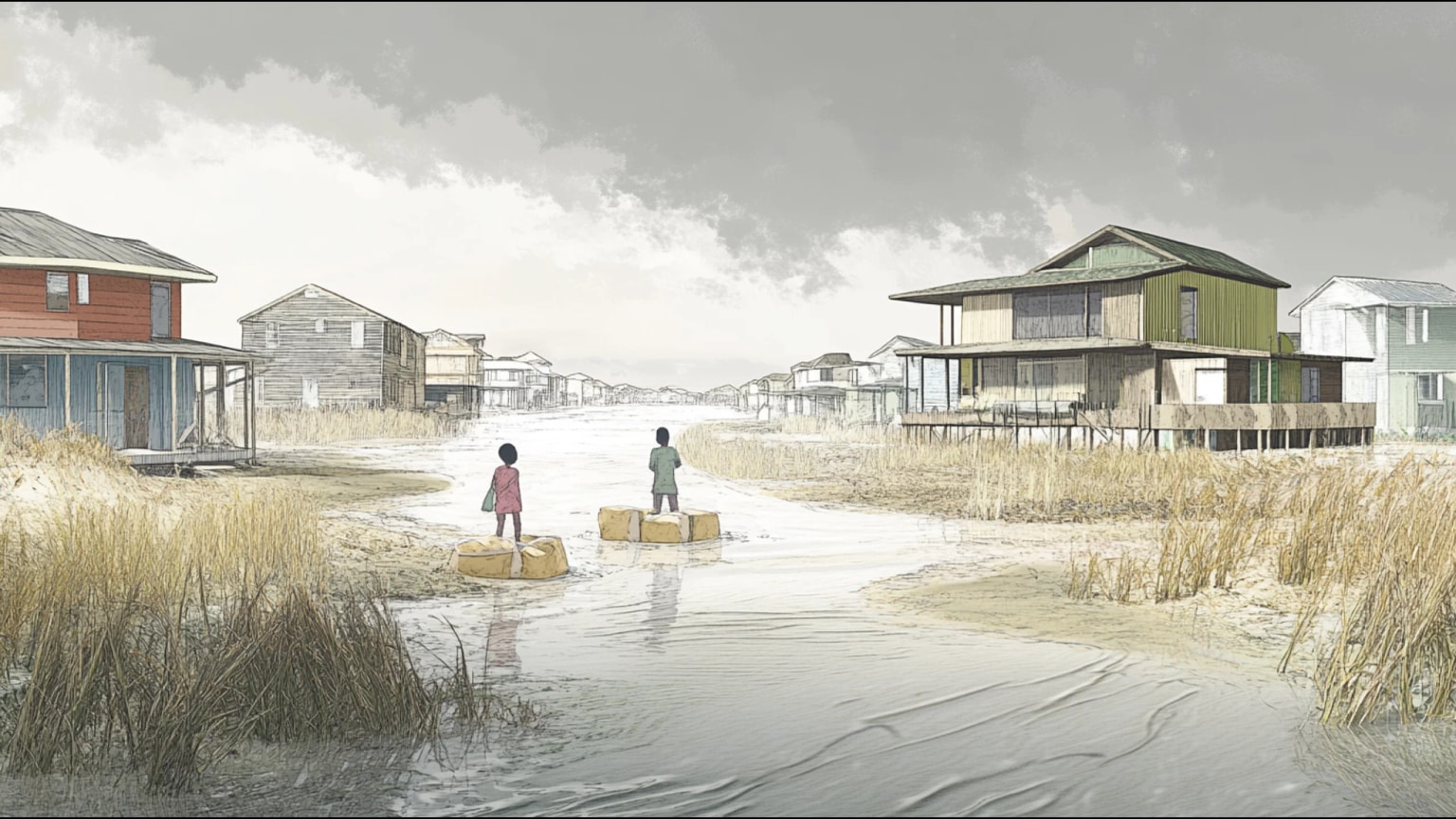
The seawall was made of sandbags and determination. Residents of the coastal settlement had filled them themselves, stacking a barrier between their homes and the rising water. It was not engineered, not funded, not part of any adaptation plan. It was what you do when the plans don't include you and the water keeps coming.

Key Insights
Essential takeaways from this chronicle
Developing countries need $310 billion per year in adaptation finance by 2035 to protect against climate impacts—roughly ten times current flows.
Point 1 of 5UNEP's 2025 Adaptation Gap Report, titled "Running on Empty," documents the widening chasm between what's needed and what's provided.
Point 2 of 5Cities bear the frontline burden of adaptation but receive only a small fraction of climate finance, which flows primarily to national governments and large-scale projects.
Point 3 of 5Low-cost adaptation strategies exist—early warning systems, nature-based solutions, building code enforcement—but require institutional capacity that many cities lack.
Point 4 of 5The adaptation gap is ultimately a justice gap: those least responsible for climate change face the greatest impacts with the fewest resources to respond.
Point 5 of 5
On the ground, preparation looked different. In the formal districts, pumps were checked and drainage systems cleared. In the informal settlements—home to a majority of residents—people moved belongings to upper shelves, stacked sandbags at doorways, and hoped the water would recede before foundations failed. The same storm, the same city, but two entirely different preparation regimes.
When the flood came, it followed the topography of inequality. Low-lying informal areas took the worst damage. Residents who had lost everything before lost everything again. The recovery funds, when they arrived months later, flowed primarily to documented property owners and registered businesses. The informal city, once again, absorbed the shock without the resources to respond.
This is the adaptation gap in practice: not an abstract shortfall in global finance, but a lived disparity in who is protected and who is not. The United Nations Environment Programme puts a number on this disparity—$310 billion per year by 2035—but the number captures only part of what's missing.
⸻
The report and the gap
UNEP's 2025 Adaptation Gap Report carries the subtitle "Running on Empty," and the phrase is not rhetorical. The analysis documents a widening chasm between the adaptation finance that developing countries need and what they actually receive.
The headline figure is stark: developing countries require approximately $310 billion annually in adaptation finance by 2035 to address climate impacts ranging from sea-level rise to extreme heat to agricultural disruption. Current international adaptation finance flows are estimated at $20-30 billion per year—roughly one-tenth of what's needed. The gap is not closing; it is growing as climate impacts intensify faster than finance mobilizes.
This is not primarily a failure of knowledge or technology. We know how to build seawalls, design heat-resilient buildings, manage water resources, and implement early warning systems. The engineering is understood; the economics are calculable. What's missing is the transfer of resources from those who caused climate change to those who are suffering its consequences.
The report identifies several dimensions of the gap. There is the absolute shortfall in available finance. There is the difficulty of accessing what finance exists—complex application processes, lengthy approval timelines, and requirements for matching funds that many countries cannot meet. There is the misalignment between finance modalities and adaptation needs: loans when grants are needed, national government allocations when cities and communities need direct access.
Behind the numbers is a structural injustice. The countries most vulnerable to climate impacts—low-lying island states, drought-prone African nations, flood-prone South Asian deltas—have contributed least to the emissions causing those impacts. They are being asked to adapt to a crisis they did not create, with resources they do not have, on timelines they cannot control.
⸻
Where the money goes (and doesn't)
Climate finance flows follow patterns that systematically disadvantage the most vulnerable. Understanding these patterns reveals why the adaptation gap persists despite decades of attention.
The first pattern is the mitigation-adaptation split. Global climate finance has historically favored mitigation—reducing emissions—over adaptation. This preference has economic logic: mitigation investments in energy efficiency and renewables can generate returns, while adaptation often resembles infrastructure spending with diffuse benefits. But the logic advantages wealthy countries that need to decarbonize over developing countries that need to protect themselves.
The second pattern is national versus local allocation. Most climate finance flows to national governments, which then allocate (or don't) to subnational levels. Cities, which concentrate both population and climate vulnerability, often receive only a fraction of national allocations. The mismatch is acute: a city facing sea-level rise or extreme heat cannot wait for national programs to filter down through bureaucratic channels.
The third pattern is project scale. Climate finance mechanisms favor large projects with measurable outcomes—a solar farm, a seawall, a new transit system. The small-scale, incremental adaptations that would most benefit vulnerable communities—improved drainage in informal settlements, tree planting in heat-stressed neighborhoods, building code enforcement in hazard zones—don't fit financing frameworks designed for different purposes.
The fourth pattern is institutional capacity requirements. Accessing climate finance typically requires sophisticated project proposals, environmental assessments, and monitoring systems. The countries and cities most in need of adaptation finance often lack the institutional capacity to navigate these requirements, creating a perverse situation where finance flows to those already capable rather than those most in need.
These patterns are not accidents. They reflect the preferences and constraints of donor institutions, the political economy of climate negotiations, and the path dependencies of development finance. Changing them requires not just more money but different systems for allocating it.
⸻
Cities on the front line
Cities concentrate climate vulnerability in ways that national statistics obscure. Urban heat islands amplify global warming locally. Coastal cities face compound risks from sea-level rise and storm surge. Dense populations in hazard zones mean that disasters affect more people per square kilometer. The infrastructure that makes cities function—water systems, power grids, transportation networks—creates interdependencies where failure cascades.
Yet cities receive only a small fraction of adaptation finance. One analysis found that just 10 percent of tracked adaptation finance was directed to urban areas, despite cities housing the majority of people affected by climate impacts. The gap is widest in developing countries, where rapid urbanization is producing cities without the institutional or financial capacity to adapt.
The reasons for this gap mirror the broader adaptation finance patterns. National governments control allocations and may prioritize rural areas or different political constituencies. City governments in developing countries often lack the creditworthiness or technical capacity to access international finance directly. The fragmented governance of many metropolitan areas—multiple municipalities, overlapping jurisdictions, unclear responsibilities—complicates project development and implementation.
Some cities have found workarounds. Medellín has integrated climate adaptation into its broader urban development programs, funding resilience through general revenues and international partnerships. Singapore treats climate adaptation as core infrastructure, budgeting for it alongside transportation and housing. Cape Town, after its near-miss with water crisis, has developed sophisticated demand management and alternative supply systems.
But these examples are exceptions—cities with unusual institutional capacity, political will, or resource availability. The typical developing-country city faces climate impacts with minimal external support, adapting through whatever measures residents and local government can improvise.
⸻
The low-cost toolkit
Not all adaptation requires massive finance. Some of the most effective interventions are relatively inexpensive, requiring institutional capacity more than capital investment.
Early warning systems save lives at modest cost. The investment required for meteorological monitoring, communication systems, and public education is a fraction of disaster recovery costs. The Sendai Framework for Disaster Risk Reduction has promoted multi-hazard early warning systems, and coverage has expanded significantly, but gaps remain particularly in low-income countries and for slow-onset hazards like drought.
Nature-based solutions can provide adaptation benefits while serving multiple purposes. Urban forests reduce heat island effects. Wetlands absorb floodwaters. Mangrove restoration protects coastlines. These interventions are often cheaper than engineered alternatives while providing co-benefits for biodiversity, recreation, and carbon sequestration. The challenge is maintenance: natural systems require ongoing management that project-based finance doesn't easily support.
Building codes and land use regulations can reduce vulnerability to future hazards at minimal public cost. Requiring climate-resilient construction in new development is far cheaper than retrofitting existing buildings. Restricting development in flood zones and unstable slopes prevents future losses. But enforcement requires institutional capacity that many cities lack, and informal construction often occurs outside regulatory frameworks entirely.
Behavioral and cultural adaptations can reduce vulnerability without infrastructure investment. Agricultural practices that conserve soil moisture, household water storage during dry seasons, heat avoidance behaviors during extreme weather—these adaptations emerge from local knowledge and experience. Supporting and spreading such practices requires extension services and communication systems, not construction budgets.
Contingency planning and social protection can reduce disaster impacts. Emergency response protocols, evacuation procedures, and social safety nets that activate during crises all provide adaptation benefits. These systems require institutional investment but not necessarily large capital expenditure.
The low-cost toolkit is not a substitute for major adaptation infrastructure. Cities facing sea-level rise need seawalls; regions facing permanent water scarcity need new supply systems; countries facing agricultural collapse need transformation of their economies. But the toolkit can save lives and reduce losses while larger investments are mobilized—and it can be implemented with resources many cities already have.
⸻
Adaptation without finance
In the absence of adequate external support, cities and communities adapt with whatever resources they can find. This improvised adaptation is not a solution—it typically leaves the most vulnerable still vulnerable—but it demonstrates both the urgency of need and the ingenuity of response.
Households adapt through physical modifications: raising floor levels in flood-prone homes, improving ventilation in heat-affected structures, storing water against scarcity. These investments are individually modest but collectively significant, representing a major commitment of household resources to climate resilience.
Communities adapt through collective action: organizing flood response teams, maintaining informal drainage systems, sharing weather information through mobile networks. These social adaptations build on existing community structures and may be more durable than externally funded projects that end when budgets expire.
Cities adapt through improvisation: repurposing existing infrastructure for new functions, adjusting maintenance schedules to address emerging hazards, coordinating informally when formal systems fail. Municipal staff often manage climate adaptation as an add-on to existing responsibilities, without dedicated budgets or personnel.
This informal adaptation is not equitable. Those with more resources—savings, education, social connections—adapt more effectively than those without. The gap between adaptive capacity and exposure that characterizes the global adaptation gap is reproduced at every scale, down to neighborhoods and households.
Nor is informal adaptation sufficient. Households cannot build seawalls. Communities cannot relocate themselves from hazard zones. Cities cannot transform water systems or redesign neighborhoods without external resources. The limits of informal adaptation are the limits of what local resources can provide—and for the world's most vulnerable cities, those limits are far short of what climate change demands.
⸻
The justice dimension
The adaptation gap is ultimately a justice gap. Those least responsible for climate change—the countries and populations that have contributed minimally to cumulative emissions—face the greatest impacts with the fewest resources to respond.
This is not a coincidence. The historical pattern of industrialization that generated climate change also generated the global distribution of wealth that determines adaptive capacity. Countries that burned fossil fuels to develop now have the economic and institutional resources to protect themselves from the consequences. Countries that did not develop—often because they were exploited rather than exploiting—face those consequences with minimal resources.
The climate negotiations have acknowledged this justice dimension through the principle of "common but differentiated responsibilities." Developed countries have committed to providing climate finance to developing countries, recognizing both historical responsibility and current capacity. The $100 billion per year commitment, made in 2009 and finally achieved (depending on accounting methodology) in recent years, was supposed to address this responsibility.
But $100 billion is not $310 billion. And even the $100 billion has flowed predominantly to mitigation rather than adaptation, and to middle-income countries rather than the least developed. The justice principle has been acknowledged in rhetoric but not implemented in resource flows.
The question facing the global climate regime is whether this gap will close before the consequences become catastrophic for the world's most vulnerable populations. The physics of climate change sets deadlines that political systems have not respected. The adaptation needed in 2035 must be planned now, financed soon, and implemented over the coming decade. Delay is not neutral; it compounds vulnerability and increases eventual costs.
⸻
What would $310 billion buy
The number is so large that it resists intuition. What would $310 billion per year actually purchase?
At current costs, it could build approximately 30,000 kilometers of coastal defenses annually—enough to protect the world's most vulnerable coastlines within a decade. It could fund comprehensive urban drainage systems for every flood-prone city in the developing world. It could establish early warning systems covering the entire global population at risk from extreme weather.
More realistically, $310 billion would be spread across thousands of interventions at multiple scales: national adaptation planning, regional infrastructure, city-level projects, community programs, and household support. It would fund both hard infrastructure—seawalls, water systems, climate-resilient buildings—and soft interventions—planning capacity, early warning systems, social protection programs.
At scale, this level of investment could fundamentally change the climate vulnerability of the developing world. It could protect cities that are currently defenseless. It could support the agricultural transformations needed to maintain food security. It could enable planned relocation from areas becoming uninhabitable. It could prevent much of the displacement, impoverishment, and mortality that current trajectories imply.
The financing exists in global capital markets. Annual investment in fossil fuels still exceeds investment in clean energy. Global military spending exceeds $2 trillion annually. The money that could close the adaptation gap is not absent from the world—it is allocated to other purposes.
The question is not whether the resources exist but whether they will be redirected. The answer will determine whether the adaptation gap closes or whether a generation of the world's most vulnerable people pays the price for decisions made in capitals far from the places where climate change hits hardest.
⸻
The sandbag seawall
I returned to that coastal settlement after the flood had receded. The sandbag seawall—the one residents had built themselves—had partially failed. It slowed the water but couldn't stop it. Several homes had collapsed. Others stood with watermarks on their walls, recording how high the flood had risen.
Residents were already rebuilding, as they had done before, as they would do again. Some were raising their floor levels. Others were reinforcing foundations. A few were discussing relocation to higher ground, though the land there was contested and the resources to rebuild weren't clear.
There was talk of a proper seawall—a real one, engineered and financed, capable of handling the floods that climate projections said were coming. The national government had promised it. An international climate fund had expressed interest. The city was preparing proposals.
But the proposals required technical studies that hadn't been completed. The fund had requirements that the city struggled to meet. The timeline stretched into years, perhaps decades. Meanwhile, the next storm season was months away.
This is the adaptation gap as people live it: the distance between what's needed and what arrives, between proposals and protection, between promises and the sandbags you fill because nothing else is coming. The $310 billion shortfall is not an abstraction; it is the difference between a proper seawall and bags filled by hand, between planned resilience and improvised survival.
The money exists. The knowledge exists. The engineering exists. What's missing is the will to transfer resources from those who caused the problem to those who suffer its consequences—and the institutions that could make such transfers at the speed and scale the climate crisis demands.
Running on empty is not a sustainable strategy. Eventually, the tank runs dry.
⸻
Sources (Selected)
- UNEP (2025). Adaptation Gap Report 2025: Running on Empty. Nairobi: United Nations Environment Programme.
- UNEP (2024). Adaptation Finance: Status and Trends. Copenhagen: UNEP DTU Partnership.
- Climate Policy Initiative (2024). Global Landscape of Climate Finance. Venice: Climate Policy Initiative.
- GCA (2024). State and Trends in Adaptation Report. Rotterdam: Global Center on Adaptation.
- IPCC (2022). Climate Change 2022: Impacts, Adaptation and Vulnerability. Cambridge: Cambridge University Press.
- ODI (2024). Climate Finance to Cities. London: Overseas Development Institute.
- WRI (2024). Financing a Resilient Urban Future. Washington: World Resources Institute.
- Sendai Framework for Disaster Risk Reduction (2015). UN Office for Disaster Risk Reduction.
- OECD (2024). Climate Finance Provided and Mobilised by Developed Countries. Paris: OECD.
- World Bank (2024). Climate Change and Development. Washington: World Bank Group.
This essay draws on UNEP's 2025 Adaptation Gap Report and related climate finance research. For ongoing tracking of adaptation finance flows, see the Climate Policy Initiative and UNEP Copenhagen Climate Centre.
Continue Reading
The View from Below: How London Mistook Skyscrapers for Density
London spent twenty years building upward in the name of the compact city. From the pavements of Shoreditch the arithmetic looks different: the tower privatises the panorama and socialises the silhouette.

The Los Angeles That Almost Learned to Walk
In 1930, a regional parks plan and an electric rail network could have made Los Angeles a polycentric, walkable, tram-linked metropolis. The city commissioned the plan, then put it in a drawer. This is the anatomy of a choice, not a fate.
Canals Under Pressure: Amsterdam and the Living City Review
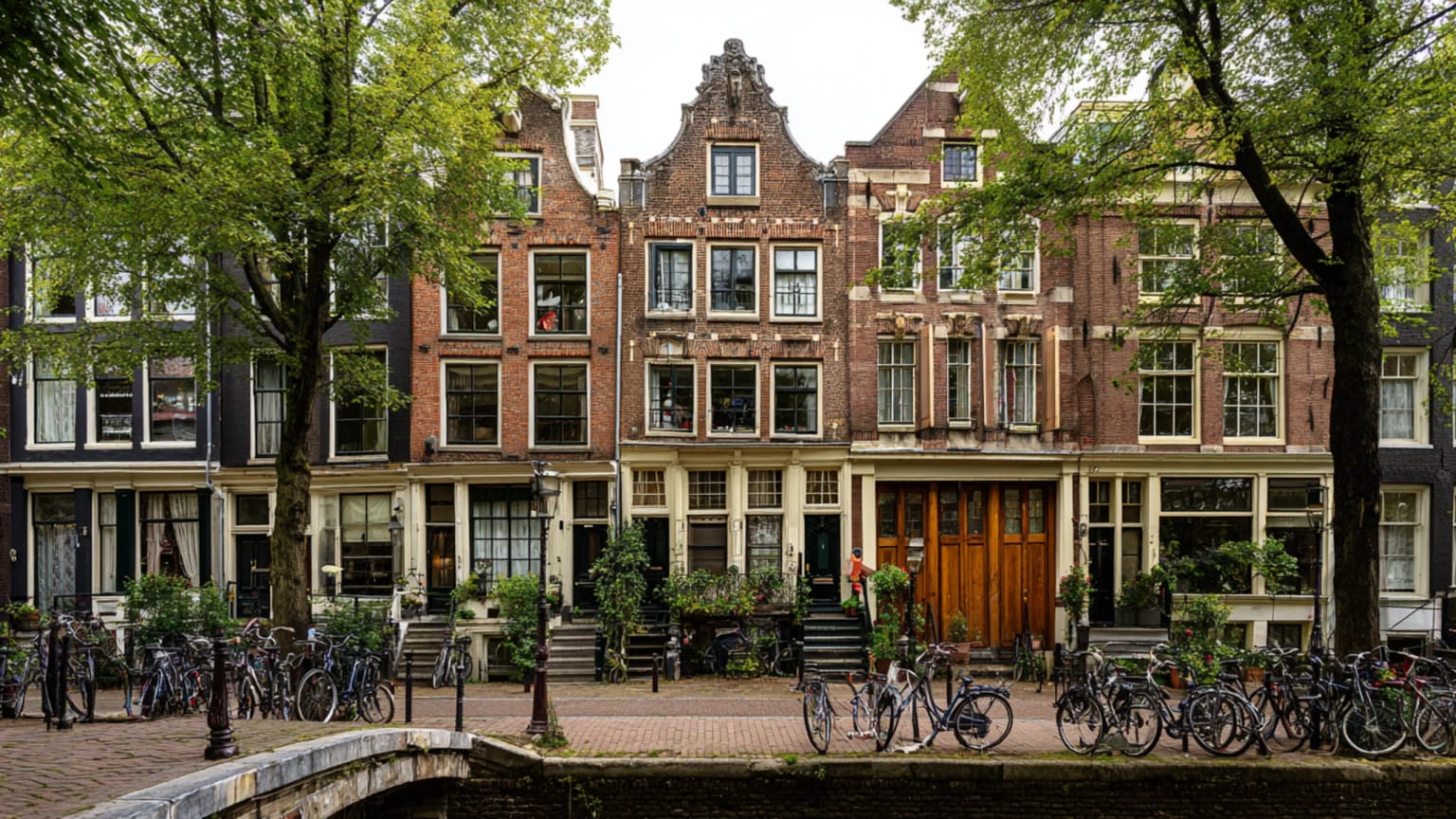
Amsterdam ranks 10th in The Living City Review 2026 with an adjusted score of 76.5. It remains one of Europe’s finest cities for daily life, but housing scarcity and tourism pressure have turned beauty into a harder civic bargain.