The 700 Percent Crisis: Urban Heat and the Cities That Cook Their Poor
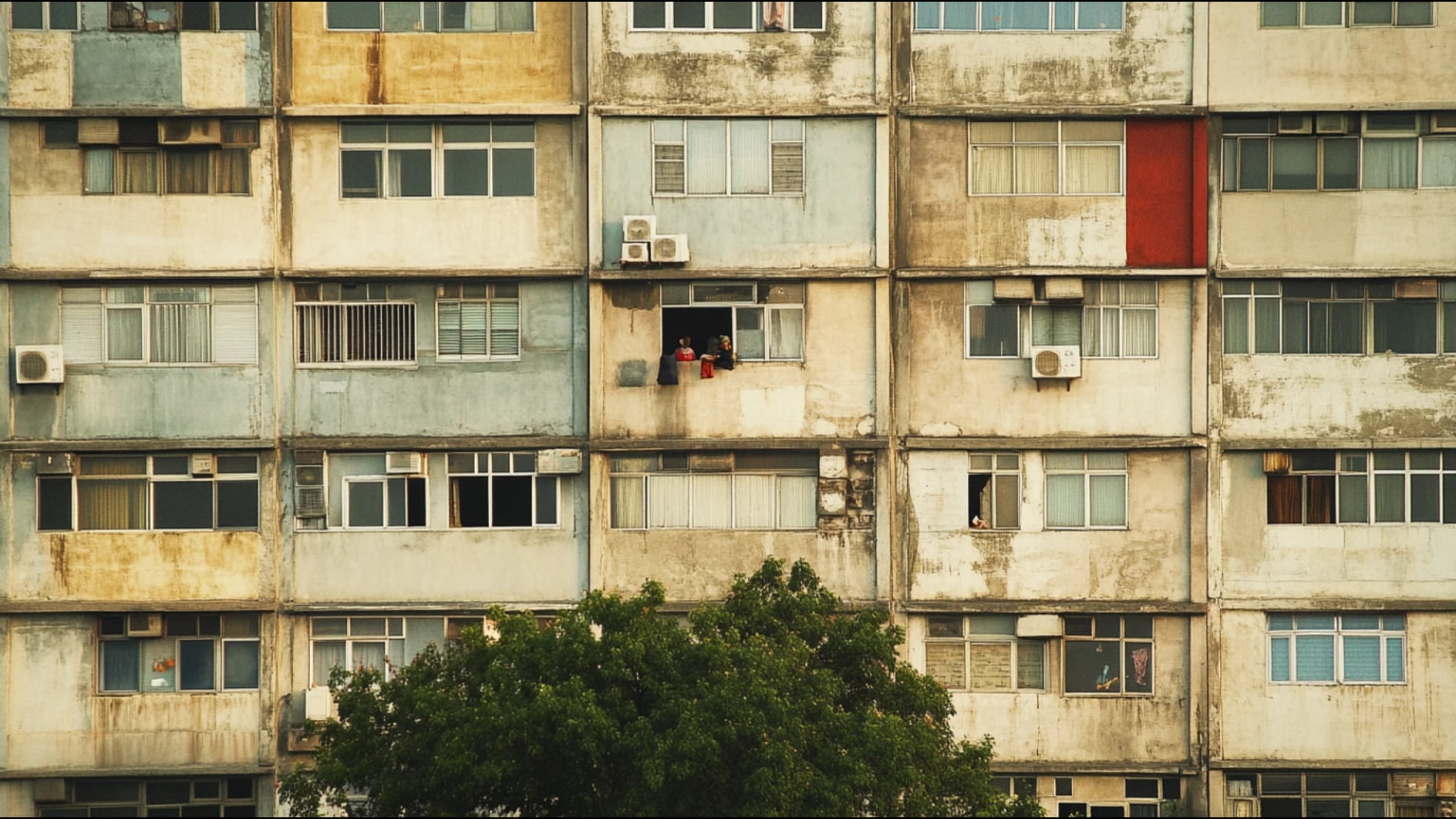
The thermometer outside my window read 34°C, but inside the concrete apartment it felt closer to 40. Air conditioning hummed in the building across the street—the one with the balconies and the security desk. In my building, we opened windows and hoped for wind. This is how cities sort their residents by temperature: the cooled and the cooked.

Key Insights
Essential takeaways from this chronicle
By 2050, the number of urban poor facing dangerous heat could increase by 700 percent, making heat the deadliest climate hazard and a profound equity crisis.
Point 1 of 5Urban heat islands can raise temperatures 5-10°C above surrounding rural areas, turning cities into heat engines that cook their most vulnerable residents.
Point 2 of 5More than 1 billion people currently lack adequate cooling access, a figure that could triple by 2050 as global cooling demand rises from 22TW to 68TW.
Point 3 of 5185 cities from Rio to Jakarta to Nairobi have joined UNEP's Beat the Heat initiative, treating cooling as a public good rather than a private luxury.
Point 4 of 5The Sustainable Cooling Pathway—combining passive design, nature-based solutions, and efficient technology—could cut projected 2050 cooling emissions by 64 percent.
Point 5 of 5
Within two hours, the apartment had become uninhabitable. The concrete walls, which had been absorbing heat all day, began radiating it inward. The air thickened. My neighbor, an elderly woman who lived alone, appeared in the hallway looking disoriented. We sat on the building's steps until dark, watching residents from the air-conditioned tower down the street come and go as if nothing had happened.
That building had backup generators. Ours did not. The difference between comfort and crisis was not architecture or geography—it was money, and the infrastructure that money buys.
This is the story of urban heat in the 21st century: a crisis distributed not by latitude but by income, not by climate but by class. And according to the United Nations Environment Programme, it is about to get catastrophically worse.
⸻
The arithmetic of a cooking city
The numbers from UNEP's Global Cooling Watch 2025 are stark enough to qualify as emergency. By 2050, the number of urban poor facing dangerous heat could increase by 700 percent. Not 7 percent. Not 70 percent. Seven hundred percent—a sevenfold multiplication of the population at mortal risk from the temperature of the air.
This projection accounts for two converging trends: climate change raising baseline temperatures, and urbanization concentrating populations in the places that heat most intensely. Cities are not passive recipients of climate; they are heat engines. They absorb solar radiation through dark surfaces, generate waste heat from buildings and vehicles, and trap warm air beneath their concrete canopies. The result is the urban heat island effect, which can raise temperatures 5-10°C above surrounding rural areas.
A city that is 2°C warmer than the global average during a heatwave is not 2°C more uncomfortable—it is potentially lethal. Human bodies can regulate temperature within limits, but those limits are narrower than most people assume. When wet-bulb temperatures (which account for humidity) exceed 35°C, healthy adults cannot survive prolonged exposure regardless of shade or hydration. We are approaching those thresholds in cities that house hundreds of millions of people.
The dead are already accumulating. The 2003 European heatwave killed over 70,000 people, many of them elderly residents of un-air-conditioned urban apartments. The 2010 Russian heatwave killed 55,000. The 2021 Pacific Northwest heat dome, which pushed temperatures to 49.6°C in British Columbia, killed over 1,400 people in a region with minimal air conditioning penetration. These are not natural disasters in any simple sense. They are infrastructure failures—failures to provide cooling to populations that have become dependent on it.
Heatwaves are now the deadliest climate hazard, killing more people annually than floods, storms, or wildfires. And unlike those disasters, heat kills quietly. The deaths happen indoors, alone, in apartments that have become ovens. They are classified as cardiac events, respiratory failures, kidney dysfunction. The heat disappears into medical records.
⸻
Who gets to be cool
The distribution of cooling access follows the contours of every other form of urban inequality. In wealthy neighborhoods, air conditioning is ubiquitous, buildings are well-insulated, and tree cover provides shade. In poor neighborhoods, residents crowd into structures that maximize heat gain, work outdoors in the hottest hours, and lack the money for air conditioning or the electricity to run it.
More than 1 billion people worldwide currently lack access to adequate cooling. This is not a matter of preference—it is a matter of infrastructure, income, and housing quality. A family in an informal settlement, living in a structure made of corrugated metal that amplifies heat, has no realistic path to air conditioning. A worker who spends eight hours on a construction site or in an un-cooled warehouse absorbs heat that the office worker across the street never experiences.
The gap is widening. Global cooling demand is projected to rise from 22 terawatts in 2022 to 68 terawatts in 2050—a tripling driven by rising temperatures and rising expectations. But this demand will not be met equally. Those who can afford cooling will buy it; those who cannot will endure.
The implications for cities are profound. Heat stress reduces labor productivity, which concentrates economic impacts on outdoor and manual workers. Heat-related illness strains health systems that are often already inadequate in underserved areas. Children in overheated schools learn less; workers in overheated factories produce less; residents in overheated homes sleep less and suffer more.
Climate adaptation, in the context of urban heat, is inseparable from economic justice. Every decision about where to plant trees, how to design buildings, and who gets access to cooling is a decision about who lives comfortably and who lives dangerously.
⸻
The city as heat engine
Understanding why cities cook requires understanding how they are built. The urban heat island is not a mystery—it is a direct consequence of design choices that prioritize other values over thermal comfort.
Start with surfaces. Asphalt and concrete absorb solar radiation during the day and release it at night, creating a 24-hour cycle of heat accumulation. A surface that reaches 60°C during the day may still be 30°C at midnight. Dark roofs, dark roads, and dark parking lots are heat sinks that raise ambient temperatures for everything around them.
Add buildings. Structures generate waste heat from air conditioning (which cools interiors by expelling heat outdoors), cooking, lighting, and electronics. A city is full of engines, all exhausting heat into the same shared air. The denser the city, the more concentrated this waste heat becomes.
Remove vegetation. Trees and plants provide shade, which directly reduces surface temperatures. They also cool through evapotranspiration, releasing water vapor that absorbs heat. A mature tree can have the cooling effect of several air conditioning units. When cities replace vegetation with pavement, they eliminate these natural cooling systems.
Constrain airflow. Dense urban geometry traps heat by reducing wind speed and preventing the mixing of air masses. Street canyons—tall buildings lining narrow streets—can experience temperatures significantly higher than open areas nearby. The same density that makes cities walkable and efficient can make them thermally brutal.
Finally, reduce moisture. Urban drainage systems are designed to remove water as quickly as possible, eliminating the cooling effect of evaporation. A city after rain dries quickly; the surrounding countryside stays cool longer as water evaporates from soil and vegetation.
Each of these factors is a choice, even when it doesn't feel like one. Cities that chose differently—more trees, lighter surfaces, better ventilation, more water features—are measurably cooler. But the choices that made cities hot were often driven by cost, speed, and priorities that did not include thermal comfort for those who couldn't buy their way out.
⸻
185 cities beating the heat
The response is beginning to scale. UNEP's "Beat the Heat" initiative, launched at COP30 in Belém, has enrolled 185 cities from Rio de Janeiro to Jakarta to Nairobi, along with 83 institutional partners. The initiative represents a shift from treating cooling as individual consumption to treating it as public infrastructure.
The Beat the Heat approach emphasizes three priorities: heat risk assessment, passive and nature-based solutions, and financial mobilization. Cities begin by mapping their heat exposure—identifying the neighborhoods, populations, and infrastructure most at risk. They then implement interventions that reduce heat at the source rather than simply adding more air conditioning.
The toolkit is varied. Cool roofs—light-colored or reflective surfaces that reduce heat absorption—can lower rooftop temperatures by 30°C or more. Urban forests and street trees provide shade while improving air quality. Green corridors connect parks and vegetated areas, creating pathways for cooler air to flow into dense neighborhoods. Blue infrastructure—fountains, ponds, and urban streams—adds evaporative cooling.
Some interventions are regulatory. Building codes can require heat-resistant design, mandate minimum tree coverage, or limit the heat-absorbing surfaces allowed in new development. Zoning can protect existing vegetation and require green space in development projects. Labor regulations can limit outdoor work during extreme heat and require cooling breaks.
Others are infrastructural. Public cooling centers—air-conditioned libraries, community centers, and transit stations—provide refuge during heatwaves. Cool pavement treatments reduce surface temperatures on existing roads. District cooling systems, which produce chilled water centrally and distribute it to buildings, can be far more efficient than individual air conditioners.
The cities leading this transition are not necessarily the wealthiest. Medellín, Colombia, has invested heavily in green corridors connecting its hillside neighborhoods. Singapore has mandated greenery in high-rise development and maintains urban tree canopy aggressively. Ahmedabad, India, developed South Asia's first Heat Action Plan, using early warning systems and cool roof programs to reduce heat mortality.
What these cities share is political recognition that heat is a public problem requiring public solutions—not a private inconvenience for individuals to solve with appliances.
⸻
The sustainable cooling pathway
The conventional response to rising heat—more air conditioning—is both necessary and dangerous. Air conditioning saves lives during heatwaves, but conventional systems consume enormous amounts of energy, release potent greenhouse gases (hydrofluorocarbons, or HFCs), and expel waste heat that warms the very cities they're meant to cool. The projected tripling of cooling demand by 2050 would, under business-as-usual scenarios, drive massive increases in emissions and electricity consumption.
UNEP's proposed alternative is the Sustainable Cooling Pathway, which combines demand reduction, efficiency improvement, and cleaner technologies. The analysis suggests this approach could cut projected 2050 cooling emissions by 64 percent while saving approximately $17 trillion in cumulative energy costs.
The pathway begins with passive design—building and urban design that reduces cooling demand before mechanical systems engage. Proper orientation, shading, insulation, and natural ventilation can dramatically reduce the energy needed to maintain comfortable temperatures. Traditional architecture in hot climates often incorporated these principles; modern construction has frequently abandoned them in favor of mechanical solutions.
Nature-based solutions provide cooling at urban scale. Tree cover, green roofs, urban wetlands, and permeable surfaces all reduce ambient temperatures while providing co-benefits for air quality, stormwater management, and biodiversity. These interventions work best when planned as systems rather than isolated features—connected green corridors, for example, have greater cooling impact than scattered parks of equivalent area.
Where mechanical cooling is necessary, efficiency matters enormously. The most efficient air conditioners on the market use less than half the energy of average units, but efficiency standards in many countries remain weak or unenforced. Transitioning from HFC refrigerants to climate-friendly alternatives can eliminate a significant source of greenhouse gas emissions.
District cooling and heat pump systems can achieve efficiencies impossible for individual units. Ground-source heat pumps, which exchange heat with the stable temperatures underground, can provide both heating and cooling with minimal energy input. District systems that aggregate demand across many buildings can optimize operations and justify investments in efficiency that individual buildings cannot.
The pathway also includes faster phaseout of HFCs under the Kigali Amendment to the Montreal Protocol, which commits countries to reducing these super-pollutants by 80 percent by 2047. Combined with efficiency improvements, this transition could prevent 0.5°C of global warming by 2100.
⸻
Heat as public good
The deeper transformation required is conceptual: treating cooling access as a public good rather than a private commodity. This reframing has policy implications at every level.
If cooling is infrastructure, then governments have responsibility for ensuring access. This might mean subsidizing efficient cooling for low-income households, mandating cooling in rental housing, or establishing legally enforceable temperature standards for workplaces and public buildings. It might mean public investment in district cooling systems that serve entire neighborhoods, reducing costs through scale.
If heat exposure is a public health issue, then heat action plans become as essential as vaccination programs or clean water systems. Early warning systems, public cooling centers, outreach to vulnerable populations, and heat-responsive work regulations all flow from recognizing heat as a health threat requiring public health responses.
If urban design affects heat exposure, then planning decisions must account for thermal impacts. Environmental review of development projects should include heat island analysis. Public space design should prioritize shade and cooling. Infrastructure investments should weight thermal comfort alongside transportation and utility considerations.
This reframing is not radical—it is how many cities already treat water, sanitation, and electricity. The difference is that heat exposure has historically been seen as natural and individual rather than constructed and collective. The urban heat island is not weather; it is infrastructure. The distribution of cooling is not fate; it is policy.
⸻
The hours after midnight
I returned to that Mediterranean city years later, during a heatwave worse than the one I remembered. The apartment building was gone—demolished for redevelopment. In its place rose a new structure with balconies, green walls, and a subtle hum that suggested robust climate control.
The elderly neighbor was gone too, though I didn't learn how or when. The building that replaced hers had what the developers called "passive cooling design"—orientation and shading and ventilation that reduced cooling loads. It also had air conditioning in every unit and a backup generator in the basement.
Progress, of a kind. The new building would protect its residents from heat in ways the old one couldn't. But the old building's residents had not moved into the new one—they had dispersed to other neighborhoods, other buildings, other cities. The cooling that arrived with redevelopment served new people at new prices.
This is the risk in every urban heat intervention: that solutions flow to those who can pay for them, that adaptation becomes gentrification by another name, that the 700 percent increase in vulnerable populations happens not because nothing was done but because what was done served the wrong people.
The Beat the Heat cities, at their best, are trying to avoid this trap. They target interventions to high-heat, low-income neighborhoods. They combine cooling infrastructure with tenure security so that residents benefit from improvements rather than being displaced by them. They measure success not by average temperature reductions but by outcomes for the most vulnerable.
Whether this approach scales fast enough to meet the 2050 projections—whether cities can cool their poorest residents before heat becomes unsurvivable—remains an open question. The technologies exist. The urban design principles are well understood. The finance, while challenging, is not impossible. What remains uncertain is political will: whether societies will treat cooling as a right or a reward, whether cities will be designed for all their residents or only for those who can afford to be comfortable.
The thermometer doesn't care about policy. It rises regardless. But policy determines who survives when it does.
⸻
Sources (Selected)
- UNEP (2025). Global Cooling Watch 2025. Nairobi: United Nations Environment Programme.
- UNEP (2025). Adaptation Gap Report 2025: Running on Empty. Nairobi: United Nations Environment Programme.
- UNEP & World Bank (2024). Handbook for Urban Heat Management in the Global South.
- Mora, C., et al. (2017). Global Risk of Deadly Heat. Nature Climate Change 7, 501-506.
- Tuholske, C., et al. (2021). Global Urban Population Exposure to Extreme Heat. PNAS 118(41).
- Raymond, C., et al. (2020). The Emergence of Heat and Humidity Too Severe for Human Tolerance. Science Advances 6(19).
- Santamouris, M. (2020). Recent Progress on Urban Overheating and Heat Island Research. Energy and Buildings 207.
- UNEP Cool Coalition (2025). Beat the Heat: Implementation Report. Nairobi: United Nations Environment Programme.
- Kigali Amendment to the Montreal Protocol (2016). Amendment to Phase Down Hydrofluorocarbons.
- WHO (2023). Heat and Health. Factsheet. Geneva: World Health Organization.
This essay draws on UNEP research and the Beat the Heat initiative documentation released in 2024-2025. For ongoing coverage of urban climate adaptation, see the Cool Coalition and Global Cooling Watch.
Continue Reading
The View from Below: How London Mistook Skyscrapers for Density
London spent twenty years building upward in the name of the compact city. From the pavements of Shoreditch the arithmetic looks different: the tower privatises the panorama and socialises the silhouette.
The Los Angeles That Almost Learned to Walk
In 1930, a regional parks plan and an electric rail network could have made Los Angeles a polycentric, walkable, tram-linked metropolis. The city commissioned the plan, then put it in a drawer. This is the anatomy of a choice, not a fate.
Canals Under Pressure: Amsterdam and the Living City Review
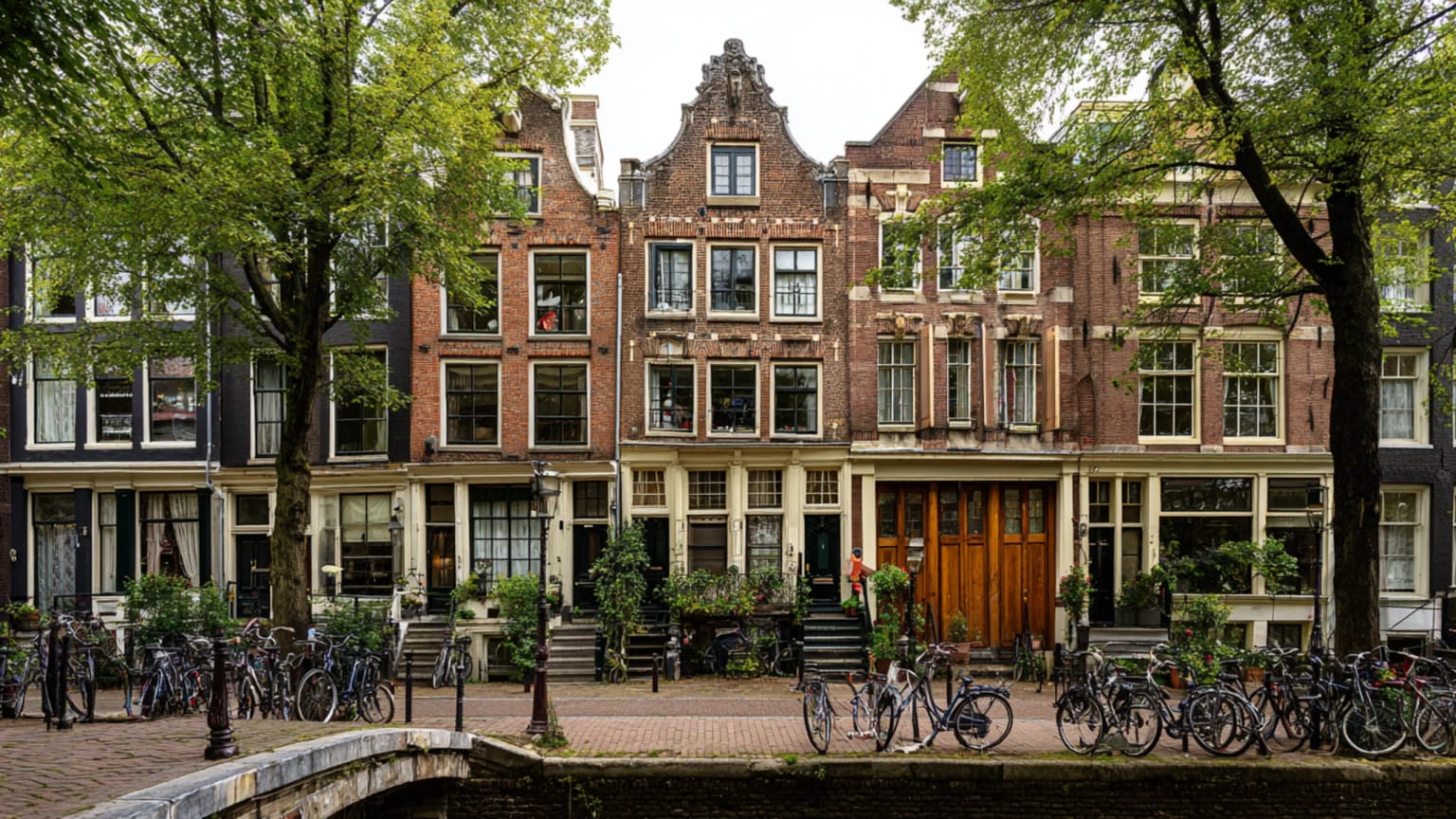
Amsterdam ranks 10th in The Living City Review 2026 with an adjusted score of 76.5. It remains one of Europe’s finest cities for daily life, but housing scarcity and tourism pressure have turned beauty into a harder civic bargain.