Cities, Water, and the New Heat: How Climate Change Rewrites Urban Thirst
The modern city is a water trickster that drinks from mountains, trades with the sea, and disguises vulnerability behind steel valves. Climate change will strip away that disguise—not with a single catastrophe, but with alternating extremes that test every reservoir, pipe, and aquifer.

Key Insights
Essential takeaways from this chronicle
In the Colorado River basin, roughly a third of the 21st-century flow decline attributed to warming alone—the "hot drought" signature
Point 1 of 5Las Vegas's return-flow credits mean indoor water is nearly "net zero"; Nevada bans nonfunctional turf irrigation by January 1, 2027
Point 2 of 5Cape Town's "Day Zero" near-miss: climate change made Western Cape rainfall deficit several times more likely; city normalized 50 L/person/day
Point 3 of 5Mexico City subsidence reaches tens of cm/year with compacted clays—irreversible at human timescales, worsening flood risk as storms intensify
Point 4 of 5Singapore's NEWater cushions against climate timing swings; reuse to grow to ~55% of supply by 2060 as demand doubles
Point 5 of 5
Cities, Water, and the New Heat: How Climate Change Rewrites Urban Thirst
What follows is a field guide to that future. We'll map the pressures that climate adds to urban water systems—then walk the streets of cities already living with these pressures, some improvising brilliantly, others burning through their luck. The goal is not theatrical alarm. It's practical clarity: what's breaking, where, and which fixes actually bend the curve.
The Seven New Pressures on Urban Water
1) More Heat, Less Flow
The warmer the air, the thirstier the landscape. In snow-fed basins (think Los Angeles, Las Vegas, large parts of Spain), warming reduces snowpack, shifts winter storms from snow to rain, and boosts evaporation from soils and reservoirs. In the Colorado River basin, roughly a third of the 21st-century flow decline has been attributed to warming alone—the infamous "hot drought." Sierra Nevada snowpack is already trending earlier and smaller; low-to-no-snow years become likelier as the century advances. Cities built on snowmelt timing must relearn the calendar.
2) Precipitation Volatility ("Whiplash")
Cities swing between multi-year droughts and short, violent rain episodes that blow past storm drains and never recharge aquifers. That volatility is a signature of a warming climate, with urban areas globally trending toward stronger wet-dry contrasts. "Climate whiplash" isn't poetry—it's operations.
3) Sea-Level Rise and Salt Intrusion
Low-lying deltas and coastal aquifers—Cairo's Nile Delta, Miami's Biscayne aquifer, parts of Barcelona's littoral—face brackish creep. Push salt far enough inland and treatment plants struggle; push it into groundwater and you can poison your drought reserve.
4) Flood Pulses and Water Quality Shocks
When extreme rainfall hits burned watersheds (Sydney) or overbuilt river plains (Chennai), turbidity, pathogens, and metals spike, forcing treatment plants into shutdowns or costly bypasses. A city can drown and thirst in the same week.
5) Groundwater Depletion and Subsidence
Pump too hard for too long—often a drought reflex—and the ground itself sinks. Mexico City's clays compact irreversibly at world-class speeds, warping pipes and drains and deepening flood risk just as storms intensify. Climate variability pushes demand up; subsidence pushes resilience down.
6) Energy–Water Feedbacks
Desalination and advanced purification steady supplies but raise energy demand. Heatwaves increase electricity load while rivers run low and warm—pinching hydropower and thermal plant cooling. Water security that depends on rising megawatt-hours must be planned with grid stress in mind.
7) Institutional Cadence vs. Climate Cadence
Reservoir rules, water rights, and funding cycles move slowly; a warmer hydrology moves quickly. Many cities now face "adaptation debt": overdue investments in leakage control, reuse, flood-plain restoration, and demand management, accumulated over decades of assuming yesterday's rain would return tomorrow. The IPCC has been direct: urban risks rise with warming; the window for low-regret adaptation is this decade.
Cities on the Line
Los Angeles: Snow That Doesn't Stay
Los Angeles drinks from three geographies—the Sierra Nevada, the Colorado River, and its own wastewater. As winters warm, more Sierra precipitation falls as rain and melts earlier, narrowing the state's springtime water cushion. The physics here is not speculative: multiple lines of evidence show declining late-season snow and "snow drought" risks in California's mountains. The result is operational: reservoirs must catch more liquid water in winter without worsening flood risk, while summer releases face hotter, thirstier landscapes.
Portfolio Shift as Climate Adaptation Los Angeles is moving from importing "peak snowmelt" to recycling "always on" wastewater. Large-scale advanced purification aims to turn Hyperion's effluent into a core supply, buffered in aquifers—decoupling demand from snow timing risk. Recycling is energy-intensive but less so than large-scale seawater desalination per cubic meter produced.
What helps? Portfolio shift. Los Angeles is moving from importing "peak snowmelt" to recycling "always on" wastewater. Large-scale advanced purification (think membrane filtration + reverse osmosis + UV/advanced oxidation) aims to turn the Hyperion facility's effluent into a core supply, buffered in aquifers—decoupling a chunk of demand from snow. This is climate adaptation as urban craft: change the source so the timing risk shrinks.
Las Vegas: Mastering the Denominator
Las Vegas doesn't pretend to be wet. It lives on accounting, not abundance. The city's genius is the "return-flow credit": every treated gallon released back to Lake Mead earns the right to withdraw another gallon. That arithmetic is why indoor use can be nearly "net zero" with respect to the Colorado River allocation—while outdoor turf, which evaporates, is pure loss.
Hence Nevada's 2021 law: by January 1, 2027, no Colorado River water for nonfunctional turf across Southern Nevada. The city is also curbing evaporative cooling in new buildings and tightening grass bans in new development. This is climate realism turned ordinance.
The Basin's Brutal Arithmetic Warming has already reduced the Colorado River's flow; even if precipitation stays similar, hotter air wrings more water from soils and plants, shrinking runoff. Expect more years when Lake Mead and Lake Powell flirt with critical thresholds. Vegas' model—relentless conservation + reuse + razor-sharp operations—is not optional. It's a preview.
The broader basin picture is severe. Warming has already reduced the River's flow; even if precipitation stays similar, hotter air wrings more water from soils and plants, shrinking runoff. Expect more years when Lake Mead and Lake Powell flirt with critical thresholds. That means Vegas' model—relentless conservation + reuse + razor-sharp operations—is not optional. It's a preview.
Mexico City: A Metropolis on Moving Ground
The Valley of Mexico is a bowl with a porous floor. Centuries of pumping have compacted its aquifer clays; modern InSAR and GPS syntheses show subsidence rates reaching tens of centimeters per year in places, with little hope of elastic rebound. Climate variability tightens the vise: hot, dry stretches force more pumping just as infrastructure sags; intense storms then smash into misaligned drains and low-lying neighborhoods.
Meanwhile, the Cutzamala reservoir system—vital for the metro—has lurched between alarming deficits and partial recoveries, under pressure from drought, heat, and high demand. The longer the basin warms, the more oscillatory and brittle this arrangement becomes.
The strategic answer is triple diversification:
- Leak reduction at meaningful scale
- Potable reuse as a core, not fringe, supply
- Managed aquifer recharge that uses brief wet windows to bank water without triggering subsidence
None of these negate climate risk; together, they blunt it.
Cape Town: The City That Saw the Future
The near-miss of "Day Zero" etched a lesson into global water management: multi-year drought can walk right into a modern city if governance and climate align the wrong way. Peer-reviewed attribution work found that climate change made the Western Cape rainfall deficit several times more likely; other studies suggest increased odds of a repeat without robust adaptation.
Cape Town's post-crisis regime—aggressive demand management, groundwater development, smaller desalination units, and diversified sources—has become a syllabus for dryland capitals. The deeper lesson is temporal: drought risk now unfolds over run lengths and intensities legacy rules did not anticipate.
Singapore: Engineering Continuity
Singapore is built on the premise that rain is unreliable and neighbors are not a water plan. PUB's "Four National Taps"—imported water, local catchment, NEWater (recycled), and desalination—explicitly address hotter droughts, spikier rainfall, and sea-level rise.
Reuse has become a pillar; NEWater cushioned the system during past dry spells and is slated to grow as demand doubles by mid-century. The city-state's gamble is clear: invest in the energy and membranes now, so climate timing swings do not become rationing later.
London: Summer Scarcity, Winter Abundance
The UK's climate signal is a paradox that water utilities must operationalize: drier, hotter summers and wetter winters. London's supply leans on the Thames and chalk aquifers; as summers warm, peak demand grows just when rivers slacken and algae thrive, with salt pushes at the estuary during low flows.
In drought, the Beckton desalination plant can add up to ~150 megaliters per day—but it is a contingency, not a lifestyle. The city's long-term plans focus on leakage reduction, demand restraint, water transfers, and new storage that can shift winter surplus into summer security. The urban design problem—for London and peers—is not knowing if water falls, but when and how fast.
São Paulo: The Missing Rain, the Missing Forest
The 2014–15 crisis revealed a continental coupling: Southeast Brazil's rains depend in part on Amazonian moisture "flying rivers." Deforestation and heat can disrupt that recycling, narrowing the window for refilling Cantareira and other systems.
São Paulo has responded with reuse, industrial substitution (like Aquapolo's large reclaimed-water supply), and demand controls, but the climate lever that matters most lies hundreds of kilometers away in forest policy. Urban water, meet biogeography.
Chennai: Between Empty Reservoirs and Flooded Streets
In 2019 the city declared a "Day Zero" of its own as four main reservoirs ran dry after back-to-back poor monsoons; then in 2023, Cyclone Michaung poured water over already saturated ground, flooding vast districts and shutting the airport.
Earlier attribution work did not find a clear human-induced signal for the extreme 2015 flood day, a reminder that local hydrology can be overrun by natural variability; newer studies, however, tie warm seas and ENSO phases more tightly to Chennai's rainfall extremes. Warming loads the dice toward more intense downpours even as droughts stay in play.
The only winning strategy is to hold both possibilities in the same hand: store more in wet times (recharge basins; lake restoration) and recycle more during dry times.
Barcelona and Catalonia: The Mediterranean Squeeze
Catalonia's reservoirs fell below 16% in early 2024, triggering a formal drought emergency and sharp restrictions; storms later eased the crisis but did not erase the structural drying trend in hot Mediterranean summers.
The region's drought playbook is now familiar: desalination, reuse, leakage control, temporary floating plants, and graduated restrictions. The deeper shift is cultural—treating drought not as a surprise but as the default, punctuated by brief generous winters.
Beijing and the North China Plain: Heat, Irrigation, and Borrowed Water
Beijing's security hinges on the South-to-North Water Transfer project and a hard pivot away from over-pumping. Recent studies document groundwater stabilization and even recovery in parts of the Plain as imported surface water substitutes for wells.
But the wider climate horizon is stark: stronger, longer heatwaves—exacerbated by irrigation feedbacks—raise both water demand and public-health risk across one of the world's most populous regions. In other words, Beijing's balance sheet is improving, but the income stream (cool, reliable summers) is degrading.
Cairo and the Nile Delta: Salt at the Door
Cairo's taps depend on the Nile's capricious arithmetic: upstream climate, basin politics, and delta geometry. As seas rise and the soft delta subsides, saltwater pushes inland, threatening aquifers and farmland; in dry years, low river flows compound the risk of salinity and water-quality deterioration upstream of treatment plants.
Projections differ on the Nile's future flow, but sensitivity analyses show just how fragile the balance is to heat and precipitation shifts. Urban adaptation here is inseparable from coastal defenses, wastewater mega-plants, and regional water diplomacy.
Limits and Possibilities: What Works Under Warming
Demand Discipline Beats Supply Heroics
It's less glamorous than desalination, but leak reduction and fixture retrofits deliver permanent, climate-proof gains at the lowest energy cost. London's plan to keep tightening losses; Barcelona's push on municipal leaks; Las Vegas' ban on decorative turf—these are not side quests; they're the main story. Once a city cuts per-capita use, every additional project goes further.
Wastewater Is a Reservoir You Control
Advanced purification and indirect potable reuse serve an unbeatable asset: timing. Indoors, people generate water even during drought. Los Angeles' move to large-scale potable reuse; Singapore's decades-long scaling of NEWater; São Paulo's industrial reuse to free up potable supplies—these are the stable middle of the portfolio. The caution is energy and brine management, both solvable at city scale.
Desalination Is a Drought Backstop, Not a Blanket
It is robust against rainfall variability, but energy-hungry and capital-intensive. For coastal giants, a few well-placed plants can insure against sequencing risks (two hot winters in a row, then a storm that muddies rivers), especially if powered increasingly by renewables. The IPCC's water chapter is blunt: desal helps manage future drought exposure but raises energy and cost footprints that must be planned honestly.
Recharge What You Can, Where You Can
The fastest way to "build" a new reservoir in a dense city is often under your feet. Managed aquifer recharge—using flood basins, urban parks, and retrofitted canals to sink storm pulses—turns the new volatility to your advantage. But beware subsidence zones: in compacting clays (Mexico City), pushing more water into the ground needs careful geotechnical design to avoid differential settlement.
Design for Whiplash
Storage rules, flood bypasses, and treatment plants must handle an era when yesterday was dust and today is deluge. That means physically larger intakes with better screens; flexible blending strategies when turbidity spikes; and wet-weather operations that protect water quality without sacrificing supply. Sydney's recent experience with post-bushfire runoff and ash underscores this dual planning.
Govern the Landscape Beyond the City
São Paulo cannot secure its water without a healthier Amazon; Cairo cannot hold back the Mediterranean alone; Barcelona's risk lives as much in regional hydrology as in municipal pipes. The most effective urban water investments now include upstream reforestation, sediment management, and regional compacts that spread risk across basins.
A Candid Accounting of Risks, City by City
| Risk Category | Cities | Why |
|---|---|---|
| Highest near-term stress | Colorado River cities (Las Vegas, Phoenix, parts of Southern California) | Heat-driven flow loss already documented; future reductions plausible even without precipitation declines. Return-flow credits and turf bans buy time but don't change basin thermodynamics. |
| Greatest structural exposure | Mexico City, Jakarta | Subsidence + climate extremes. Ground losing altitude as storms intensify and seas rise. Water safety inseparable from land-use reform and infrastructure re-leveling. |
| Most mature adaptation model | Singapore | Turning wastewater and seawater into primary assets at city scale while planning for sea-level rise. Expensive, but portfolio respects volatility. |
| Mediterranean bellwether | Barcelona/Catalonia | Multi-year heat-led drying forces standing drought posture, flickering with winter storms. Desalination and reuse can keep city open; culture and pricing decide comfort level. |
| Dryland pioneer | Cape Town | Operationalizing drought probability as policy; proving behavior change scales fast when scarcity becomes legible. Task: harvest social learning before next three-year deficit. |
What a Climate-Ready Urban Water System Looks Like
If you were to sketch a climate-ready water utility on a napkin, it would have five traits:
1. A Flat Demand Curve
Lower per-capita use, tiered rates, tight leak control, bans on ornamental evapotranspiration. (Las Vegas wrote the law; many cities should copy it.)
2. A Flexible Source Stack
Some surface water, some groundwater (carefully managed), a lot of high-quality reuse, and a use-when-needed dose of desalination. (Singapore wrote the textbook.)
3. Wet-Time Capture
Urban recharge basins and upstream natural infrastructure that convert storm surges into banked supply rather than dirty floods. (Sydney's lesson: plan for ash, algae, and turbidity after fire.)
4. Whiplash Operations
Engineers and contracts that can pivot between flood safety and drought conservation without legislative drama, backed by continuous monitoring and predictive modeling. (Think London's winter-to-summer transfers and contingency desal.)
5. Region-Scale Diplomacy
Because every big city is a tributary of someone else's politics. (Nile Delta salt; Amazon moisture; Colorado allocations.)
The Uncomfortable Ceiling
Is there a hard upper bound to how much climate change a 21st-century water system can absorb?
Technically, you can desalinate oceans and purify sewage into better-than-rainwater.
Practically, there are ceilings: energy cost, distribution loss, social license, and the nonlinear carnage of heat extremes that push demand and stress grids simultaneously.
On the North China Plain, for example, extreme wet-bulb temperatures under high emissions raise heat-stress dangers beyond the reach of simple adaptation—an ominous feedback for water demand, agriculture, and labor. A city can survive drought on membranes and money. It cannot out-organize physics without bounds.
What Changes Now
The most useful shift is conceptual. Treat droughts and deluges as two faces of the same climate coin; invest in assets that pay off under both.
- Reuse plants that run year-round
- Recharge fields that fill only in blitz-storm weeks
- Turf bans that save water whether it rains or not
- Contracts that move water across regions on the new calendar, not the old
And do it before the next oscillation, not after.
The urban century will be lived in the tense space between pipes and clouds; the winners will be the cities that accept the strangeness early and build for it.
The Progress
If this feels daunting, note the progress:
- Basin-level conservation turning law in the American Southwest
- A metropolis (Singapore) proving that recycled water can carry a nation
- Drought-hardened Cape Town lowering per-capita use at global-scale speed
- Barcelona lifting itself back from emergency with a portfolio that mixes desal, reuse, and patience
None of these erase risk. They redraw it into something governable.
The Improvisation
The story of cities has always been a story of improbable water: aqueducts over arches, pumps across deserts, pipes beneath estuaries. Climate change doesn't end that story; it tightens the plot.
The improvisation now must be faster, the engineering humbler, the governance more exacting.
Cities that learn this grammar are not just more resilient—they're more honest. And honesty, in a warming century, is a form of infrastructure.
Sources (Selected)
IPCC AR6: Water cycle shifts and urban risks; desalination as adaptation with energy costs
California/Sierra Nevada: Snowpack trends and "low-to-no-snow" futures
Colorado River: Warming-driven flow declines ("hot drought")
Las Vegas: Return-flow credits and turf ban (AB356, 2027)
Cape Town: Drought attribution and repeat risk
Mexico City: Subsidence and system stress
Singapore: NEWater and four-tap model
London: Drought/desal posture and projections
Chennai: Day Zero 2019; 2015 flood attribution; 2023 Michaung flood
Barcelona/Catalonia: Drought emergency thresholds (<16%)
North China Plain: Heat-risk literature; groundwater transfer and recovery signals
Climate attribution studies, IPCC Working Group reports, municipal water utility planning documents, peer-reviewed hydrology research, and basin-level climate impact assessments inform this analysis. Heat-driven flow reductions in snow-fed basins are documented across multiple watersheds; sea-level rise and salinity intrusion projections continue to refine regional risk assessments.
Continue Reading
The View from Below: How London Mistook Skyscrapers for Density
London spent twenty years building upward in the name of the compact city. From the pavements of Shoreditch the arithmetic looks different: the tower privatises the panorama and socialises the silhouette.

The Los Angeles That Almost Learned to Walk
In 1930, a regional parks plan and an electric rail network could have made Los Angeles a polycentric, walkable, tram-linked metropolis. The city commissioned the plan, then put it in a drawer. This is the anatomy of a choice, not a fate.
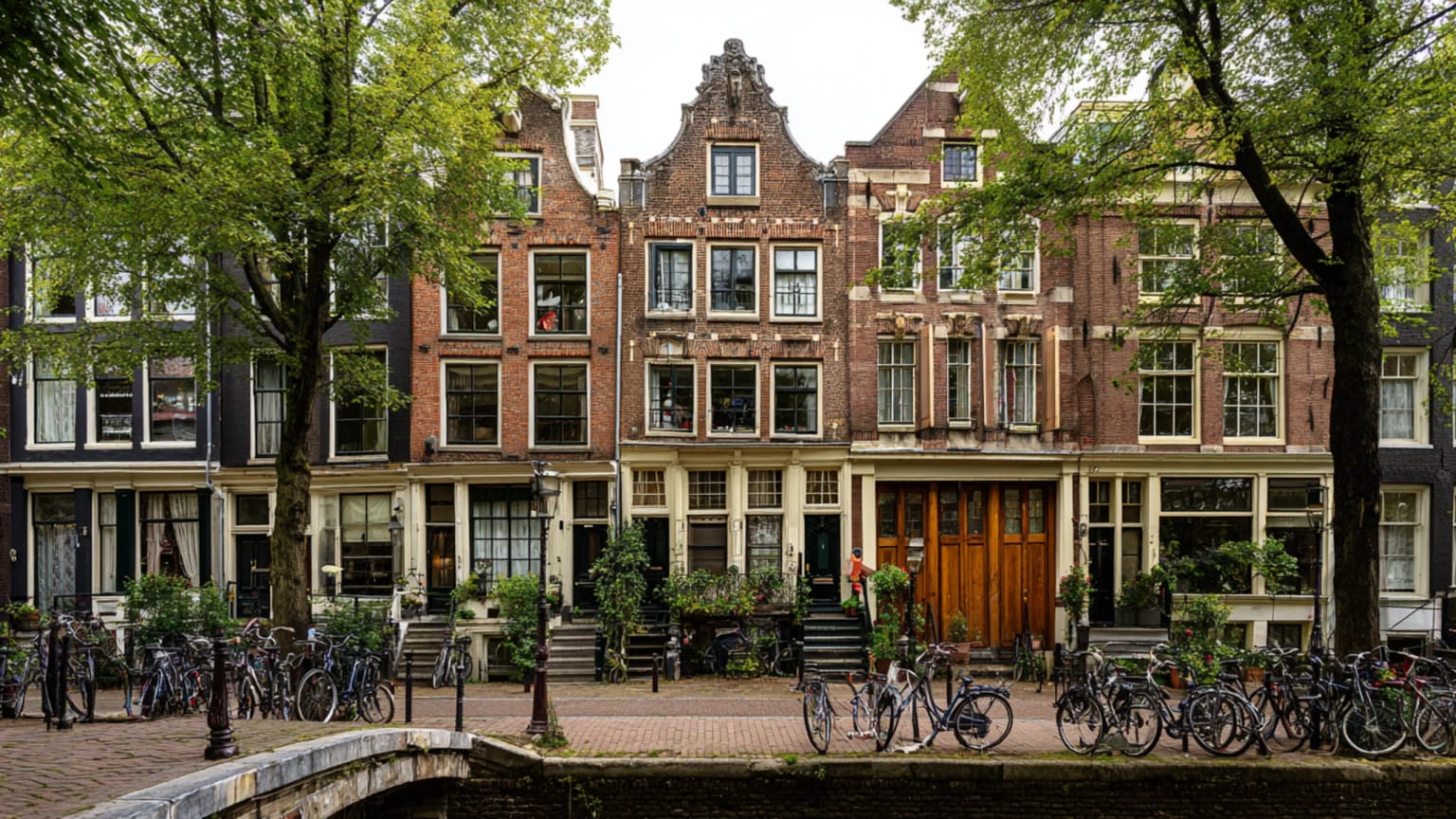
Canals Under Pressure: Amsterdam and the Living City Review
Amsterdam ranks 10th in The Living City Review 2026 with an adjusted score of 76.5. It remains one of Europe’s finest cities for daily life, but housing scarcity and tourism pressure have turned beauty into a harder civic bargain.