
The City That Makes Its Own Weather: How Far Can Urban Energy Go?
Cities are becoming power plants. Through rooftop solar, district thermal networks, and waste heat recovery, the world's densest metropolises can meet half or more of their total energy needs locally. Here's the engineering ceiling—and who's touching it.

Key Insights
Essential takeaways from this chronicle
Global rooftop solar potential could generate ~27 PWh/year—more than world's 2019 electricity consumption—with costs from $40-$280/MWh
Point 1 of 5Dense cities can meet 25-40% of electricity demand from rooftop solar; thermal energy (heating/cooling) can reach 60-100% through heat pumps and recovered heat
Point 2 of 5Stockholm targets 100% renewable/recovered district heat by 2030, with 10% coming from data center waste heat through 3,000-km thermal network
Point 3 of 5Paris's Dogger aquifer geothermal already heats ~250,000 housing equivalents; Seine-fed district cooling expanding to hundreds of buildings with COPs in mid-teens
Point 4 of 5Helsinki's Katri Vala wastewater heat pump plant generates ~1,000 GWh of heat annually at 160 MW capacity, proving sewage as critical thermal infrastructure
Point 5 of 5
The City That Makes Its Own Weather: How Far Can Urban Energy Go?
This essay maps that ceiling. Not as fantasy, but as an engineer's poem—numbers and networks braided with urban habit. The conclusion is not symmetry but potential: a maximum that is different for Singapore and for Stockholm, for Paris and for Los Angeles, because their stones, waters, and winds are different.
The Urban Energy Ceiling (A Working Model)
Think of four levers the city can pull within its boundary:
- Surfaces to photons: rooftops, façades, parking canopies, and water bodies converted to solar PV. At the global scale, high-resolution mapping suggests rooftops alone could generate ~27 PWh/year—more than the world's 2019 electricity consumption—at costs from $40–$280/MWh, with the cheapest potential in India and China. That's the global numerator. City denominators vary, but this sets the outer wall for what "surfaces" can do.
- The city's fluids: rivers, lakes, seawater, and sewer mains as seasonal batteries for district cooling and heating via heat pumps. Paris's cold water loop from the Seine is expanding to hundreds of buildings—including the Louvre—with performance coefficients up to the mid-teens in winter; Toronto's deep lake water has cooled downtown for two decades and is still expanding. When you move heat with water, the city's map becomes your compressor.
- Geology and waste heat: shallow aquifers (ATES), deep aquifers (geothermal), data centers, metros, supermarkets, and wastewater all leak useful heat. Stockholm's open market for "sell-us-your-excess-heat" is wiring these sources into a 3,000-km district heating network, aiming for 100% renewable and recovered heat by 2030. Helsinki's Katri Vala plant alone now supplies ~1,000 GWh of heat per year by upgrading heat from treated wastewater.
- Metabolic frictions: waste-to-energy (controversial but real), biogas from organics, and demand-side choreography (storage, timing, efficiency) that makes limited local supply feel larger. Copenhagen's CopenHill shows the social and thermal math of a city that burns what it cannot recycle and recovers the heat.
Now, the ceiling. Evidence from city-scale studies tells a consistent story:
- Electricity from rooftops can usually cover ~25–40% of annual city demand if you push hard. For the U.S., NREL's national assessment pegs rooftop PV technical potential at 39% of electric sales; city snapshots find ~29% of on-site demand in Los Angeles and ~25% in New York City. That's not self-sufficiency, but it's tectonic.
- Heating and cooling can, in the right geographies, go most of the way local. District systems using recovered heat, aquifers, lakes, seas, and wastewater pumps can meet a majority—up to nearly all—of thermal loads. Stockholm is targeting 100% renewable/recovered district heat by 2030; Paris is growing both geothermal heat from the Dogger aquifer (already serving on the order of ~250,000 homes) and river-fed district cooling; Helsinki's heat-from-wastewater is now central city infrastructure.
So a realistic, aggressive ceiling for in-city production in dense global cities looks like:
- Electricity: 25–40% (rooftops + some façades and floating PV where possible).
- Thermal (heating/cooling): 60–100% (heat pumps + recovered heat + geothermal + water-based networks).
Where you land in that range is geology and hydraulics as much as policy.
The Front-Runners: Five Cities That Can Touch Their Ceiling
Stockholm: Where Heat Has a Marketplace
Stockholm treats the city like a warm-blooded animal and its district network like a circulatory system. An open district heating program lets data centers, supermarkets, and industries sell excess heat into a 3,000-km grid; the utility aims for all district heat to be renewable or recovered by 2030. The city is also pushing toward 10% of heating from data centers as that sector grows. In practice, this means Stockholm can satisfy most thermal demand with in-city sources while saving scarce land for people. The electricity side is still import-dependent, but the thermal story—half or more of building energy—is close to a local maximum.
Why it reaches the limit: a mature heat network that hoovers up waste heat at scale, and a rulebook that treats excess heat as a commodity rather than a nuisance.
Helsinki: Mining Warmth from Sewers and the Sea
Helsinki built giant heat pumps into its urban bedrock. The Katri Vala plant (expanded in 2023) now provides ~160 MW of heating and 100 MW of cooling, generating ~1,000 GWh of heat annually by upgrading energy from purified wastewater; a new seawater heat pump plant is under construction to add hundreds of GWh more. With a 1,400-km district heating network to distribute it, the city can localize much of its thermal energy—and do it quietly.
Why it reaches the limit: vast wastewater flows, cold seawater, and a utility comfortable with big heat pumps—plus a network to move the heat where people are.
Paris: Geology Below, River Above
Paris sits atop the Dogger aquifer, a Jurassic limestone bathtub at 60–80°C that feeds dozens of geothermal doublets across Île-de-France—already heating ~210,000 to ~250,000 housing equivalents and growing. Above ground, Fraîcheur de Paris is using the Seine as a cold source to cool hundreds of buildings (with major expansion planned through the 2030s). Stack those together, and you get a capital that can localize a very large share of thermal demand. On the electric side, rooftops help but won't close the loop; yet shifting most heating and cooling to in-city sources still moves the total-energy needle dramatically.
Why it reaches the limit: unique geothermal geology + a fast-growing river-fed cooling grid, both knitted into dense urban fabric.
Singapore: A City-State as Solar Raft
Land is scarce; sunlight is not. Singapore's strategy is to fill roofs and water with PV and run the built environment on extreme efficiency and district solutions. The 60-MWp floating solar plant at Tengeh Reservoir proved the concept at scale; national targets call for ≥2 GWp of solar by 2030 (on rooftops and water), with longer-term plans to meet ~10% of demand by 2050 from solar alone. Add district cooling in new business districts and relentless efficiency standards, and Singapore pushes the local electricity fraction toward its physical limit for a dense equatorial city.
Why it reaches the limit: it can deploy PV on every plausible horizontal and buoyant surface and pair it with some of the world's most disciplined demand management.
Reykjavík: When the Ground Is a Boiler
Reykjavík's district heating runs almost entirely on geothermal. While Iceland's electric grid leans on hydro and geothermal mostly outside dense cores, the city's heat is quintessentially local, delivered by wells and networks that have turned volcanic context into everyday comfort. If the question is "how much thermal energy can a city produce within itself?" the answer here is "nearly all of it."
Why it reaches the limit: rare geology + a culture of district heating that predates the current climate conversation.
High Potential, Underused: Five Cities Leaving Energy on the Table
New York City: Rooftops That Could Do a Quarter
Fine-grained studies estimate ~8.6–10 GW of rooftop capacity in NYC—enough to cover roughly a quarter of annual electricity and over half of daylight consumption if fully tapped. Yet grid interconnection friction, roof rights on co-ops/condos, and split incentives slow deployment. Local Law 97 is forcing electrification, which increases electricity demand; marrying that with a rapid rooftop and community solar build-out (plus steam/district networks that harvest waste heat) is how NYC climbs toward its ceiling.
What unlocks it: streamlined interconnections, standardized roof leases, and heat-network pilots that capture data-center and subway heat.
Los Angeles: Sun-Rich, Grid-Constrained
NREL's LA100 shows multiple pathways to 100% renewables for LADWP; rooftop PV technical potential is on the order of ~9–10.5 GW, and parcel analyses suggest ~29% of on-site building electricity could be met by rooftops. In practice, distribution constraints, adoption inequities, and storage sizing hold LA below its physical maximum. The opportunity is distributed solar + storage at scale, paired with neighborhood thermal networks that mine wastewater and coastal waters.
What unlocks it: targeted feeder upgrades, equity-first incentives, and a portfolio of urban heat pumps that harvest the basin's wastewater flows.
Tokyo: A Mandate Arrives, Late But Strong
From April 2025, Tokyo requires rooftop solar on new small buildings from major developers—a first in Japan. For a high-density city, mandates are the difference between incremental and structural change. The ceiling remains limited by roof area and snow/shading in some wards, but a mandatory pipeline finally aligns practice with potential.
What unlocks it: extending the mandate across more building classes; pairing PV with ubiquitous building-level heat pumps and sub-district loops to share waste heat.
Dubai: A Bright Sun That's Not Yet a Grid
Under Shams Dubai, ~725 MW of rooftop PV across ~8,400 buildings is connected—impressive but small against a system with double-digit GW peak. Dust, high cooling loads, and summer peaks complicate matters; still, the physical limit is much higher given solar geometry and vast roofscapes. Dubai's ceiling rises as fast as storage, O&M for soiling, and district cooling + solar are married.
What unlocks it: standardized O&M for dust, cheap storage to ride the afternoon peak, and a rule that every new chiller block must be PV-paired.
Mumbai: Gigawatts Waiting on Policy Friction
Greater Mumbai's rooftops hold an estimated ~1.7 GWp technical PV potential, with residential roofs as the majority. India's national rooftop potential is enormous, yet residential adoption remains a thin slice due to financing, net-metering rules, and tenancy. Given monsoon clouds and dense mid-rise morphology, Mumbai's ceiling is lower than a desert city's—but still transformative if aligned with neighborhood-scale batteries and sewage heat recovery pilots.
What unlocks it: concessional finance, simple net metering, and pilots that prove wastewater heat in warm-humid climates can shoulder domestic hot-water loads.
Design Patterns for Reaching the Ceiling
1) Build heat highways first. Electricity is precious; heat is heavy. Cities that lay pipes—district heating and cooling—tap their own geology and waste heat. That's why Stockholm can promise 100% renewable/recovered district heating by 2030 and why Paris can expand river-cooling even under historic streets.
2) Treat rooftops as critical infrastructure. The U.S. technical potential math says rooftops can approach ~40% of demand nationally; in LA and NYC, ~25–30% at city scale is plausible. This only becomes real when interconnections are fast, roof rights are templated, and storage is woven into building codes.
3) Buy heat from your own metabolism. Wastewater, data centers, transit tunnels, and supermarkets all exhale warmth. Helsinki and Stockholm made buying that heat as ordinary as buying power. London is now mapping how data-center heat could warm up to hundreds of thousands of homes as it expands heat networks fed by the Thames, the Underground, and sewers.
4) Use water as a seasonal battery. Toronto's deep-lake system, Paris's Seine-cooled network, and Vancouver's sewage-heat district energy show how rivers, lakes, and mains anchor cooling and low-temperature heating with COPs that blow past resistive options.
5) Know your geology. If you have Dogger-style geothermal or a friendly aquifer, your thermal ceiling jumps. The Netherlands shows what mass ATES looks like in practice—3,000+ systems and counting—turning shallow geology into a quiet thermal internet beneath cities.
Where the Numbers Land (And Why It Matters)
Put it together and the upper bound for a well-run, dense city in the 2030s–2040s looks like:
- ~30% local electricity from roofs, façades, canopies, and water (more in sun-rich, low-rise fabrics; less in super-tall cores). Global mapping suggests the rooftops exist; the bottlenecks are policy and wiring.
- ~80–100% local thermal for buildings via heat pumps, geology, and recovered heat in places with river/lake/sea access or geothermal; ~60–80% in others with strong wastewater and ATES options. Stockholm, Helsinki, and Paris are already operating inside this range.
Count both streams (and remember that thermal is a very large share of urban final energy) and you find a credible path for many cities to meet roughly half or more of total building energy from inside the city—with transport electrification shifting more of the remaining burden to regional grids and imports. In other words: cities won't be islands, but they can be headwaters, generating a large, predictable slice of their own load and making imported energy cheaper to integrate because the peaks are shaved and the timing is civilized.
Short Case Notes (Tactics You Can Steal)
- Rooftop potential is real but finite. In LA, parcel-level analysis finds ~29% of on-site demand covered by rooftops; in NYC, citywide studies cluster around ~25%; nationwide, the U.S. 39% figure is the technical cap. Treat that as your electricity "budget," then plan the rest around off-site renewables and storage.
- Cooling networks are surging. Paris plans to triple its district cooling piping by the 2040s; Wired's reporting shows COPs high enough to make a utility engineer grin. These networks don't just reduce emissions; they are public-health infrastructure in heat waves.
- Wastewater is a gold mine. Vancouver's False Creek utility just tripled its low-carbon capacity by adding 6.6 MW of sewage-heat pumps, with seasonal COPs >3 (i.e., 300%+ effective efficiency). This is replicable anywhere sewers flow—so, anywhere.
- Geothermal under capitals is not a fairy tale. The Dogger beneath Paris supplies on the order of hundreds of thousands of homes today, and the basin still has running room. Cities should fund pre-feasibility geology and then standardize drilling risk pools.
- Floating PV widens the map. Singapore's 60-MWp Tengeh array shows how water surfaces can become quiet power plants in land-tight cities—part of a national push to ≥2 GWp by 2030 and beyond.
The Real Lesson: Cities as Patient Machines
A city is a choreography of delays—buildings that last a century, pipes that last half of that, codes that change glacially until they change all at once. The ceiling for in-city energy is not just physics; it's patience made visible.
Stockholm, Helsinki, Paris, Singapore, Reykjavík—they didn't arrive; they accreted. They built the heat highways before they knew which fuels would drive them. They treated rooftops as public utilities by other means, not decorative hats. They bought heat from their own metabolism. They let geology be a partner, not a postcard.
The cities leaving energy on the table—New York, Los Angeles, Tokyo, Dubai, Mumbai—have the same raw materials in very different proportions. Their ceilings are lower or higher depending on sun, water, and rock—but they share a solvable problem: institutional friction. Standardize roof rights. Pre-permit interconnections. Lay the pipes. Buy waste heat. Then let builders, owners, and citizens fill the network with watts and warmth.
A city that makes its own weather is not a metaphor. It's a choice. And once you've seen the map—the rivers as chillers, the sewers as radiators, the rooftops as panels, the bedrock as a slow battery—you don't unsee it. You just start connecting more of it to itself.
Continue Reading

The View from Below: How London Mistook Skyscrapers for Density
London spent twenty years building upward in the name of the compact city. From the pavements of Shoreditch the arithmetic looks different: the tower privatises the panorama and socialises the silhouette.

The Los Angeles That Almost Learned to Walk
In 1930, a regional parks plan and an electric rail network could have made Los Angeles a polycentric, walkable, tram-linked metropolis. The city commissioned the plan, then put it in a drawer. This is the anatomy of a choice, not a fate.
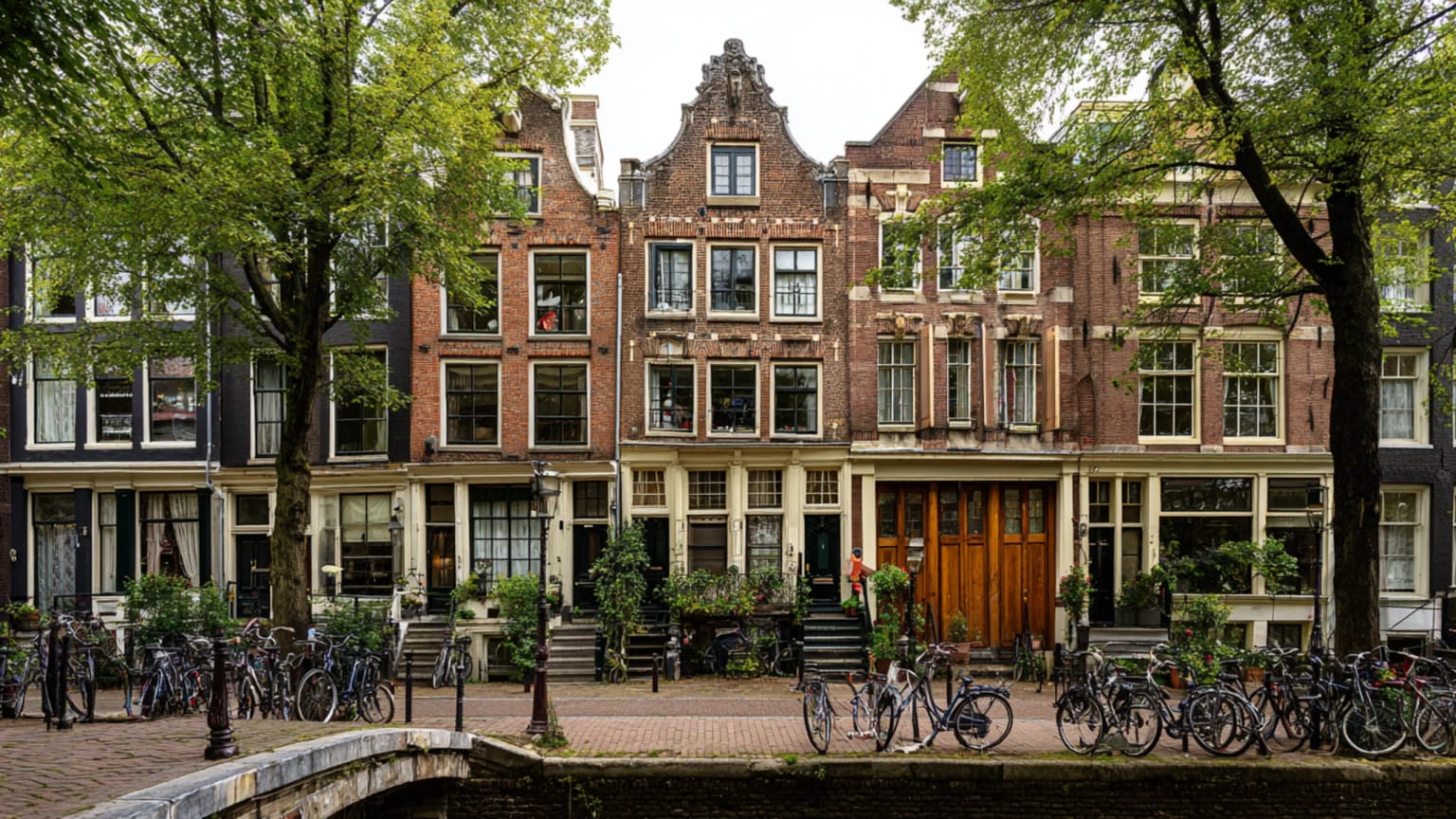
Canals Under Pressure: Amsterdam and the Living City Review
Amsterdam ranks 10th in The Living City Review 2026 with an adjusted score of 76.5. It remains one of Europe’s finest cities for daily life, but housing scarcity and tourism pressure have turned beauty into a harder civic bargain.