The 2.8 Billion Housing Gap: When No City on Earth is Affordable
The number arrives like a diagnosis: 2.8 billion people worldwide lack access to adequate housing. That's 40 percent of humanity living in structures that fail basic tests of safety, security, or sanitation. And for the first time since economists began systematically tracking housing affordability, every major market has crossed into unaffordable territory.

Key Insights
Essential takeaways from this chronicle
2.8 billion people—40% of humanity—lack adequate housing, including 1.1 billion in informal settlements and 100 million who are homeless. The crisis is not marginal; it is the dominant condition.
Point 1 of 5For the first time in over 20 years of systematic tracking, not one of 95 major housing markets across eight nations qualifies as "affordable" by standard metrics.
Point 2 of 5Meeting current demand would require building 96,000 new affordable housing units every day—a rate no country has achieved and few have seriously attempted.
Point 3 of 5The crisis has different textures across regions: 62% of African urban housing is informal, while in wealthy nations the problem manifests as price inflation that locks out middle-income households.
Point 4 of 5Solutions exist but require treating housing as infrastructure rather than investment: secure tenure, accessible peri-urban land, streamlined regulations, and public financing at scale.
Point 5 of 5
The scene was so specific to this moment—the professional who builds homes unable to afford one—that it took me a week to recognize it as universal. In Sydney, nurses commute two hours because they cannot afford to live near their hospitals. In San Francisco, teachers sleep in cars. In London, the children of homeowners have a lower chance of owning property than their grandparents did in the 1960s. Something has broken in the basic machinery of shelter, and it has broken everywhere at once.
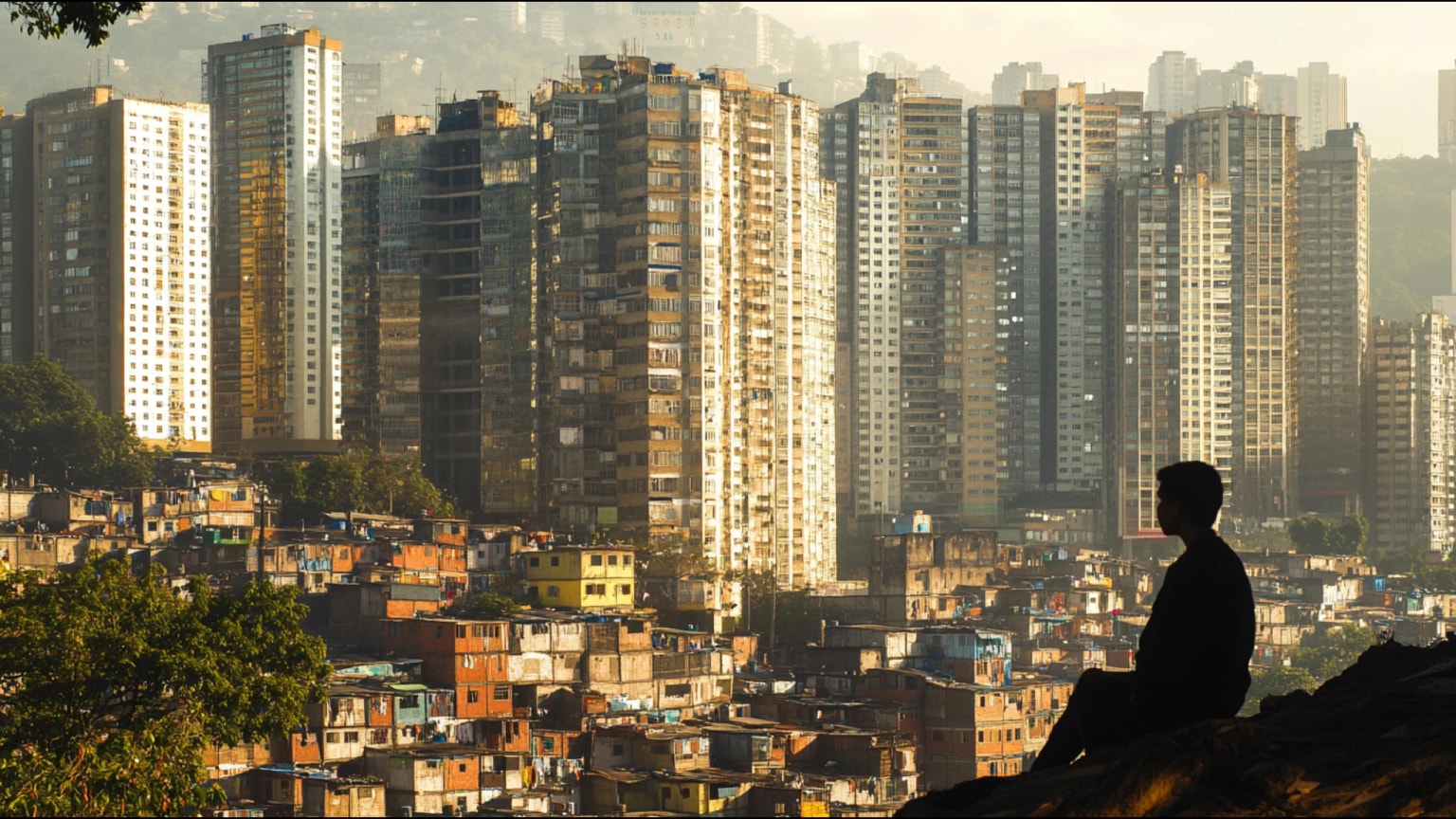
The numbers, when you finally look at them, are staggering enough to seem like errors. According to UN-Habitat, 2.8 billion people worldwide lack access to adequate housing, secure land tenure, or basic water and sanitation services. That is roughly 40 percent of the human population living in structures that fail elementary tests of safety, security, or dignity. One hundred million people are homeless outright. Another 1.1 billion live in informal settlements—the favelas, slums, and unauthorized colonies that house more people than the entire population of Europe.
And then there is the headline that should have dominated news cycles but barely registered: for the first time in over two decades of systematic measurement, not a single major housing market on earth qualifies as "affordable."
This is the arithmetic of a crisis that has outpaced our vocabulary for describing it.
⸻
What "adequate housing" actually means
The phrase sounds technical, and it is meant to. UN-Habitat defines adequate housing through seven criteria: security of tenure, availability of services, affordability, habitability, accessibility, location, and cultural adequacy. A dwelling that lacks any of these—a shack without running water, an apartment where eviction is one landlord's whim away, a home so far from employment that transportation costs consume the savings—fails the test.
By this measure, the 2.8 billion figure is probably conservative. It captures people living in informal settlements, those without access to basic sanitation, those in overcrowded conditions, and those spending so much of their income on rent that other necessities become luxuries. It does not fully account for the hidden inadequacy of housing that looks acceptable from outside but traps its occupants in precarity: the legal apartment with mold problems the landlord won't fix, the room in a subdivided house with fourteen other tenants sharing one bathroom, the technically adequate dwelling in a location so disconnected from jobs and services that it functions as a poverty trap.
What the UN data reveals is that inadequate housing is not a problem of the margins. It is the dominant condition for a plurality of humans.
The geography of this crisis is uneven but nearly universal. In Sub-Saharan Africa, 62 percent of urban dwellers live in informal settlements—structures built without permits, often on land without clear tenure, frequently lacking connection to water, electricity, or sanitation networks. In South Asia, the figure is 31 percent. In Latin America, decades of urbanization have produced cities where informal housing is not an exception but a parallel system, often more extensive than the formal one.
In the wealthy nations of Europe, North America, and East Asia, the crisis takes a different form. Housing exists, but access to it has become a sorting mechanism for wealth. Prices have risen faster than incomes for so long that ownership has become inheritance rather than achievement. Rents consume proportions of income that would have been considered crisis-level a generation ago and are now simply normal.
The convergence is the news: both the absolute deprivation of the global South and the affordability collapse of the global North are accelerating simultaneously.
⸻
The year every market became unaffordable
The Demographia International Housing Affordability report has tracked housing costs across major metropolitan areas since 2004, using a simple metric: the ratio of median house price to median household income. A ratio of 3.0 or below is considered affordable—a household can reasonably expect to purchase a home without destabilizing their finances. A ratio above 5.1 is "severely unaffordable."
For twenty years, the reports documented a worsening trend. Markets that had been affordable slipped into moderate unaffordability. Moderately unaffordable markets became severely unaffordable. The severely unaffordable became something new: "impossibly unaffordable," with ratios exceeding 9.0 or 10.0.
The 2025 edition crossed a threshold. Of 95 major metropolitan areas surveyed across Australia, Canada, China (Hong Kong), Ireland, New Zealand, Singapore, the United Kingdom, and the United States, not one—not a single market—qualified as affordable. The most affordable market in the survey, Pittsburgh, had a ratio of 3.1, just above the threshold. The least affordable, Hong Kong, had a ratio of 16.7: a median home costing nearly seventeen years of median income.
This is not a statistical curiosity. It represents the closure of a path that previous generations took for granted. In most of these countries, the postwar decades saw homeownership expand dramatically, creating middle classes whose wealth was anchored in property. That expansion is over. The children of homeowners now face markets where median homes are simply inaccessible to median earners.
The consequences ripple outward. Young households delay family formation. Workers cannot move to cities with job opportunities. Teachers, nurses, firefighters, and other essential workers are priced out of the communities they serve. Inequality becomes spatial: the ability to live in a particular place becomes a function of existing wealth rather than current work.
What the Demographia data captures is the failure of markets that were supposed to work. These are not informal settlements or developing-world slums. These are the most regulated, most financialized, most "sophisticated" housing markets on the planet. They have failed their basic purpose.
⸻
How we built a crisis
The causes are multiple and reinforcing, which is another way of saying that the crisis is structural rather than accidental.
Start with land. In most cities, land costs now dominate housing prices. A house that cost three times median income in 1970 might cost the same to build today (in real terms), but the land beneath it costs five times what it did. Land is fixed. Population grows. Cities have boundaries, whether physical (coastlines, mountains) or regulatory (urban growth boundaries, greenbelt policies). When land supply cannot expand, prices absorb demand.
Add regulation. Zoning codes developed in the twentieth century to separate noxious industry from residential neighborhoods have evolved into instruments of exclusion. Single-family zoning in American cities, restrictive height limits in European capitals, complex permitting processes everywhere—these regulations limit housing supply precisely where demand is highest. Each individual regulation may have defensible intent. Collectively, they produce scarcity.
Then there is finance. Housing has become a global asset class. Institutional investors, pension funds, sovereign wealth funds, and high-net-worth individuals treat residential property as a store of value and source of returns. This financialization disconnects housing prices from local incomes. A worker in Vancouver competes not just with other Vancouver workers but with capital flows from around the world seeking safe, appreciating assets.
Tax policy amplifies the problem. Most wealthy countries tax housing lightly—no wealth tax on primary residences, favorable treatment of capital gains, mortgage interest deductions that subsidize ownership. These policies were designed to encourage homeownership but now function as subsidies to asset appreciation, benefiting those who already own at the expense of those trying to enter.
Finally, construction itself has stagnated. Productivity growth in housing construction has lagged other industries for decades. Labor shortages, supply chain disruptions, regulatory delays, and the inherent difficulty of building in dense urban environments have pushed costs upward. Even where land is available and regulations permit, the physical act of building has become slower and more expensive.
None of these factors operates in isolation. Land scarcity makes regulation more consequential. Financialization increases demand for regulatory barriers that protect existing values. Tax policy rewards the appreciation that supply constraints create. The system is self-reinforcing, which is why it has proven so resistant to reform.
⸻
96,000 homes per day
UN-Habitat has calculated the production required to meet current housing need: 96,000 new affordable and accessible housing units every single day. This figure accounts for current inadequacy, population growth, and household formation. It does not include replacement of aging stock or upgrading of marginal housing to adequate standards.
To put this in perspective: the United States, with one of the world's largest construction industries, builds approximately 1.4 million housing units per year, or about 3,800 per day. Meeting its share of the global target would require roughly tripling production. Most countries would need to increase output by even larger factors.
The number sounds impossible, and in some sense it is. No country has sustained housing production at the levels the crisis demands. But the impossibility is political and financial rather than physical. The materials exist. The labor could be mobilized. The designs are not exotic. What is missing is the allocation of resources at scale.
Consider what countries have achieved when housing was treated as urgent. Singapore, starting from severe overcrowding in the 1960s, built public housing for 80 percent of its population within two generations. Vienna, committed to social housing since the 1920s, maintains a stock that houses 60 percent of its residents and effectively caps market rents. Post-war Britain built millions of council homes in a decade. These examples required massive public investment, state involvement in land acquisition, and acceptance that housing was infrastructure rather than simply a market good.
The gap between 96,000 units per day and current production is not primarily a gap in technical capacity. It is a gap in political will and resource allocation.
⸻
The texture of crisis across regions
The global statistics mask regional variations that matter for policy.
In Sub-Saharan Africa, the housing challenge is inseparable from the pace of urbanization itself. The continent's urban population is projected to double by 2050, adding more than 900 million city dwellers. Formal housing production cannot remotely match this growth. The result is expansion of informal settlements—self-built housing on land without clear tenure, often in hazardous locations, typically lacking basic services.
Yet informality is not simply failure. Informal settlements represent an enormous investment of household resources and labor. Residents build incrementally, improving structures over years and decades as resources permit. The policy challenge is not to replace this housing but to support it: securing tenure so that households can invest with confidence, extending infrastructure to connect settlements to water, electricity, and sanitation, regularizing status so that residents can access credit and services.
In South and Southeast Asia, the scale is largest in absolute terms. More than half a billion people in the region lack access to basic water services. Over a billion lack adequate sanitation. The informal settlements of Mumbai, Manila, Jakarta, and Dhaka house populations larger than many European countries. Here the housing crisis intersects with climate vulnerability: low-lying informal settlements face flooding, inadequate construction provides little protection from extreme heat, and density makes disease transmission rapid.
In Latin America, decades of urbanization have produced a distinctive pattern. Many cities have achieved near-universal access to water and electricity, but housing quality and security remain uneven. The challenge is often regularization and upgrading rather than construction from scratch: securing tenure for settlements that have existed for generations, connecting neighborhoods to urban services and transportation, and preventing displacement as informal areas become attractive to formal development.
In Europe and North America, the crisis is less about absolute deprivation and more about distribution and access. Housing exists in aggregate; the problem is who can afford it and where. Young adults delay household formation. Essential workers commute long distances. Homelessness persists despite overall wealth. The policy failures here are different—not failures to build in absolute terms, but failures to ensure that what gets built serves residents rather than investors.
In the Gulf states and parts of East Asia, a different model has emerged: housing abundant for citizens or owners, precarious for migrant workers who build and maintain the cities. The crisis here is one of rights and recognition as much as structures.
Each region's housing challenge has distinct characteristics, but all share common elements: insufficient production relative to need, mismatch between where housing is built and where people need to live, and systems that treat housing as asset rather than necessity.
⸻
What works (and what might)
The housing crisis has not been solved anywhere at the scale required. But partial successes point toward elements of a solution.
Tenure security is foundational. Households that lack secure rights to their land and housing cannot invest in improvements, cannot access formal credit, and cannot plan for the future. Regularization programs that grant legal recognition to existing settlements—even without full formal title—have enabled billions of dollars in household investment. Peru's titling programs, Indonesia's kampung improvement projects, and various upgrading initiatives across Africa and Asia demonstrate that security enables investment.
Land policy matters enormously. Cities that have maintained public land banks, captured land value increases through taxation, or used compulsory purchase powers effectively have more tools to ensure affordable housing. Singapore's public land ownership, Hong Kong's leasehold system (despite its current dysfunction), and Vienna's long-term land acquisition all demonstrate that public control over land enables public control over housing outcomes.
Regulatory reform can unlock supply. Japan's relatively liberal building regulations have kept Tokyo housing costs far lower than comparable global cities. Minneapolis's elimination of single-family zoning, Auckland's upzoning, and various "yes in my backyard" reforms represent attempts to allow density where demand exists. The evidence suggests that supply constraints do affect prices, even if the relationship is not instantaneous or simple.
Public financing at scale has worked historically and could work again. The social housing systems of Vienna, Singapore, and postwar Britain required sustained public investment over decades. Contemporary proposals for public development banks, land value capture financing, and social housing investment would require similar commitment. The financing exists; global capital markets are enormous. The question is whether public purposes can direct private capital.
Construction innovation could reduce costs. Prefabrication, modular construction, and new materials have long promised to transform housing production. Results have been mixed, but some jurisdictions have achieved significant cost reductions through standardization and factory production. The challenge is scaling these innovations within regulatory and financing systems designed for traditional construction.
Incremental upgrading recognizes that much of the world's housing will not be replaced but improved in place. Supporting self-building through technical assistance, materials supply, and infrastructure extension can improve millions of homes at costs far below new construction. This approach requires accepting that the boundary between formal and informal housing is permeable and that policy should work with existing housing rather than against it.
No single intervention suffices. The crisis is systemic, and responses must be systemic: land policy and regulation and finance and construction and tenure all operating together.
⸻
Housing as infrastructure, not investment
The deepest challenge may be conceptual. For several decades, housing in most countries has been understood primarily as an investment good—an asset whose value should appreciate, generating wealth for its owners. This understanding has shaped tax policy, financial regulation, and public attitudes. Homeowners vote for policies that protect their asset values. Politicians respond to homeowner constituencies. The result is a system optimized for appreciation rather than affordability.
An alternative framing treats housing as infrastructure: a necessary input to economic and social functioning, like transportation or water supply. Infrastructure is expected to be available, affordable, and adequate. Governments invest in it not for financial returns but because the returns flow to the broader economy and society. Housing-as-infrastructure would imply different policies: public investment in supply, regulation that prioritizes access over value protection, and taxation that discourages speculation.
This framing is not radical. It describes how most countries treated housing in the mid-twentieth century, and how some—Singapore, Vienna, various Nordic nations—continue to approach it. The question is whether the political coalitions that benefited from housing-as-investment can be persuaded or overridden by those suffering from its consequences.
The mathematics are clarifying. When 40 percent of humanity lacks adequate shelter, when every major market has become unaffordable, when meeting current need would require 96,000 units per day, the system is not working. The question is not whether it will change but how: through reform or through crisis, through policy or through breakdown.
⸻
The architect's tears
I think about that architect in Oslo more than the encounter probably warrants. She had done everything right by the conventional script: trained in a useful profession, worked steadily, saved diligently. The system she helped build—literally, physically build—could not house her.
Her tears were personal, but the condition is structural. Across the world, people who teach children, care for the sick, respond to emergencies, and design buildings cannot afford to live in the cities where they work. The young cannot afford what the old took for granted. The workers cannot afford what the owners assume as natural.
The 2.8 billion people lacking adequate housing are not an abstraction. They are construction workers sleeping in the buildings they build. They are families in informal settlements investing everything in homes they might lose. They are young professionals crying in cafés, realizing that the system does not work for them and might not work for anyone much longer.
The solutions are known. The resources exist. The politics are difficult but not impossible. What remains is the choice: whether to treat shelter as a right to be secured or a prize to be competed for, whether to build housing for people or for portfolios, whether to measure success in units delivered or values appreciated.
The arithmetic is simple, even if the politics are not. 2.8 billion people need adequate homes. 96,000 units per day need to be built. Every market has become unaffordable. These are not trends to be managed but failures to be reversed.
The alternative is a world where the architect designs housing she cannot afford, where the nurse commutes two hours to her shift, where the teacher sleeps in her car—where shelter becomes a inheritance rather than a right, and cities become monuments to investment rather than places to live.
We know how to build housing. We have always known. The only question is whether we will.
⸻
Sources (Selected)
- UN-Habitat (2024). Annual Report 2024: Adequate Housing for All. Nairobi: United Nations Human Settlements Programme.
- UN-Habitat (2025). Global Snapshot of Spatial Inclusion in Cities. Nairobi: United Nations Human Settlements Programme.
- Demographia (2025). International Housing Affordability 2025 Edition. Chapman University Center for Demographics and Policy.
- UNECE (2024). Challenges and Priorities for Improving Housing Affordability. Geneva: United Nations Economic Commission for Europe.
- World Economic Forum (2025). Housing Affordability: A Global Urban Crisis Private Finance Must Help Solve.
- UN-Habitat (2023). World Cities Report 2022: Envisaging the Future of Cities. Nairobi: United Nations Human Settlements Programme.
- UN-Habitat (2025). Proposed Recommendations on Informal Settlements. HSP/OEWG-H.2025/INF/4.
- Habitat for Humanity (2025). Climate Action through Housing and Informal Settlements.
- Rolnik, R. (2019). Urban Warfare: Housing under the Empire of Finance. London: Verso Books.
- Madden, D. & Marcuse, P. (2016). In Defense of Housing: The Politics of Crisis. London: Verso Books.
This essay draws on UN-Habitat, UNEP, and Demographia research released in 2024-2025. For ongoing coverage of global housing policy, see the World Cities Report series and UN-Habitat's Urban Indicators Database.
Continue Reading
The View from Below: How London Mistook Skyscrapers for Density
London spent twenty years building upward in the name of the compact city. From the pavements of Shoreditch the arithmetic looks different: the tower privatises the panorama and socialises the silhouette.

The Los Angeles That Almost Learned to Walk
In 1930, a regional parks plan and an electric rail network could have made Los Angeles a polycentric, walkable, tram-linked metropolis. The city commissioned the plan, then put it in a drawer. This is the anatomy of a choice, not a fate.
Canals Under Pressure: Amsterdam and the Living City Review
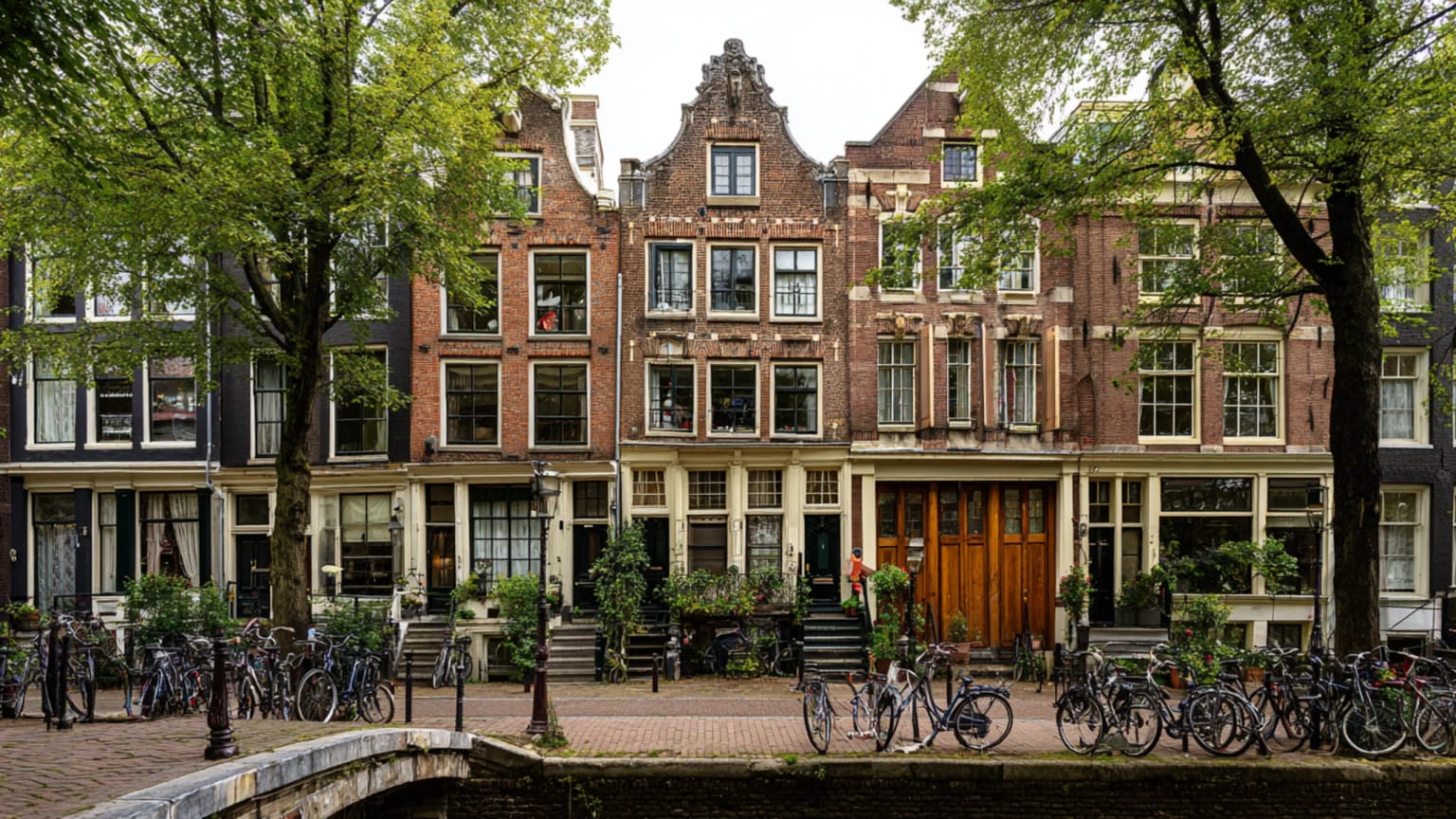
Amsterdam ranks 10th in The Living City Review 2026 with an adjusted score of 76.5. It remains one of Europe’s finest cities for daily life, but housing scarcity and tourism pressure have turned beauty into a harder civic bargain.