The Informal City: 1.1 Billion People and the Urbanism That Policy Forgot
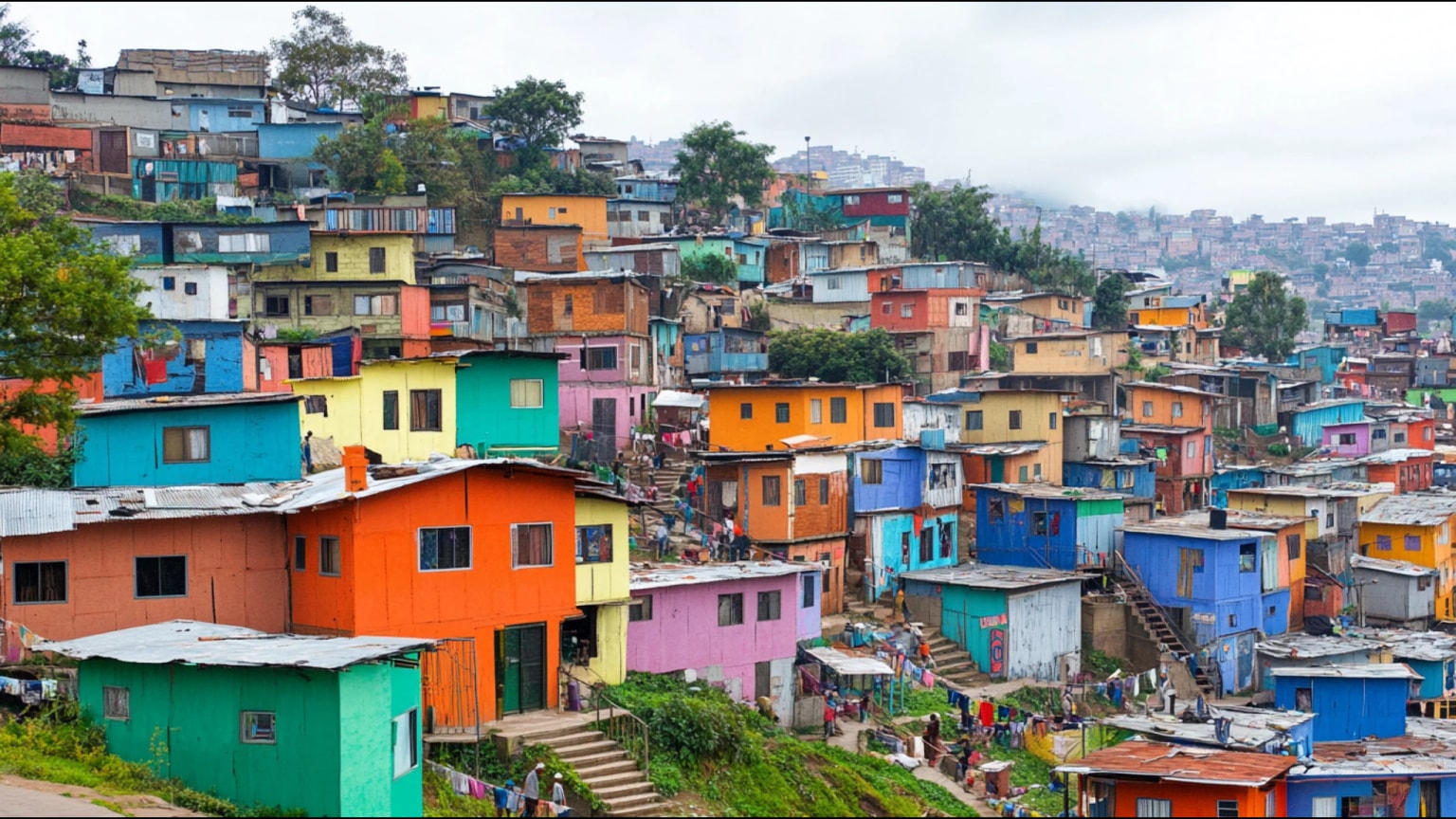
The neighborhood had no official name on any map I could find. Residents called it by the name of the water tap—the one amenity that appeared after twenty years of lobbying. Houses climbed the hillside in organic improvisation, each one a record of incremental investment by families who built what they could afford when they could afford it.

Key Insights
Essential takeaways from this chronicle
1.1 billion people currently live in informal settlements—housing built without permits, often without secure tenure, frequently lacking basic services like water and sanitation.
Point 1 of 5Without significant intervention, this population could triple to 2.9 billion by mid-century, with 52 percent concentrated in Central and Southern Asia.
Point 2 of 562 percent of urban dwellings in Africa are informal, representing not failure but a parallel system of housing that formal markets have failed to provide.
Point 3 of 5UN-Habitat's Participatory Slum Upgrading Programme works in 40+ countries and 190 cities, supporting in-situ improvement rather than displacement.
Point 4 of 5Only 7 percent of climate-related development finance reaches informal settlements, despite these areas facing the highest climate vulnerability.
Point 5 of 5
The residents, of course, knew exactly where they lived. They had built the houses themselves, over years and decades, adding rooms as children arrived and incomes permitted. They had organized to petition for water service, for electricity connections, for the footpath that made the steepest section passable during rains. They paid property taxes through an informal arrangement with a sympathetic clerk. They were present in every way except the one that mattered for legal recognition.
This is the informal city—home to more than a billion people worldwide, growing by the tens of millions each year, and largely invisible to the planning systems that are supposed to shape urban development. It is not a marginal phenomenon or a temporary condition. In many countries, informal housing is the dominant form of urbanization, providing shelter that formal markets cannot or will not supply.
The question facing cities is not whether informal settlements will exist—they already do, at a scale that makes eradication impossible—but how to engage with them. UN-Habitat's work over the past two decades suggests an answer: upgrading rather than erasure, partnership rather than displacement, recognition of what residents have already built.
⸻
The scale of informality
The statistics are numbing in their magnitude. According to UN-Habitat, 1.1 billion people currently live in informal settlements and slums—roughly one in seven humans. These residents face conditions that the UN defines as inadequate: lack of secure tenure, insufficient living space, limited access to water and sanitation, poor structural quality, or hazardous locations.
The distribution is global but uneven. In Sub-Saharan Africa, 62 percent of urban residents live in informal housing. In South Asia, the share is 31 percent. Latin America and the Caribbean, despite decades of upgrading programs, still house 21 percent of urban populations informally. Even in developed countries, informal and substandard housing shelters millions—often hidden in plain sight as illegal subdivisions, overcrowded apartments, or unpermitted structures.
The trajectory is concerning. UN-Habitat projects that without significant intervention, the global slum population could reach 2.9 billion by mid-century—nearly triple the current level. More than half of this growth would occur in Central and Southern Asia, with another quarter in Sub-Saharan Africa. These are not projections of failure but extrapolations of current trends: the pace of formal housing production nowhere matches the pace of urban population growth.
Behind these statistics are individual decisions repeated millions of times. A family migrates to a city seeking work. Formal housing is unaffordable or unavailable. They find a plot—on a hillside too steep for formal development, in a floodplain too risky for legal construction, on the urban periphery beyond infrastructure networks—and they build. First a room, then a second, then a kitchen. Each improvement represents savings invested, risk taken, a bet that the settlement will not be demolished.
The aggregate of these decisions is a city within a city: the informal urban system that houses more people than the formal one in many countries.
⸻
What informality produces
The discourse around informal settlements often emphasizes what they lack: legal tenure, infrastructure connections, building standards, public services. This deficit framing is not wrong—residents of informal areas do face genuine deprivation—but it obscures what informality produces.
Informal settlements represent an enormous investment of household resources. Residents who cannot access mortgages or formal construction finance instead invest incrementally, adding to their homes over years and decades. The aggregate value of this investment is difficult to calculate but certainly reaches into the hundreds of billions of dollars globally. These are not temporary structures but permanent homes, built with the same aspirations as any suburban house.
The settlements also produce urban form. The narrow paths, the buildings that step up hillsides, the mixing of residential and commercial uses—these patterns emerge from the logic of settlement without planning. The result is often denser, more mixed, and more walkable than planned suburbs, though less serviced and more hazardous. The organic street patterns frustrate vehicles but accommodate pedestrians; the mixed uses put work and commerce within walking distance of homes.
Perhaps most importantly, informal settlements produce community. Residents who have organized to secure land, petition for services, and defend against eviction have developed social networks and collective capacity that planned neighborhoods often lack. The mutual aid systems, the informal credit associations, the neighborhood watches—these institutions fill gaps that formal systems leave.
None of this means that informal conditions are acceptable. Residents overwhelmingly want the security, services, and standards that formal housing provides. But it does mean that upgrading programs should work with what exists rather than erasing it, recognizing the value that residents have created.
⸻
The limits of clearance
The historical response to informal settlements was clearance: demolish the slums and relocate residents to planned housing. This approach dominated urban policy from the colonial era through the late twentieth century, producing showcase housing projects that were supposed to demonstrate what modern cities could offer.
The results were largely failures. Clearance destroyed social networks and economic relationships that had developed over decades. Relocation sites were typically peripheral, far from employment centers, with higher transport costs that offset any savings in housing. The new housing often cost more than residents could afford, leading to subletting, abandonment, or return to informal areas. The cleared land was frequently redeveloped for uses that served wealthier populations, making clearance an instrument of displacement rather than improvement.
Contemporary research has quantified these harms. Studies of relocation programs in India, Nigeria, and elsewhere document increased poverty, reduced employment, and worsened health outcomes among displaced populations. The planned housing that replaced informal settlements often became slums itself within a generation, lacking the incremental investment and community organization of the neighborhoods it replaced.
The shift away from clearance began in the 1970s, when organizations including UN-Habitat and the World Bank began advocating for "sites and services" approaches—providing infrastructure and tenure to support self-built housing rather than replacing it. This evolution continued toward in-situ upgrading: improving existing settlements in place, without displacement.
The logic of upgrading is both practical and ethical. Practically, the scale of informal housing makes clearance infeasible. There is no capacity to rebuild housing for a billion people, and attempts to do so would require resources better spent on services and infrastructure. Ethically, residents who have invested in their homes and communities deserve to benefit from improvements rather than being displaced by them.
⸻
The participatory approach
UN-Habitat's Participatory Slum Upgrading Programme (PSUP) represents the current state of upgrading practice. Operating in over 40 countries and 190 cities, the program has directly benefited more than 4 million people while developing methodologies adopted by national and municipal governments.
The approach begins with participation. Rather than external experts diagnosing problems and prescribing solutions, PSUP engages residents in identifying priorities and designing interventions. This process often reveals that professional assumptions about what residents need—typically focusing on housing quality—miss what residents most value: often tenure security, water access, or pathways that prevent accidents during rains.
Tenure security is typically foundational. Residents who fear eviction cannot invest in their homes, cannot access formal credit, and cannot demand services. PSUP works with governments to develop mechanisms for recognizing existing settlements—sometimes through full titling, more often through intermediate forms of tenure that provide security without requiring the complete formalization that many governments resist.
Infrastructure follows tenure. Water connections, sanitation systems, electricity networks, and pathways transform living conditions more rapidly than housing upgrades. These investments also signal government recognition of settlements, reducing the threat of demolition and enabling further private investment.
Housing improvement happens last, and primarily through household investment enabled by security and services. PSUP may provide technical assistance—training local builders, demonstrating construction techniques, facilitating access to materials—but the actual construction is done by residents themselves, as it always has been.
The process is slow. A typical PSUP engagement takes years from initial assessment to visible infrastructure. But the results are durable: settlements that have been upgraded rarely revert to informal conditions, and the institutional capacity developed during upgrading enables continued improvement.
⸻
Climate and informality
The intersection of informal housing and climate vulnerability is among the most urgent challenges in urban policy. Informal settlements are disproportionately located in hazardous areas: floodplains, unstable slopes, coastal zones subject to storm surge. Their structures are less able to withstand extreme weather. Their residents have fewer resources to recover from disasters.
Yet climate finance flows around these areas rather than through them. According to analysis by Habitat for Humanity, only 7 percent of climate-related development finance is directed toward informal settlements and incremental housing—despite these areas housing a billion people with the highest climate vulnerability.
The gap reflects institutional failures. Climate finance mechanisms are designed for formal projects with measurable outcomes: renewable energy installations, flood barriers, infrastructure upgrades. Informal settlements don't fit these frameworks. They lack the tenure clarity required for conventional investment. Their incremental, self-built nature doesn't match project-based funding cycles. Their very informality makes them invisible to the systems that allocate climate resources.
Closing this gap requires recognizing informal settlements as critical sites for climate adaptation. Upgrading pathways to reduce flooding, improving drainage systems, securing slopes against landslides—these interventions protect residents while providing the measurable outcomes that climate finance requires. Tenure security enables household investment in climate-resilient construction. Early warning systems and evacuation planning save lives during extreme events.
Some cities are leading this integration. Durban, South Africa, includes informal settlements in its climate adaptation planning. Mumbai has developed slum rehabilitation programs that incorporate flood resilience. The C40 Cities network has published guidance on climate-resilient upgrading.
But the scale of need vastly exceeds current response. A billion people living in climate-vulnerable informal housing, with projected growth to nearly three billion, cannot be protected through isolated pilot projects. Systemic integration of climate and informal housing finance is essential.
⸻
The African urban future
Nowhere is the informal housing challenge more acute than in Sub-Saharan Africa, where urbanization is proceeding faster than anywhere else in the world with less infrastructure investment per capita.
The continent's urban population is projected to double by 2050, adding more than 900 million city dwellers. At current rates of formal housing production, most of these new residents will find shelter in informal settlements. The absolute number of Africans living in informal conditions will increase even if the percentage decreases—a mathematical reality that makes upgrading essential.
African cities exhibit particular characteristics that shape informal settlement patterns. Many have weak formal land markets, with most transactions occurring outside registered systems. Colonial-era planning frameworks, designed to segregate and control rather than house, remain embedded in regulations. Post-independence governments often prioritized industrial development over housing, leaving formal shelter provision to markets that never materialized.
The result is informality as the dominant urban condition. In Nairobi, Kinshasa, Lagos, and other major cities, informal residents outnumber formal ones. The informal economy, closely linked to informal housing, generates the majority of employment. Attempts to enforce formal standards would displace millions and destroy livelihoods.
The alternative is transformation of what exists. African upgrading programs, often supported by UN-Habitat and bilateral donors, have demonstrated that informal settlements can be improved to provide adequate conditions. The model developed in Kenya—combining tenure regularization, infrastructure provision, and community organization—has been adapted across the continent. What's needed is scale: the transition from pilot projects to citywide programs to national policies.
⸻
The Asian mega-settlements
South and Southeast Asia present a different scale: informal settlements housing tens of millions in single metropolitan areas, with density and complexity that strain upgrading methodologies developed for smaller contexts.
Dharavi in Mumbai, one of the world's largest informal settlements, houses somewhere between 700,000 and one million people in approximately 2 square kilometers. The settlement is not a residential slum in the conventional sense but an industrial ecosystem: leather goods, recycling operations, pottery workshops, garment manufacturing. Upgrading Dharavi means grappling with livelihoods as well as housing, commercial uses as well as residential, a web of relationships that has developed over more than a century.
Multiple redevelopment proposals have been floated, typically involving high-rise towers that would relocate residents vertically while freeing land for commercial development. Residents and advocates have resisted, arguing that tower blocks cannot accommodate the workshops and storage spaces that current housing provides, that relocation would destroy the economic networks that sustain livelihoods, that the proposed housing would be unaffordable for many current residents.
Similar tensions play out in Bangkok, Jakarta, Manila, and other Asian megacities where informal settlements occupy valuable urban land. The pressure to redevelop is intense; the risk of displacement is high. What distinguishes more successful interventions is community participation in design, protection against displacement, and recognition that housing serves economic as well as residential functions.
The Baan Mankong program in Thailand represents one model: community-led upgrading with government financing, where residents design improvements and manage construction. The approach has reached over 100,000 households across more than 300 cities, demonstrating that participation can work at scale.
⸻
The policy repertoire
Decades of upgrading experience have produced a repertoire of interventions that work when applied systematically.
Tenure regularization provides the foundation. This does not necessarily require full formal title—which can be expensive and administratively complex—but rather sufficient security to enable investment. Occupancy certificates, community land trusts, and leasehold arrangements all provide security short of freehold. The key is protection against arbitrary eviction and recognition that enables access to services.
Infrastructure investment transforms conditions most rapidly. Water connections, sanitation systems, and electricity networks address the most severe deprivations while signaling government recognition. Pathways and roads improve access for residents and emergency services. Stormwater drainage reduces flooding. Each intervention builds on the others.
Spatial improvements address the urban form. Opening community spaces, widening critical pathways, and improving structural connections can enhance livability without wholesale redevelopment. In-situ reblocking—adjusting plot boundaries to create functional streets while minimizing displacement—can transform maze-like settlement patterns into serviceable neighborhoods.
Building assistance supports household investment. Technical advice on construction techniques, access to building materials at reasonable prices, and small-scale financing for improvements enable residents to upgrade their own housing. This approach leverages household resources rather than replacing them with public expenditure.
Economic development recognizes that housing and livelihoods are inseparable. Home-based enterprises, which are common in informal settlements, need regulatory accommodation rather than enforcement. Access to markets, skills training, and small business finance can increase incomes that fund housing improvements.
Community organization sustains improvements over time. Residents who have participated in upgrading processes develop capacity for ongoing collective action: maintaining infrastructure, resolving disputes, advocating for additional investment. This social infrastructure may be as important as the physical infrastructure.
The elements work best in combination and over time. Quick wins—visible improvements that demonstrate government commitment—build trust for longer-term processes. Community participation ensures that investments match priorities. Tenure security enables private investment that leverages public expenditure.
⸻
The neighborhood that found its name
I returned to that hillside neighborhood several years after my first visit. Things had changed. The water tap that gave the settlement its informal name had been supplemented by household connections. A concrete path replaced the muddy track on the steepest section. Several houses had added second floors, signs of investment enabled by greater security.
Most significantly, the neighborhood now appeared on official maps. The tenure arrangement remained informal—not full title, but recognition sufficient to access services and resist displacement. Residents spoke of the change as if a weight had lifted: the fear of demolition that had constrained investment for decades was, if not eliminated, at least reduced.
The houses were still modest by middle-class standards. The paths were still narrow. The services remained incomplete. But the trajectory had shifted from precarity toward permanence, from informality toward integration, from invisibility toward recognition.
This is what upgrading can accomplish: not the transformation of informal settlements into formal neighborhoods indistinguishable from planned suburbs, but the progressive improvement of conditions while preserving the communities and investments that residents have built. The informal city will not disappear. The question is whether policy will ignore it, destroy it, or help it become adequate.
A billion people are waiting for an answer. Without one, that number will triple.
⸻
Sources (Selected)
- UN-Habitat (2025). Proposed Recommendations on Informal Settlements. HSP/OEWG-H.2025/INF/4.
- UN-Habitat (2024). Global Action Plan: Accelerating for Transforming Informal Settlements and Slums by 2030. Nairobi.
- UN-Habitat (2024). Housing, Slums and Informal Settlements: Data. Urban Indicators Database.
- UN Statistics Division (2025). SDG Goal 11 Extended Report: Sustainable Cities and Communities.
- Habitat for Humanity (2025). Climate Action through Housing and Informal Settlements.
- UN-Habitat (2023). Prosperity for All: Enhancing the Informal Economy through Participatory Slum Upgrading.
- Satterthwaite, D., et al. (2020). Building Resilience to Climate Change in Informal Settlements. Environment and Urbanization 32(1).
- Dovey, K. & King, R. (2011). Forms of Informality: Morphology and Visibility of Informal Settlements. Built Environment 37(1).
- Archer, D. (2012). Baan Mankong Participatory Slum Upgrading in Bangkok. Environment and Urbanization 24(2).
- Mukhija, V. (2003). Squatters as Developers? Slum Redevelopment in Mumbai. Routledge.
This essay draws on UN-Habitat research and informal settlement documentation from 2024-2025. For program-level data, see the Participatory Slum Upgrading Programme and Global Urban Indicators Database.
Continue Reading
The View from Below: How London Mistook Skyscrapers for Density
London spent twenty years building upward in the name of the compact city. From the pavements of Shoreditch the arithmetic looks different: the tower privatises the panorama and socialises the silhouette.

The Los Angeles That Almost Learned to Walk
In 1930, a regional parks plan and an electric rail network could have made Los Angeles a polycentric, walkable, tram-linked metropolis. The city commissioned the plan, then put it in a drawer. This is the anatomy of a choice, not a fate.
Canals Under Pressure: Amsterdam and the Living City Review
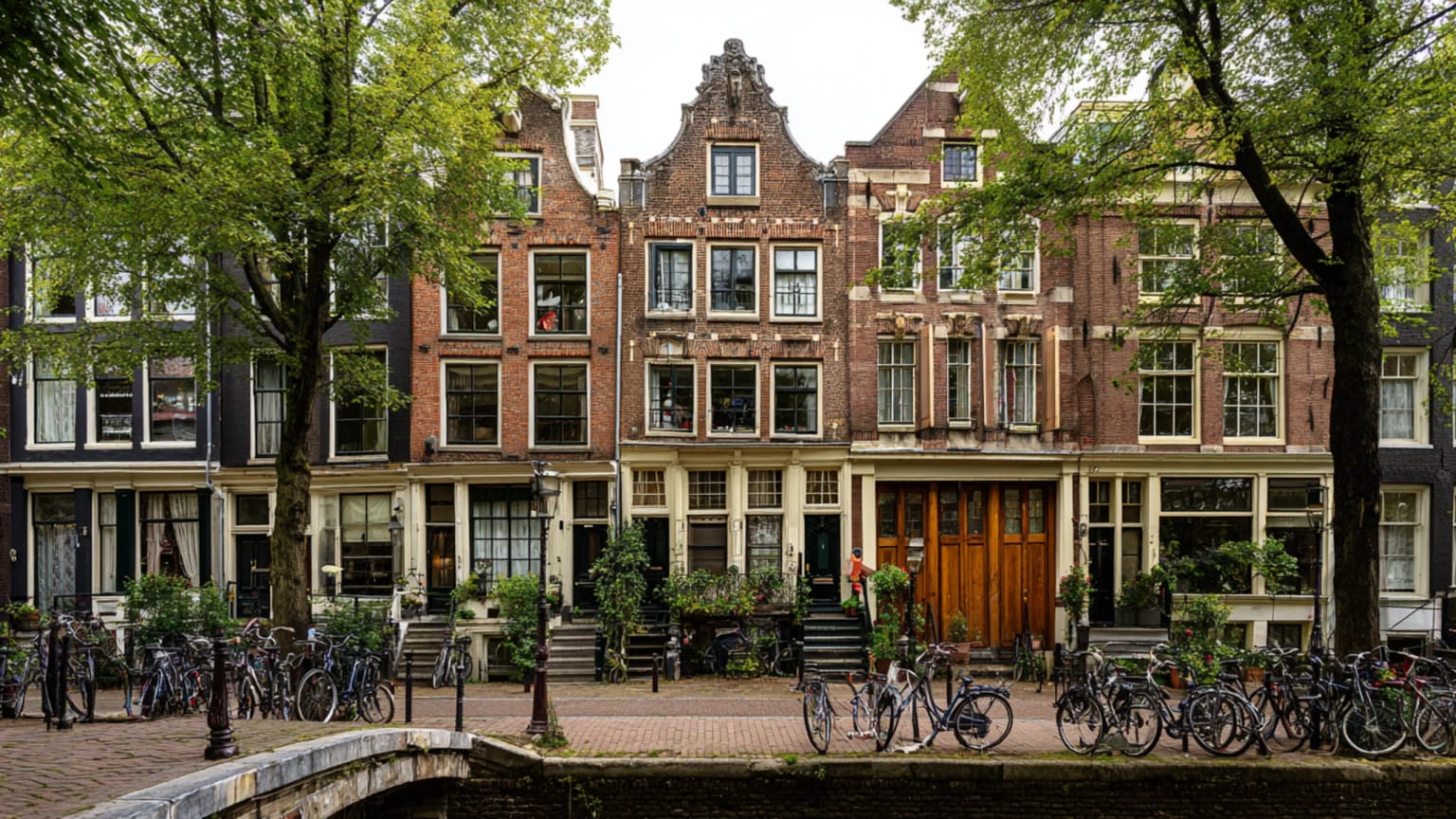
Amsterdam ranks 10th in The Living City Review 2026 with an adjusted score of 76.5. It remains one of Europe’s finest cities for daily life, but housing scarcity and tourism pressure have turned beauty into a harder civic bargain.