
The Good City in Plain Clothes: Copenhagen and the Liveable City Index
Copenhagen does not win by spectacle. It wins because the daily contract between resident and city remains unusually intact.

Key Insights
Essential takeaways from this chronicle
Copenhagen ranks first in the Liveable City Index 2026 with a composite score of 86, outperforming cities that place higher in prestige-driven rankings because its lived urban fabric is unusually coherent.
Institute for Quality of Life / Happy City Hub — Happy City Index 2026Resonance Consultancy — 2026 World's Best Cities ReportPoint 1 of 4Its strongest marks are Everyday Mobility at 92 and Human Scale at 90, the clearest sign that Copenhagen works first as a city for movement at eye level rather than as an urban brand.
Point 2 of 4Copenhagen sits only 33rd in Resonance's global ranking but first in Happy City. Our method takes that split seriously: the city is less dazzling to tourists than it is dependable to residents.
Resonance Consultancy — 2026 World's Best Cities ReportInstitute for Quality of Life / Happy City Hub — Happy City Index 2026Point 3 of 4The shelter score of 80 is high but not saintly. The UN's regional affordability context helps, yet this index does not pretend Copenhagen is a cheap city for every household.
Point 4 of 4
The Good City in Plain Clothes: Copenhagen and the Liveable City Index
The light comes in sideways off the water. A cyclist in office shoes glides over a bridge with the mild concentration of someone commuting, not performing. A father steadies a cargo bike at a red light while a child inside it points at a canal boat. The buildings do not shout. They hold the street in a practiced, unheroic way: brick, windows, trees, shopfronts, the old urban grammar still spoken fluently.
That quiet competence is the whole argument.
Copenhagen ranks first in the UrbanStories Liveable City Index 2026 with a composite score of 86, placing it in our top Exemplary band. It also arrives with a revealing split in the public record: No. 1 in the Happy City Index on 6,954 points, but only No. 33 in Resonance's World's Best Cities report. In other words, it underperforms on glamour and overperforms on life. For our purposes, that is not a contradiction. It is almost the definition of success.
⸻
1. First place without fanfare
Copenhagen wins because almost nothing in its daily urban contract feels accidental. The city does not top our table by dominating every category in a theatrical way. It wins because the six scores lock together: Shelter 80, Human Scale 90, Civic Voice 89, Nature & Climate Comfort 84, Everyday Mobility 92, Conviviality 83. There is no glamorous weak point being compensated for by one spectacular advantage. The city is simply, across the board, very hard to live badly in.
That is the sort of strength prestige rankings routinely miss. Resonance is excellent at measuring global pull: visitor appeal, institutional heft, the magnetism of world-city scale. Copenhagen has some of that, but it is not London or New York. It does not live by monumentality, nor by the vanity of size. It feels almost modest in world-ranking terms, and the modesty costs it.
But when the lens shifts from "Where would the world like to spend a weekend?" to "Where can a resident move through the week with dignity?" the city climbs fast. The Happy City Index captures part of that by placing Copenhagen first. Our own method pushes the point further. A resident does not inhabit an airport ranking. A resident inhabits the walk to school, the trip to work, the bike lane that actually connects, the confidence that the public realm has not been surrendered to traffic.
That is why Copenhagen looks stronger the closer one stands to the pavement.
⸻
2. Shelter 80, Human Scale 90
A first-place city still has to clear the bluntest threshold: can ordinary people remain in it? Copenhagen's Shelter score of 80 is high because the broader Danish and northern European housing context still offers more security than the overheated metropolitan norm. The dataset is explicit about the limit of this claim: it uses regional affordability context and a lived-experience reading, not unpublished city-level rent measurements. That caveat matters. Copenhagen is not cheap in any naive sense, and anyone pretending otherwise is writing tourism copy, not urban analysis.
Still, the city earns 80 because the structure around housing remains more social, more regulated, and less nakedly extractive than in the cities it beats. The resident is not left alone with a global property market and a prayer. That does not eliminate pressure, but it changes the character of it.
The Human Scale score of 90 is easier to see with the naked eye. Copenhagen does not ask the citizen to behave like infrastructure. Streets are sized for crossing. Blocks are legible. Mid-rise fabric still defines much of the experience. Even where newer development enters the picture, the city usually remembers that a neighbourhood is something seen from five feet above the ground, not from an investor deck.
This is one reason Copenhagen can feel almost suspiciously calm to outsiders. It has refused the metropolitan habit of turning every successful district into a contest between luxury towers and defensive nostalgia. The city is dense enough to support urban life, but seldom so large in scale that the body feels excluded from the scene. In an age of overbuilt spectacle, that restraint counts for a great deal.
⸻
3. Civic Voice 89, Nature & Climate Comfort 84
The deeper achievement is institutional, not scenic. Copenhagen's Civic Voice score of 89 reflects a city in which public systems still carry a visible trace of public legitimacy. The dataset anchors this partly in the city's No. 1 Happy City placement and partly in the broader northern European context, where democratic trust and administrative competence remain stronger than in most urban regions. It is not a claim of utopia. It is a judgement that residents are more often treated as constituents than as inconvenience.
That distinction matters. The UN's 2025 SDG-11 report notes that only 19% of cities in the studied sample give citizens a strong voice in planning decisions. Against that background, Copenhagen stands out not because every resident wins every argument, but because the city still broadly behaves as if public life requires consent, negotiation and maintenance.
Its Nature & Climate Comfort score of 84 comes from a similar logic. Copenhagen is not naturally soft. The winters are dark, the wind can be sharp, and the north is no exempt province from climate risk. But the city works persistently to make elemental life urbanly bearable. Water is not only decoration; it is part of the lived environment. Parks and street trees are not luxury accessories; they are basic equipment. Blue-green infrastructure, waterfront access and a habit of designing with climate rather than against it all lift the score.
We should also say where the number stops. Eighty-four is not 94 because climate comfort is no longer something any city can simply possess. Even Copenhagen's ecological composure depends on continuous investment, and its housing pressure will grow harsher if climate migration and capital pressure continue to intensify. Good systems still live inside a damaged century.
⸻
4. Everyday Mobility 92, Conviviality 83
The highest score in Copenhagen's card is the most revealing one. At Everyday Mobility 92, the city approaches the ideal we were trying to reward: movement without coercion. You do not have to own a private machine to have a full adult life here. Cycling works not as lifestyle branding, but as transport. Trains, metro, buses and walking connect into a practical whole. The important thing is not that the city has bicycles in its photography. The important thing is that mobility feels normalized at the scale of the resident's day.
That normalization affects almost everything else. Time is redistributed. Noise falls. Children appear on streets where, in more car-led cities, only adults in protective shells would feel safe. Daily movement becomes less adversarial. It is difficult to exaggerate how much urban life improves when transport stops feeling like combat.
The Conviviality score of 83 is high, though notably lower than mobility and human scale. That, too, feels right. Copenhagen has restaurants, bars, waterfront summers, public bathing, design intelligence and a reliable culture of cafe life. But its pleasures are usually measured rather than feverish. It is not a city of continual sensory excess. It is a city of ease.
We take that as a strength, but not an absolute one. If the ranking were for theatrical urban intensity alone, Tokyo, Mexico City or Naples would run ahead. Copenhagen's 83 says something more specific: that the city offers enough delight, sociability and street life to feel generous, without needing to convert itself into an entertainment machine. The resident, again, benefits from the refusal.
⸻
5. Why we rank it first when Resonance ranks it 33rd
This is the sharpest divergence in the whole series, and it tells you exactly what our index is for. Resonance places Copenhagen at No. 33 because the city lacks some of the scale effects that global rankings favour. It is not a commanding air hub on the level of a mega-capital. It does not dominate museum counts, investor attention or tourism mythology in the way Paris, London or New York do.
Our table reverses that logic. Copenhagen reaches No. 1 because we deliberately give heavier weight to Shelter, Human Scale, Civic Voice and Everyday Mobility than to urban spectacle. Once those weights are applied, the city ceases to look like a pleasant secondary capital and starts to look like the most coherent answer to the central question: what kind of city best supports the ordinary resident?
This does not mean the famous rankings are wrong. It means they are answering a different question. If the question is which city concentrates prestige, capital and global visibility, Copenhagen will not finish first. If the question is which city most carefully preserves the terms of everyday urban life, it becomes very difficult to beat.
The split with Happy City is also instructive. Copenhagen's No. 1 there suggests that resident-centred indices already see what prestige tables overlook. UrbanStories pushes further by being openly normative. We are not merely reporting happiness or fame. We are making an argument about what a city owes the people who live in it.
⸻
6. Where our own index may be too generous
Copenhagen is first, but first place is not absolution. If our scorecard is vulnerable anywhere, it may be in the shelter number. Eighty acknowledges real strength, but even that may look charitable to residents feeling the bite of a tightening housing market. The dataset itself warns against false precision here. It does not claim a city-specific affordability measure, and neither should this essay. Copenhagen remains expensive enough that success can shade into exclusivity faster than admirers admit.
There is a second possible generosity in Nature & Climate Comfort 84. The public realm is excellent and the environmental competence is real, but comfort is not evenly distributed across seasons, incomes or districts. Northern composure can be romanticized from abroad. So can cycling. So can social trust.
On the other side, one could argue we are slightly harsh on Conviviality 83. In summer especially, Copenhagen can feel more open, sensuous and public than the number suggests. Yet we kept the score below its mobility and civic marks because pleasure here still arrives in a restrained register. The city persuades rather than seduces.
That, finally, may be why it belongs at the top. Copenhagen's greatness is not ecstatic. It is constitutional. It lies in the rare sensation that the city has remembered what it is for.
Sources & further reading
Continue Reading

The View from Below: How London Mistook Skyscrapers for Density
London spent twenty years building upward in the name of the compact city. From the pavements of Shoreditch the arithmetic looks different: the tower privatises the panorama and socialises the silhouette.
The Los Angeles That Almost Learned to Walk
In 1930, a regional parks plan and an electric rail network could have made Los Angeles a polycentric, walkable, tram-linked metropolis. The city commissioned the plan, then put it in a drawer. This is the anatomy of a choice, not a fate.
Canals Under Pressure: Amsterdam and the Living City Review
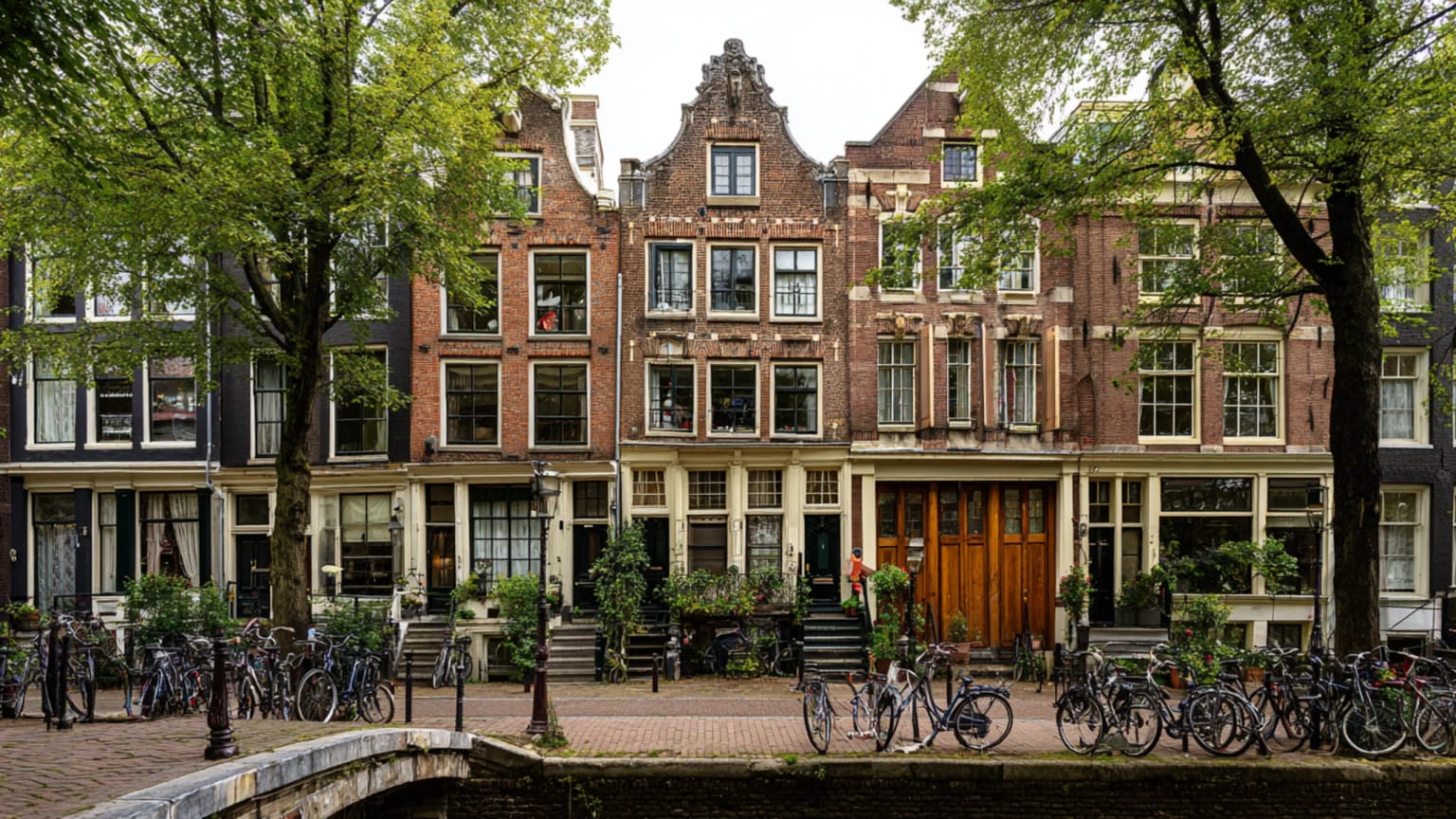
Amsterdam ranks 10th in The Living City Review 2026 with an adjusted score of 76.5. It remains one of Europe’s finest cities for daily life, but housing scarcity and tourism pressure have turned beauty into a harder civic bargain.