
The Housing Republic: Vienna and the Liveable City Index
Vienna does not merely manage growth. It socializes it, disciplines it, and gives it a street form people can actually live inside.

Key Insights
Essential takeaways from this chronicle
Vienna finishes second in the Liveable City Index 2026 with a composite score of 84, driven above all by the strongest shelter performance in the entire table.
Institute for Quality of Life / Happy City Hub — Happy City Index 2026UN-DESA — Sustainable Development Goals Report 2025 (SDG 11)Point 1 of 4Its Shelter score of 87 is the highest in the index, consistent with the city's widely studied social-housing model and the UN's use of Vienna as a housing case study.
Point 2 of 4Vienna is only 27th in Resonance and 33rd in Happy City, yet it rises to No. 2 for us because the fundamentals of daily life matter more than metropolitan glamour.
Resonance Consultancy — 2026 World's Best Cities ReportInstitute for Quality of Life / Happy City Hub — Happy City Index 2026Point 3 of 4Human Scale at 84, Civic Voice at 86 and Everyday Mobility at 83 show that Vienna's housing success is not an isolated policy trick but part of a broader public urban system.
Point 4 of 4
The Housing Republic: Vienna and the Liveable City Index
Along the broad Viennese street, apartment blocks hold their line with unusual confidence. Not luxury towers, not nostalgic cottages, but the durable middle register of the European city: facades that know how to face a boulevard, courtyards hidden behind them, shops at the edge of the pavement, enough density to support civic life without dissolving the citizen inside it. Vienna can seem almost too composed at first, as though history itself had been placed under municipal management.
In one sense, it has.
Vienna ranks second in the UrbanStories Liveable City Index 2026 with a composite score of 84, in the Exemplary band. Its component scores are among the steadiest in the dataset: Shelter 87, Human Scale 84, Civic Voice 86, Nature & Climate Comfort 81, Everyday Mobility 83, Conviviality 78. Most important is the first of those numbers. Vienna posts the highest shelter score in the entire index, and it does so for a reason other cities have spent decades refusing to learn: housing is too important to leave entirely to the market.
⸻
1. The city that treated housing as infrastructure
Vienna's place near the top begins with a political choice, not a skyline. The city is famous in housing circles for good reason. Roughly half its residents live in some form of social or limited-profit housing, and the result is not just a welfare niche for the poor. It is a metropolitan structure that disciplines the private market by existing at scale. In our index, that earns Vienna a Shelter score of 87, the strongest mark in the series.
The dataset states plainly why. Vienna's Happy City rank of 33 and Resonance rank of 27 make it broadly strong, but the decisive lift comes from the UN source, which explicitly names Vienna as a social-housing case study. We take that seriously. The city does not merely talk about affordability as a moral aspiration. It has built institutions capable of acting on it over time.
This is where Vienna differs from cities that discover housing policy only after the crisis becomes unignorable. The question is not how to patch scarcity at the margins. The question is how to structure urban growth so that scarcity is never allowed to become sovereign.
That does not mean Vienna is untouched by contemporary pressures. Construction costs rise. Demand rises. European capitals do not float above the laws of capital. But compared with the Anglo-American pattern of chronic exposure, Vienna still offers a thicker layer of protection between the resident and the speculative city. In a lived-experience ranking, that matters more than any number of signature buildings.
⸻
2. Shelter 87, Human Scale 84
The housing model would not matter as much if the city were physically miserable. It is not. Vienna's Human Scale score of 84 reflects the fact that its social achievement is housed in a convincing urban form. The city is not dominated by detached-house sprawl, nor by a skyline of isolated towers. It works largely in the mid-rise register that UrbanStories returns to again and again: dense enough to support shops, schools, trams and corner life; low enough that the street still feels like a civic room rather than a leftover service corridor.
This is why Vienna's housing story is so important beyond Austria. The lesson is not merely that the city built many subsidized homes. It is that it built them as city, not as administrative residue. Courtyards, perimeter blocks, transit-rich districts, mixed neighbourhoods: these are spatial decisions as much as social ones.
An 84 rather than a 90 also acknowledges the city's limits. Vienna has grand boulevards and monumental spaces that can feel more imperial than intimate. Some newer growth areas work better than others. Human scale here is strong, not perfect. But it is anchored by a physical continuity too many cities have broken.
The coupling of 87 and 84 is the real story. Housing policy without urban form can produce managed bleakness. Urban form without housing policy can produce beautiful exclusion. Vienna's distinction lies in bringing the two together. The city still seems to understand that architecture, tenure and transit are one argument, not three separate departments.
⸻
3. Civic Voice 86, Nature & Climate Comfort 81, Everyday Mobility 83
A good housing city also needs a functioning public culture around that housing. Vienna's Civic Voice score of 86 suggests a city where institutions remain broadly legible and residents are still treated as part of the urban equation. That is not the same thing as endless participatory romance. Vienna can be procedural. It can be bureaucratic. But bureaucracy, in the best European sense, can also be a form of public seriousness.
The UN's 2025 SDG-11 report is useful context here. When only 19% of cities in the studied sample give citizens a strong voice in planning, a city with durable public capacity and a long social-housing tradition begins to look exceptional almost by default. Vienna has not escaped conflict. It has, more often than most, kept conflict inside institutions rather than letting it harden into abandonment.
Its Nature & Climate Comfort score of 81 is similarly solid without slipping into fantasy. Vienna benefits from substantial green space, a river landscape, parks that function as real relief, and a public realm that has not treated shade and water as decorative afterthoughts. Yet the score stops at 81 because climate comfort in central Europe is becoming less stable. Summers are hotter. Heat is more socially uneven than postcard images suggest.
The Everyday Mobility score of 83 reflects a city where tram, rail, walking and cycling still form a believable daily system. Vienna does not need to perform innovation theatre here. The resident can simply get around. That fact alone now feels radical in a world full of transport policy whose main output is renderings. The city's mobility is not as frictionless as Copenhagen's, hence the lower number, but it remains genuinely resident-centred.
⸻
4. Conviviality 78, and why the city feels richer than the number
Vienna's lowest score is Conviviality at 78, and the number is both fair and slightly misleading. Fair, because Vienna is not a city of incessant urban voltage. It is cultivated rather than feverish. It offers cafes, public culture, music, markets, baths, museums and a deep social intelligence about how streets are inhabited, but the atmosphere is rarely manic.
Misleading, because a city does not need to be loud to be convivial. Vienna's sociability is often built into duration rather than intensity: the long coffee, the public bench, the tram stop that is not hostile, the courtyard where life can accumulate without buying a ticket. This is one of the understated virtues of a strong welfare city. Pleasure need not always be commercialized to be available.
We nonetheless kept the score below the rest because our conviviality criterion is deliberately modest and comparative. Tokyo, Barcelona or Naples deliver a denser charge of urban stimulation. Vienna offers something gentler: a city in which culture sits close to daily life rather than hovering above it as an elite performance.
That may be why the city can seem oddly under-celebrated in international chatter. It is easier to market frenzy than steadiness. Easier to brand a skyline than a functioning rent system. Easier to count Michelin stars than the dignity of not being displaced.
⸻
5. Why we rank Vienna second when the famous tables do not
Vienna is a near-perfect example of our methodological wager. Resonance places it 27th. Happy City places it 33rd on 6,461 points. We place it 2nd. The difference is not clerical; it is philosophical.
Prestige rankings tend to reward magnitude, visitor desire and global salience. Vienna is globally admired, but it is not constantly over-performing on those terms. It can seem decorous, even old-fashioned, beside the louder capitals of capital. Yet once the weight shifts toward Shelter, Human Scale, Civic Voice and Everyday Mobility, Vienna's advantages become structural.
This is especially true in a decade defined by housing crisis. A city that still protects a large share of its residents from housing volatility should rise dramatically in any honest liveability table. If it does not, the table is concealing its priorities.
Our divergence from the famous rankings is therefore not a correction of error so much as a declaration of values. We are not asking which city has the strongest brand halo. We are asking which city has built the strongest ordinary life. Vienna's answer is unusually persuasive because it is institutional rather than mood-based. The city has made durability visible.
⸻
6. Where we may be too generous, and where we may be too harsh
No housing myth should go uninspected, including the good ones. Vienna's Shelter 87 is deserved, but it can still be too flattering if read carelessly. The dataset's own warning matters here: these are synthetic editorial scores, not direct city-level sub-measurements. Even a strong social-housing system can leave some residents facing long waits, constrained choice or new affordability pressure. The score describes relative metropolitan strength, not a universal resident experience.
We may also be a little generous on Civic Voice 86 if one equates administrative competence with democratic permeability. Those are not the same thing. A city can govern well and still govern somewhat from above. Vienna's institutions are serious, but seriousness is not identical with openness.
Conversely, one could argue we are slightly harsh on Conviviality 78. The city can feel more socially abundant than the number implies, especially if one values public culture that does not need to advertise itself. But we kept the score restrained because Vienna's pleasures are rarely chaotic or abundant in the way nightlife-heavy cities can be.
That tension is fitting. Vienna is not second because it is the most thrilling city on earth. It is second because it has done something more difficult: it has made urban civilization feel administratively possible.
Sources & further reading
Continue Reading
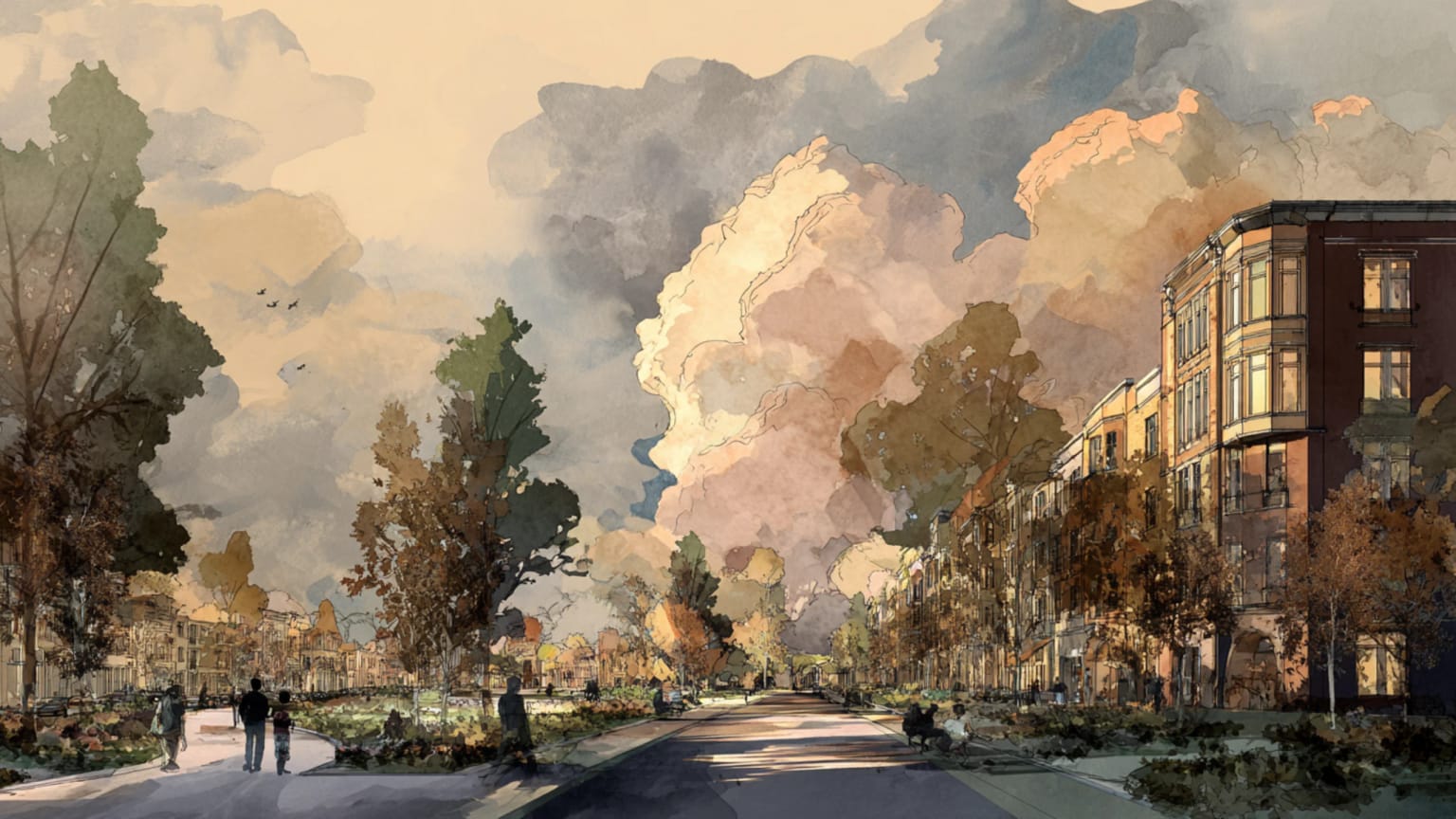
The View from Below: How London Mistook Skyscrapers for Density
London spent twenty years building upward in the name of the compact city. From the pavements of Shoreditch the arithmetic looks different: the tower privatises the panorama and socialises the silhouette.
The Los Angeles That Almost Learned to Walk
In 1930, a regional parks plan and an electric rail network could have made Los Angeles a polycentric, walkable, tram-linked metropolis. The city commissioned the plan, then put it in a drawer. This is the anatomy of a choice, not a fate.
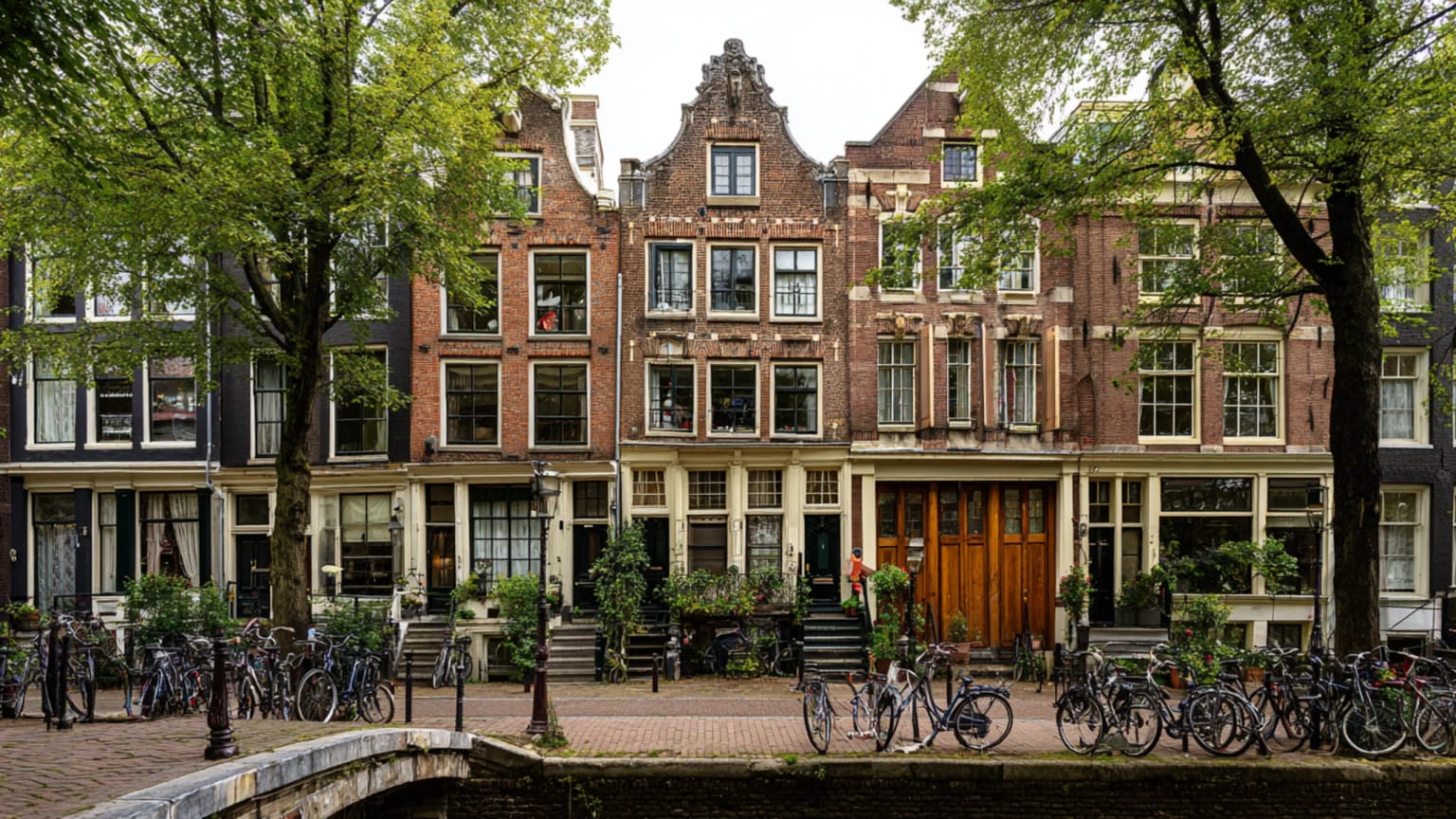
Canals Under Pressure: Amsterdam and the Living City Review
Amsterdam ranks 10th in The Living City Review 2026 with an adjusted score of 76.5. It remains one of Europe’s finest cities for daily life, but housing scarcity and tourism pressure have turned beauty into a harder civic bargain.