
The Living City Review 2026: A Human-Scale Ranking of the World's Great Cities
Most rankings measure cities as platforms — for capital, tourism, corporations, airports. We measure them as habitats. Which cities let an ordinary, engaged person actually live well?

Key Insights
Essential takeaways from this chronicle
The Living City Review evaluates cities as habitats, not platforms. Ten criteria over 100 points — daily life and human scale (14) and housing dignity (14) weighted highest, global usefulness (4) lowest — then shadow penalties for the ways a city betrays its residents.
Point 1 of 4A two-stage model: first a Great City Gate (civilizational depth, cultural production, migration magnetism, distinct urban form), then the living-quality score. We rank great cities as places to live — not small towns where life is merely easy.
Point 2 of 4Shadow penalties are the sharp edge: housing extraction (−8), inequality shadow (−8), climate negligence (−8), safety and exclusion (−7), car-dependency (−5). A city can be rich, famous and photogenic and still lose points for hollowing out ordinary life.
Point 3 of 4The model stands on its own. Scores apply our criteria to well-established facts about each city plus documented editorial judgment — never a re-weighting of other rankings, which appear here only as foils.
Point 4 of 4
The Living City Review 2026: A Human-Scale Ranking of the World's Great Cities
It is a daily negotiation between the body and the street — between rent and time, between shade and heat, between memory and permission. It is the walk to the tram, the price of lunch after wages, the patience of a bus route, the safety of a midnight street, the old man who can still cross the road, the child who can walk to school, the immigrant who can find a way in. The best city is not the one with the loudest myth. It is the one where ordinary days have room to become extraordinary.
Almost every famous ranking measures something else.
They measure cities as platforms — for capital, for tourism, for corporations, for talent, for airports and events and luxury property. Those are real forms of value, and the lists that track them are useful. But they answer a landlord's question, or a tourist's, or an investor's: where should money, attention or a weekend go? They do not answer the harder, more intimate one:
Where does a serious, curious, ordinary-but-engaged person actually live well — not merely consume the city, photograph it, monetize it, or survive it?
That is the question behind the Living City Review. It is not a best-city list, a happiest-city list, or a most-powerful-city list. It is a review of which of the world's great cities still work as habitats for a full human life.
⸻
1. Cities as habitats, not platforms
Most rankings overvalue the city as a stage on which powerful things happen. We evaluate the city as a place where a life is either made possible or slowly made impossible.
A city is good when it lets you form a life: walk, work, think, eat, raise children, grow old, meet strangers, disappear into a bookshop, reach water or trees, participate in politics, pay the rent, and still have enough energy left at night to be a citizen rather than merely a unit of productivity.
This changes what we measure and how much it counts. A magnificent airport matters far less than whether a nurse can afford to live within reach of the hospital. A skyline of investment towers counts for little if the neighbourhoods beneath them are being hollowed into short-stay rentals. Global prestige is not the same thing as a good Tuesday.
So the Review is built to be suspicious of glamour and attentive to the ordinary. It rewards the shade on a summer street, the tram that comes when promised, the social housing that keeps a teacher in the city, the square that belongs to everyone because it belongs to no one. And it penalises the quiet betrayals — the extraction, the sprawl, the inequality, the climate negligence — that a simple average score tends to hide.
⸻
2. The Great City Gate
There is a reason many quality-of-life indices are topped by small, wealthy, orderly towns. Life is easier there. But our project is not "where is life easiest?" It is a review of the world's great cities as habitats — the places with civilizational weight, cultural gravity, migration pull and urban complexity, tested against the question of whether they still return a good life to the people in them.
So a city enters the Review only if it passes a first gate. It must show at least four of:
- Civilizational depth — history, architecture, memory, cultural continuity.
- Global or regional influence — political, economic, intellectual or cultural weight.
- Urban complexity — dense, mixed neighbourhoods and layered social life.
- Cultural production — literature, music, food, universities, media, design.
- Migration magnetism — people arrive to reinvent themselves.
- Distinct urban form — a recognisable spatial character.
- Future relevance — the city is instructive about climate, governance, technology, inequality or design.
This gate is what lets the Review include New Orleans, Buenos Aires or Mexico City — cities that would never win a conventional livability table but are essential to any honest conversation about urban life. And it keeps the project from collapsing into a list of pleasant, forgettable suburbs.
⸻
3. Ten criteria for a life
Cities that pass the gate are scored on 100 points across ten criteria. The weights are the argument: everyday life first, then the systems that sustain it, then the civilization it carries, and only last its usefulness to the world.
| Criterion | Weight | The test it applies |
|---|---|---|
| Daily life and human scale | 14 | Can you live a rich Tuesday without a car? |
| Housing dignity and social access | 14 | Can a teacher, nurse or single parent still belong? |
| Climate resilience and ecological intelligence | 13 | Will this city still be livable in July 2035? |
| Health, safety and the social floor | 12 | When life goes wrong, does the city become cruel? |
| Civic competence and institutional trust | 10 | Can the city actually repair itself? |
| Work, learning and economic openness | 9 | Can newcomers build a life, or only serve one? |
| Culture, street life and everyday pleasure | 9 | Does it give pleasure without requiring luxury? |
| Beauty, memory and urban form | 8 | Does ordinary movement feel meaningful? |
| Freedom, pluralism and belonging | 7 | How many ways of being adult does the city allow? |
| Global usefulness without self-destruction | 4 | Does the world enrich the city, or consume it? |
Grouped, the weighting reads as a philosophy: everyday life, 40 points (human scale, housing, health); systems and resilience, 36 (ecology, governance, economy, global role); meaning and civilization, 24 (culture, beauty, freedom). That balance keeps the Review from becoming either a lifestyle magazine or a municipal dashboard. It gives us numbers, but leaves room for judgment.
⸻
4. The shadow penalties
The ten criteria produce a raw score. Then we subtract the shadows.
This is where the Review becomes sharper than a conventional index, because a city's average quality can conceal structural cruelty. A place can score well on beauty, culture and economy while quietly becoming unliveable for anyone not already protected by wealth. The penalties name those failures explicitly:
| Penalty | Max | When it applies |
|---|---|---|
| Housing extraction | −8 | Housing has become primarily a wealth-storage system |
| Inequality shadow | −8 | Citywide averages hide brutal neighbourhood gaps |
| Climate negligence | −8 | Known heat and flood risks are met with paving and denial |
| Safety and exclusion | −7 | Significant groups cannot use the city freely |
| Tourism hollowing | −6 | Neighbourhoods become short-stay consumption zones |
| Car-dependency | −5 | Ordinary life requires driving |
| Governance theatre | −5 | Plans, visions and branding exist; delivery does not |
| Cultural sterilization | −4 | Independent culture is priced or regulated out |
We publish both the raw score and the adjusted score, so you can see exactly where the penalty bit — and disagree with us precisely.
Then each city gets a label, an editorial signature that a number alone cannot carry: Gold Habitat, Brilliant but Wounded, Beautiful but Extracted, Efficient but Thin, Fragile Genius, Rising Living City, or Myth Over Life.
⸻
5. Standing on our own
One principle matters more than any single score: this model stands on its own.
The Living City Review is an original instrument. Its numbers are the result of applying our ten criteria to well-established facts about each city — rent burdens, transit share, air quality, homicide rates, tree canopy, life expectancy — together with documented editorial judgment about the things that resist measurement: beauty, belonging, the texture of a street. Every criterion in our dataset carries a short note on its basis and a flag for whether it rests on hard data or on judgment. Where a fact is genuinely uncertain, we say so rather than invent a decimal.
What the Review is not is a re-weighting of anyone else's ranking. The famous lists — the ones built around prosperity, prestige, visitor perception or institutional performance — appear in our writing only as foils: the questions we have chosen not to ask. We never take another list's verdict as an input. Measuring the world directly is the whole point. Borrowing a myth is not.
Its editorial DNA comes from three preoccupations we have carried for years: the lived urban experience — the body on the street; the conviction that infrastructure is political — that urban systems decide who gets housing, transit and opportunity; and the insistence that ecology is not decoration but a condition of civic life — the city as habitat, watershed and heat machine.
⸻
6. How to read the Review
Each city in the Review gets a compact, literary-critical review, not just a score: a one-sentence verdict, the full scorecard, who the city is best for, its singular genius, its structural wound, a neighbourhood test (where we would actually live, walk, read, raise a child), a 2035 trajectory, and a final line — the city reduced to a civic image.
Because in the end, the score is where the argument starts, not where it ends.
⸻
7. The 2026 table
Thirty-six great cities, scored on the ten criteria and adjusted by the shadows. The full dataset — every criterion, basis note and penalty — is published with this series.
| Rank | City | Adjusted | Label |
|---|---|---|---|
| 1 | Vienna | 87.0 | Gold Habitat |
| 2 | Copenhagen | 86.0 | Gold Habitat |
| 3 | Helsinki | 85.0 | Gold Habitat |
| 4 | Tokyo | 84.0 | Gold Habitat |
| 5 | Zurich | 82.0 | Gold Habitat |
| 6 | Oslo | 81.5 | Gold Habitat |
| 7 | Stockholm | 80.0 | Gold Habitat |
| 8 | Singapore | 78.0 | Efficient but Thin |
| 9 | Bilbao | 77.0 | Gold Habitat |
| 10 | Amsterdam | 76.5 | Beautiful but Extracted |
| 11 | Taipei | 76.0 | Gold Habitat |
| 12 | Madrid | 74.5 | Brilliant but Wounded |
| 13 | Montréal | 74.0 | Gold Habitat |
| 14 | Paris | 72.0 | Gold Habitat |
| 15 | Berlin | 72.0 | Brilliant but Wounded |
| 16 | Milan | 70.5 | Brilliant but Wounded |
| 17 | Barcelona | 69.0 | Beautiful but Extracted |
| 18 | Seoul | 68.5 | Rising Living City |
| 19 | London | 65.0 | Beautiful but Extracted |
| 20 | Buenos Aires | 61.5 | Fragile Genius |
The tail of the table is as revealing as its head. New York (23rd, Brilliant but Wounded), San Francisco (31st), Hong Kong (32nd) and — at the very bottom — Miami, Los Angeles and Dubai (34th–36th, all Myth Over Life) are not bad places to visit or make money. They are places where the raw score is dragged down hard by the shadows: housing extraction, inequality, car-dependency, climate negligence. Their fame exceeds their lived quality. That gap is precisely what this Review exists to name.
⸻
8. What comes next
Over the coming weeks we publish the flagship reviews — each a full reckoning in eight parts. We begin with the cities that best illuminate the method: Vienna and Copenhagen, the Gold Habitats; Tokyo, the great affordable metropolis; Singapore, efficient but thin; Paris and Amsterdam, brilliant cities under extraction; London and San Francisco, the wounded giants; Dubai, the myth; and Medellín, the rising city that rebuilt itself.
A city is great when its greatness descends into ordinary days. That is the only ranking worth reading — and the only one we are interested in making.
About this series
The Living City Review is an ongoing UrbanStories project. The launch covers a calibration set of 36 great cities and a first wave of in-depth reviews; the table and methodology will be refined in public as the series grows. The complete scored dataset — every criterion, basis note and penalty — is published alongside the series so readers can check our work and argue with our judgments.
Continue Reading
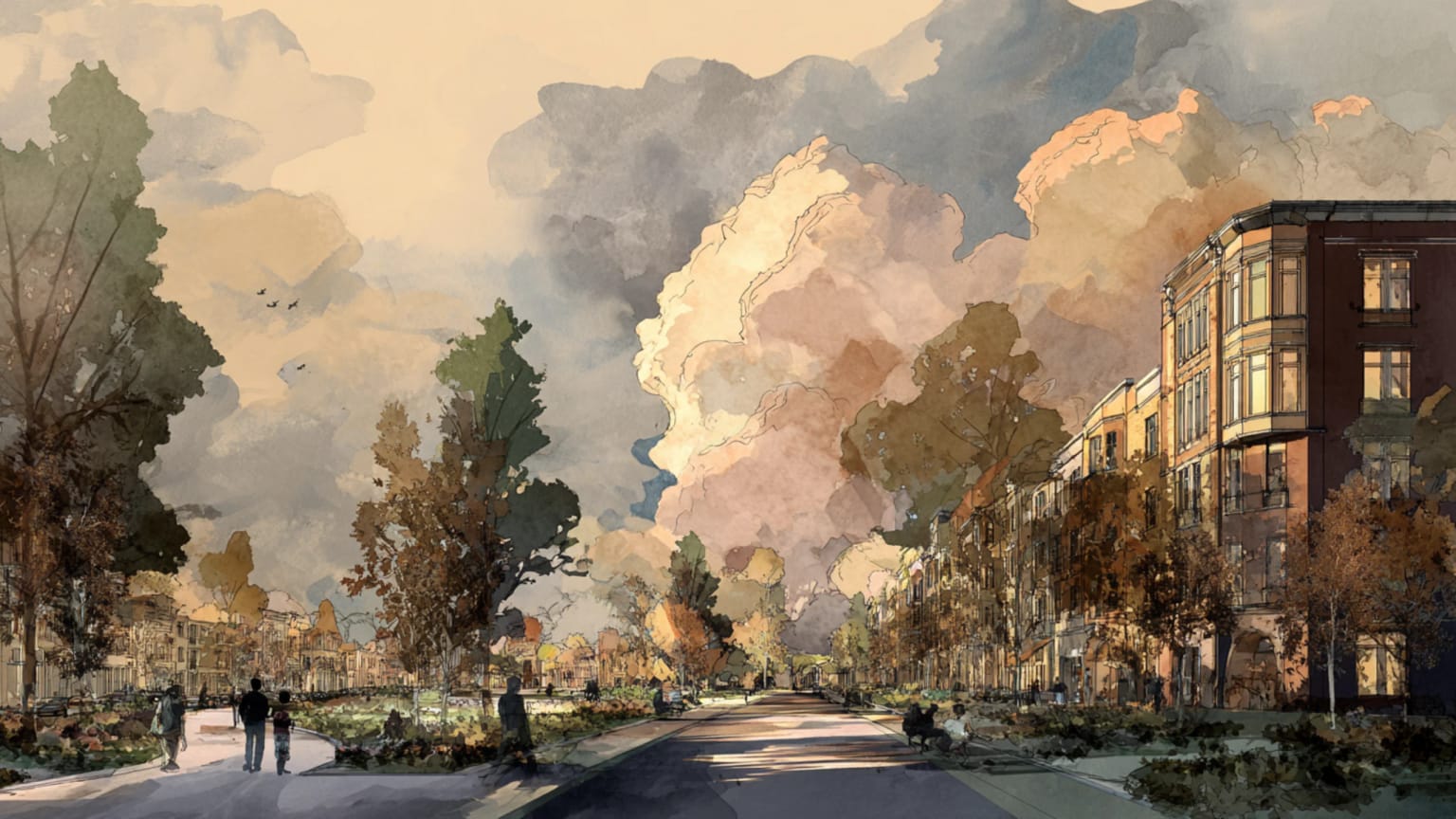
The View from Below: How London Mistook Skyscrapers for Density
London spent twenty years building upward in the name of the compact city. From the pavements of Shoreditch the arithmetic looks different: the tower privatises the panorama and socialises the silhouette.
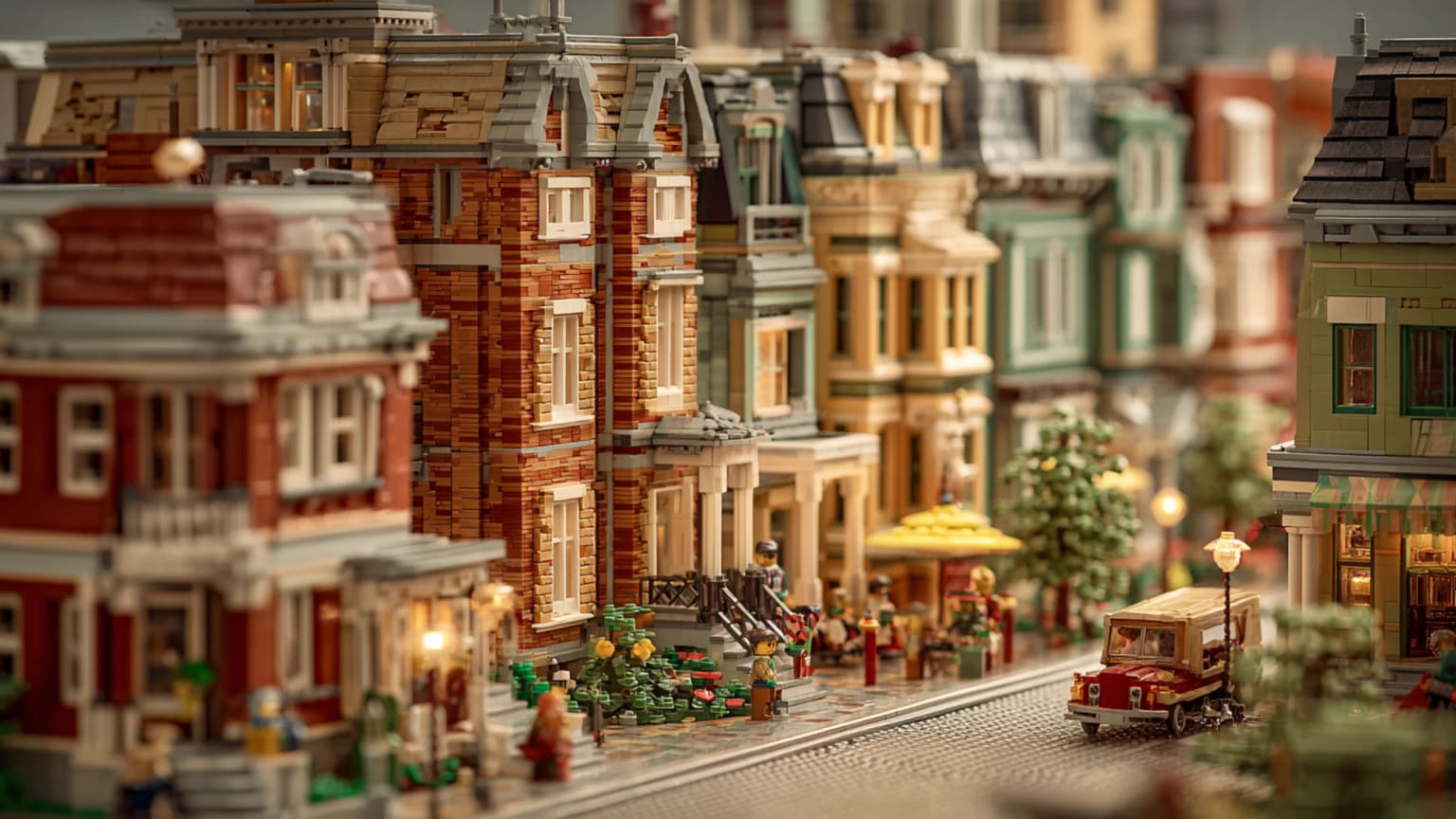
The Los Angeles That Almost Learned to Walk
In 1930, a regional parks plan and an electric rail network could have made Los Angeles a polycentric, walkable, tram-linked metropolis. The city commissioned the plan, then put it in a drawer. This is the anatomy of a choice, not a fate.
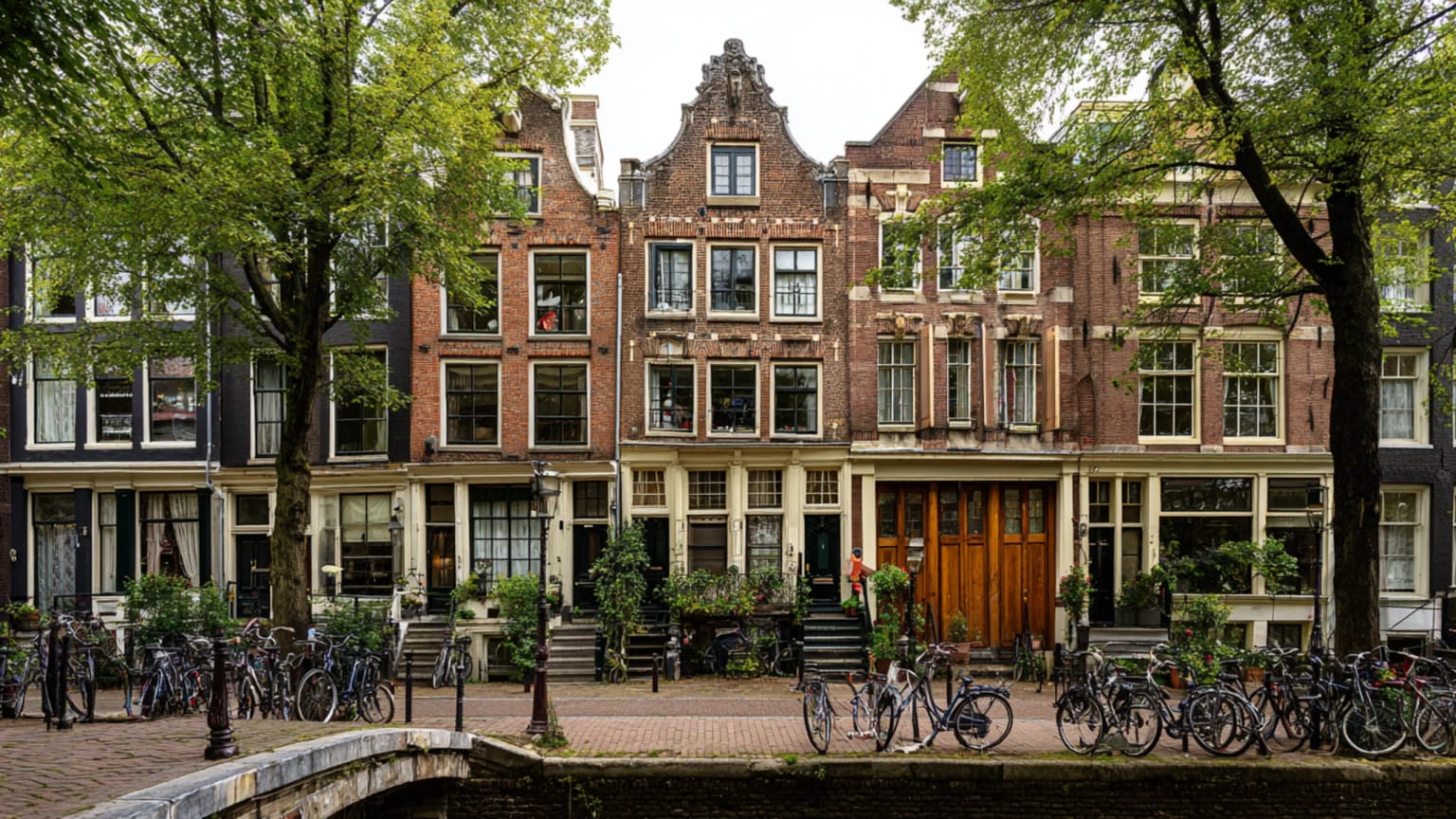
Canals Under Pressure: Amsterdam and the Living City Review
Amsterdam ranks 10th in The Living City Review 2026 with an adjusted score of 76.5. It remains one of Europe’s finest cities for daily life, but housing scarcity and tourism pressure have turned beauty into a harder civic bargain.