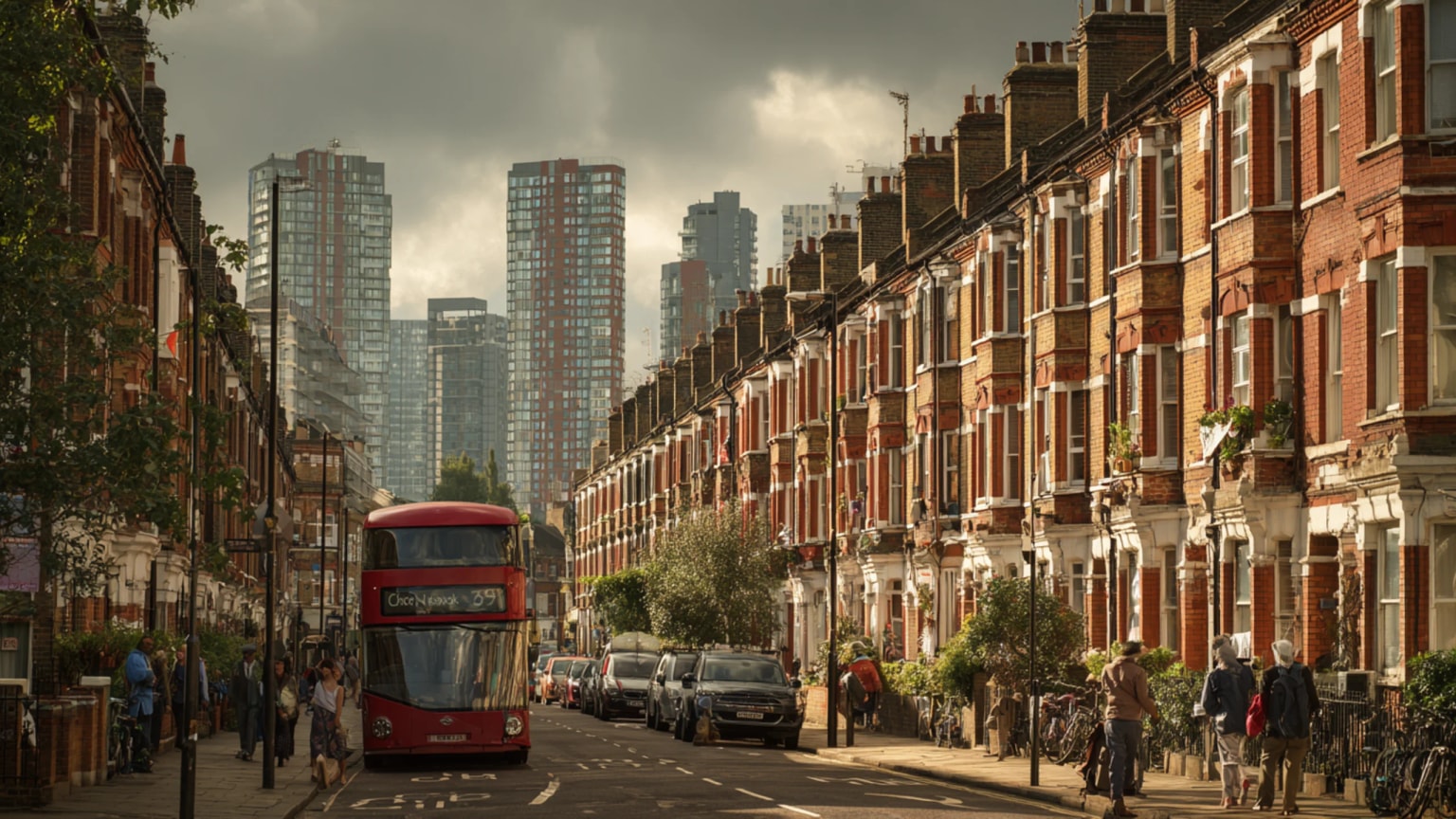
Grandeur and Rent: London and the Living City Review
London still gives back immense urban life, then sends the bill. A great city remains great here, but not gently.

Key Insights
Essential takeaways from this chronicle
London ranks 19th of 36 with an adjusted score of 65.0 and the label Beautiful but Extracted: still immense in lived richness, brutally costly in the terms of staying.
Point 1 of 4Culture scores 9 out of 9 and global usefulness 4 out of 4, confirming that London remains one of the world’s deepest cities for work, learning, and public life.
Point 2 of 4Housing dignity lands at just 5.5 out of 14, then loses another -6 for housing extraction because global capital and scarcity have turned too much of the housing stock into a wealth-storage system.
Point 3 of 4Further penalties for inequality shadow (-4) and tourism hollowing (-2) explain why so much brilliance can still produce only a 65.0.
Point 4 of 4
Grandeur and Rent: London and the Living City Review
You emerge from a station into a neighborhood that already feels like a minor civilization: Georgian terraces, a Turkish bakery, three languages at the bus stop, a small park full of toddlers and old men, a library doing its quiet work, a pub carrying two centuries badly but gamely. Then you turn a corner and remember the invoice. Everything that makes London feel inexhaustible is now entangled with a housing market that behaves like an extraction machine.
This is why London is hard to judge lazily. Prestige lists still crown it because prestige is precisely what London produces in industrial quantities: jobs, universities, flights, finance, culture, access, influence. But we are not asking whether London matters. We are asking whether London, at the scale of a life, remains a habitat rather than a magnificent burden.
⸻
1. The verdict in one sentence
London still returns immense daily urban richness, but the housing market now taxes belonging too heavily to call it a settled habitat.
⸻
2. Scorecard
| Criterion | Score |
|---|---|
| Daily life and human scale | 12 / 14 |
| Housing dignity and social access | 5.5 / 14 |
| Climate resilience and ecological intelligence | 8.5 / 13 |
| Health, safety and social floor | 8.5 / 12 |
| Civic competence and institutional trust | 7 / 10 |
| Work, learning and economic openness | 8.5 / 9 |
| Culture, street life and everyday pleasure | 9 / 9 |
| Beauty, memory and urban form | 7.5 / 8 |
| Freedom, pluralism and belonging | 6.5 / 7 |
| Global usefulness without self-destruction | 4 / 4 |
Raw score: 77 / 100
Shadow penalties applied
Housing extraction: -6— Global capital and scarcity have turned too much housing into a wealth-storage system.Inequality shadow: -4— Strong citywide averages mask steep borough-level gaps in health, income and life chances.Tourism hollowing: -2— Parts of the center increasingly function as short-stay consumption zones rather than resident neighborhoods.
Adjusted score: 65 / 100
Rank: 19 / 36
Label: Beautiful but Extracted
The shape is unmistakable. London's greatness is not in dispute. Its failure is that greatness no longer lands evenly on ordinary residents.
⸻
3. Best for
London is best for readers, immigrants, artists with stamina, ambitious young professionals who want the largest possible field of opportunity, and anyone who believes culture is not one district or one institution but an entire urban weather system. It is also one of the strongest cities in the world for those who need libraries, universities, museums, and strangers in order to think clearly.
It is worse for anyone seeking ease, cheap entry, or the assurance that hard work will eventually translate into spatial stability. London still offers a thousand ways to become yourself. It simply charges too much rent for the privilege.
⸻
4. The city's genius
London's genius is abundance without sameness.
The dataset gives it a perfect 9 out of 9 for culture, street life, and everyday pleasure, and there is no serious reason to argue. Few cities match the range of museums, libraries, markets, theatres, music venues, corner cafés, neighborhood restaurants, public rituals, and improvised subcultures available across price levels. London's cultural depth is not a luxury layer sitting above the city; it is woven into districts, routes, and routines. A person of modest means can still spend a whole day in London being enlarged by it.
That abundance is supported by another real strength: daily life. London scores 12 out of 14 because dense mixed neighborhoods, extensive rail and bus coverage, and relatively low inner-city car dependence still make it possible to live richly without structuring everything around a vehicle. The city remains one of the great arguments for transit urbanism in the Anglophone world. You can inhabit different scales of London in a single day: the corner shop, the high street, the park, the museum, the regional rail line, the world.
It is also one of the rare cities where global usefulness genuinely deepens local life before it starts to damage it. The 4 out of 4 in global usefulness is earned. Air connections, rail, diplomacy, finance, publishing, academia, media, and immigrant networks make London an arrival city for talent and ambition from almost everywhere. That matters. A city becomes spiritually provincial when nothing new enters it. London still absorbs and reworks the world.
The beauty score of 7.5 out of 8 helps explain why even tired Londoners speak of the place with a kind of battered loyalty. The river, the squares, the terraces, the parks, the historic layering across ordinary districts: these make movement meaningful well beyond the postcard core. London is one of the few cities where a bus ride can still feel like an education.
⸻
5. The city's wound
The wound is not cost in the abstract. It is the conversion of shelter into sorting mechanism.
Housing scores just 5.5 out of 14, and that should end the complacent conversation immediately. Rent and purchase costs are punishing for ordinary earners. Temporary accommodation is high. Social-rental institutions still provide some access, which is why the score is not lower, but the broad civic meaning of housing has shifted. To live in London for a long time now often requires inheritance, partnership, luck, compromise so severe it becomes a form of exhaustion, or a willingness to give the city everything and receive instability in return.
Hence the -6 housing-extraction penalty. This is not merely a complaint that London is expensive. Many great cities are expensive. London is being marked down because too much of its housing stock has become a wealth-storage system attached to a real city where actual people are still trying to live. The civic insult lies in the mismatch: one of the world's deepest cities increasingly denies continuity to the very classes of people who make it culturally alive.
Then there is the inequality shadow, minus 4. London can impress a visiting executive and fail a child in a poorer borough within the same municipal mythology. Strong averages hide steep differences in health, income, service quality, and life chances. This is why London's 8.5 for health and 7 for governance do not translate into security of feeling. The systems are strong enough to keep the city functioning, not strong enough to erase the borough map of advantage.
The tourism penalty, at minus 2, is smaller but still deserved. Parts of central London now work as short-stay consumption zones. That does not destroy the whole city; London is far too large and too district-rich for that. But it does mean some of its most symbolic areas are becoming less urban in the intimate sense.
⸻
6. Neighbourhood test
If we were choosing a London life rather than a London fantasy, we would look toward Stoke Newington, Walthamstow, Blackheath, Telegraph Hill, and selected parts of Bloomsbury and Islington.
Stoke Newington still offers one of London's best combinations of street life, libraries, parks, buses, schools, and manageable scale. Walthamstow has become a serious answer to the question of whether outer districts can still feel urban rather than resigned; it keeps a market-town energy inside the larger machinery of the metropolis. Blackheath and Telegraph Hill provide calmer domestic versions of London without full retreat from the city. Bloomsbury and Islington, though costlier, still show what London can be when beauty, institutions, and walkability align.
Where would we actually raise a child? Somewhere with a park, a useful rail or Overground connection, a decent high street, and a chance of routine dignity. That pushes us slightly away from the most mythic addresses and toward neighborhoods where London is still lived rather than merely admired.
There is a useful honesty to add here. Our score may be a touch harsh if one judges London by the density of its public institutions and the sheer democratic abundance still available for cheap or free. It may be too generous if one judges it by what a nurse, teacher, or single parent now has to do to remain inside it. The city contains both truths, and the gap between them is the story.
⸻
7. 2035 trajectory
The trajectory is bifurcating.
London is too institutionally durable to collapse into melodrama. A governance score of 7 and an ecology score of 8.5 suggest a city that can still plan, still deliver major transport improvements, still maintain large parks, and still think in metropolitan rather than merely municipal terms. The social and cultural infrastructure remains formidable. If the question were whether London will still matter in 2035, the answer would be embarrassingly obvious.
But if the question is whether it will become easier to inhabit as a non-elite resident, the answer is much less kind. Without a real rebalancing of housing access and a stronger social floor, London will continue to split between those who convert global opportunity into stable residence and those who experience the city as an education in contingency. The rich London and the vivid London are not yet separate cities. They could become so.
That is why London lands below cities that are less globally magnetic but more civically humane. We do not deny its greatness. We deny that greatness is enough. A city that still produces enormous life while making permanence feel provisional has earned admiration, not absolution.
⸻
8. Final line
London is a lit high street after rain: crowded, polyglot, inexhaustible, and priced as if wonder were a taxable resource.
Continue Reading

The View from Below: How London Mistook Skyscrapers for Density
London spent twenty years building upward in the name of the compact city. From the pavements of Shoreditch the arithmetic looks different: the tower privatises the panorama and socialises the silhouette.
The Los Angeles That Almost Learned to Walk
In 1930, a regional parks plan and an electric rail network could have made Los Angeles a polycentric, walkable, tram-linked metropolis. The city commissioned the plan, then put it in a drawer. This is the anatomy of a choice, not a fate.
Canals Under Pressure: Amsterdam and the Living City Review
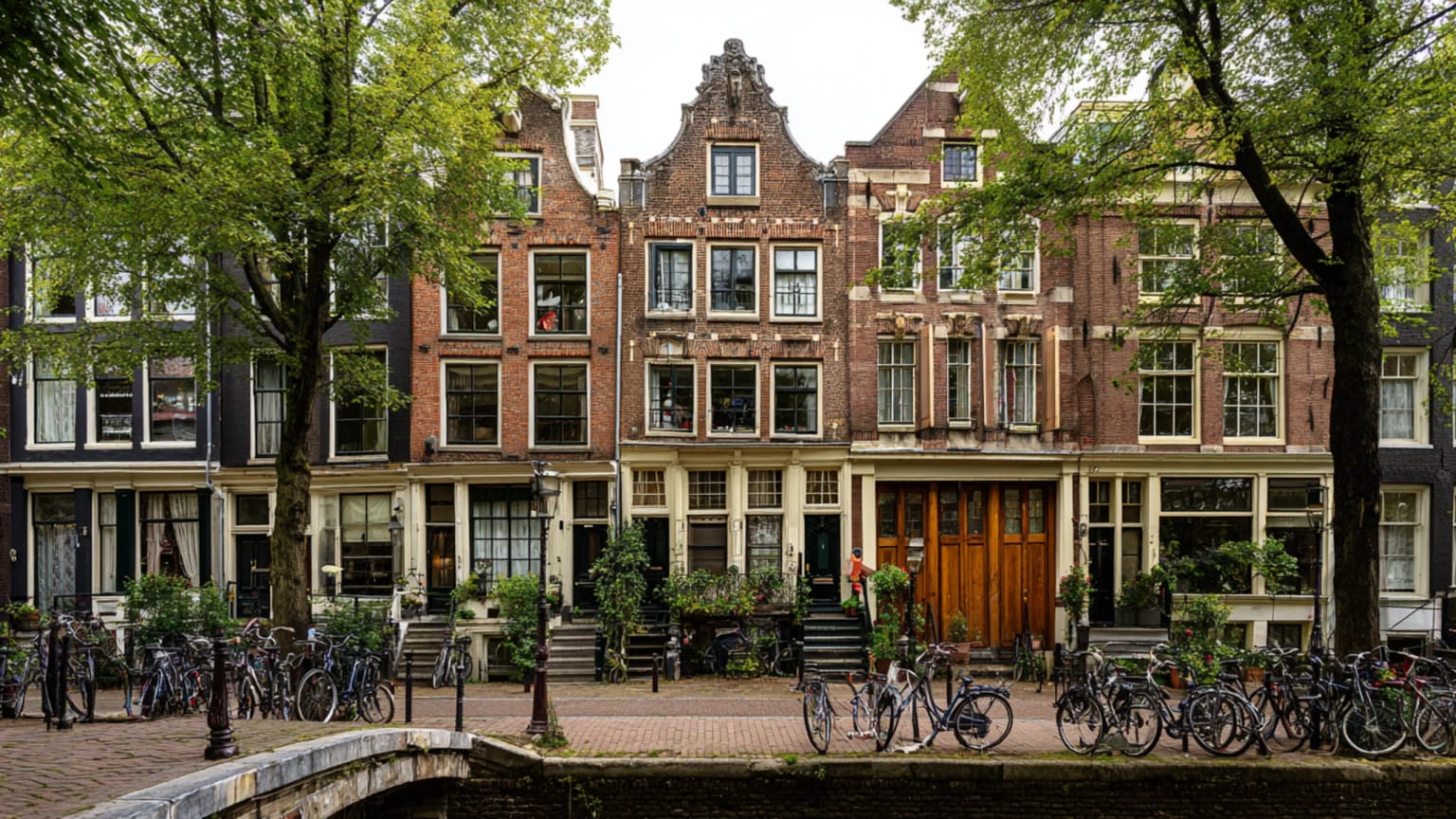
Amsterdam ranks 10th in The Living City Review 2026 with an adjusted score of 76.5. It remains one of Europe’s finest cities for daily life, but housing scarcity and tourism pressure have turned beauty into a harder civic bargain.