The Beautiful Pressure: Paris and the Living City Review
Paris still lets beauty descend into the weekday. It also charges too much for entry into that privilege.

Key Insights
Essential takeaways from this chronicle
Paris ranks 14th with an adjusted score of 72.0 and the label Gold Habitat: still a true great habitat, but one under visible pressure from prestige demand and tourism.
Point 1 of 4Daily life scores 13 out of 14, culture 9 out of 9 and beauty 8 out of 8, confirming that few cities let transit, ritual and form descend so fully into ordinary movement.
Point 2 of 4Housing sits at 7 out of 14, then takes a further -4.0 housing extraction penalty because scarcity and prestige still push ordinary households outward.
Point 3 of 4Tourism hollowing costs -3.0 and inequality shadow -2.0, showing that the famous city and the lived metropolis are no longer comfortably the same thing.
Point 4 of 4
The Beautiful Pressure: Paris and the Living City Review
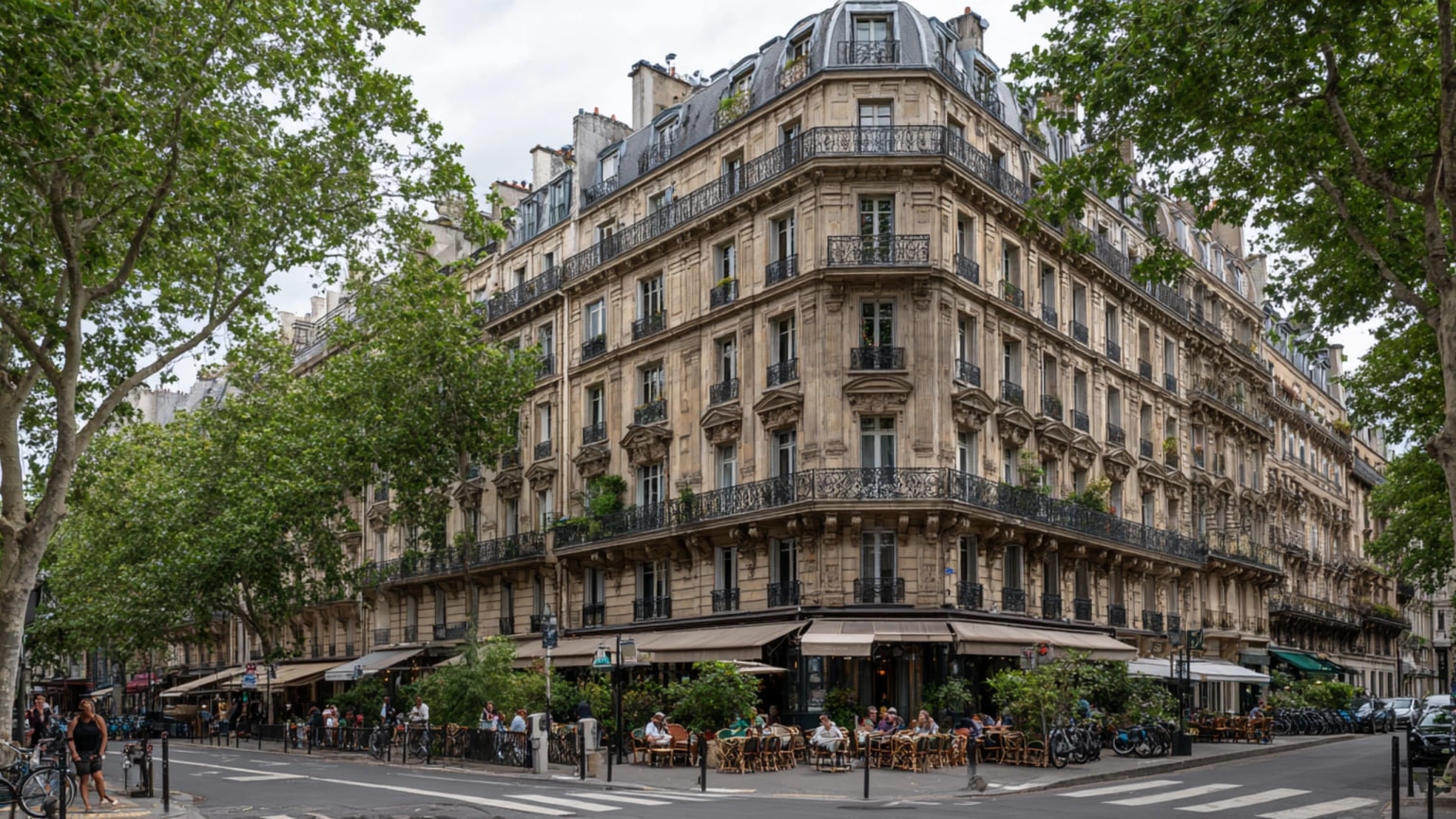
The plane trees, the blocks, the bridges, the corners where a bakery, a school, a pharmacy and a café all seem to have been placed there by an urban mind that understood sequence: few cities so consistently dignify movement. Even the routine commute can feel like participation in a composed public world. This is why Paris remains dangerous to critics. It is too easy to love, and too easy to mistake that love for proof that everything underneath is still working.
⸻
1. The verdict in one sentence
Paris remains one of the rare great capitals where beauty, transit and daily ritual still descend into ordinary life, even if housing and tourism bite.
⸻
2. Scorecard
| Criterion | Score |
|---|---|
| Daily life and human scale | 13 / 14 |
| Housing dignity and social access | 7 / 14 |
| Climate resilience and ecological intelligence | 9.5 / 13 |
| Health, safety and social floor | 9.5 / 12 |
| Civic competence and institutional trust | 7.5 / 10 |
| Work, learning and economic openness | 7.5 / 9 |
| Culture, street life and everyday pleasure | 9 / 9 |
| Beauty, memory and urban form | 8 / 8 |
| Freedom, pluralism and belonging | 6 / 7 |
| Global usefulness without self-destruction | 4 / 4 |
- Raw score:
81.0 / 100 - Shadow penalties:
Housing extraction: -4.0Prestige demand and scarcity still push ordinary households outward and intensify central exclusion.Tourism hollowing: -3.0Short-stay pressure and tourist concentration distort parts of the historic core.Inequality shadow: -2.0The city proper benefits from strong systems, but greater metropolitan inequality remains structurally important.
- Adjusted score:
72.0 / 100 - Rank:
14 / 36 - Label:
Gold Habitat
⸻
3. Best for
Paris is best for walkers, readers, café people, students of urban form, those who want a world city that still behaves like a city of neighborhoods, and anyone who believes public transport and public beauty should belong to the same sentence. It remains strong for culture without luxury, for the solitary flâneur, for lovers of ritual and for those who want daily stimulation rather than suburban calm. It is less generous to households needing easy spatial entry, to anyone requiring lots of domestic space for the money, and to those who cannot tolerate the friction of a city permanently desired by others.
⸻
4. The city's genius
Its genius is the democratization of magnificence.
Many beautiful cities behave like museums. Paris still behaves, crucially, like a machine for ordinary life. The dataset basis notes are exact on this point: dense mixed neighborhoods, metro and RER coverage, strong pedestrian life and expanding cycling lanes make rich car-light daily life normal; museums, food, cafés, libraries, cinema and everyday ritual are integrated into ordinary life rather than fenced off as luxury; architecture, scale, sequence and memory continuously dignify movement.
That is why Paris scores 13 for daily life, 9 for culture, the full 8 for beauty and 4 for global usefulness. It remains one of the few cities where global importance still enriches local life more than it destroys it. A resident can move through a major diplomatic, transport and cultural capital without being reduced to the role of spectator.
This matters because Paris proves something our method insists on: beauty is not frivolous when it lowers the psychic tax of the day. A dignified street, a legible block, a square that invites lingering, a metro system that places intensity within reach: these are not ornament around urban life. They are part of the life itself.
⸻
5. The city's wound
The wound is that the city has become too precious to remain equally accessible.
Housing at 7 is the exposed nerve. Paris still preserves more meaningful access than the fully financialized Anglo peers because social housing, rent regulation and a stronger public frame remain real. But prestige demand and scarcity keep pushing ordinary households outward. Then the penalties deepen the diagnosis: minus 4 for housing extraction, minus 3 for tourism hollowing, minus 2 for inequality shadow. Together they cut the raw 81 down to an adjusted 72.
That subtraction is the honest Paris. The famous city and the lived metropolis no longer line up neatly. The city proper still offers extraordinary systems, but the metropolitan field beyond it carries sharper inequality, longer daily compromises and a harder bargain for those not already positioned close to the center. Tourism adds another distortion. Parts of the historic core are still beautiful, but beauty under short-stay pressure risks becoming a public set for private extraction.
If our model is too harsh anywhere, it may be on governance at 7.5, because Paris has in fact shown real capacity in street redesign and cycling expansion. If it is too generous, it may be the continued Gold Habitat label itself, which the numbers defend but the housing experience increasingly tests.
⸻
6. Neighbourhood test
We would look hardest at the 11th, the 12th near Aligre, the 14th, Batignolles in the 17th, and the 19th around Buttes-Chaumont and the Canal de l'Ourcq.
The 11th remains one of the better Parisian balances between density, food, transit and human mess. The 12th, especially around the Marché d'Aligre and the quieter residential stretches beyond, offers a more family-ready version of that same urban completeness. The 14th still carries a slightly less performative Paris, well served and lived-in. Batignolles shows how the city can civilize renewal when it tries. The 19th is important because it keeps the review honest: parks, water, schools, mixed populations and active public life, but also a more visible encounter with the social fractures the postcard prefers to crop out.
Where would we read? The 14th or the 11th. Where would we raise a child? The 12th or Batignolles. Where would we walk to remember why Paris keeps defeating utilitarian critiques? Across the 5th and into the 6th at dusk, then quickly back to districts where people still buy groceries rather than merely admire stone.
This is also where one might call our housing score too generous. A city can retain good bones and still ask too much of the people who want to live inside them.
⸻
7. 2035 trajectory
Bifurcating, though not yet lost.
Paris is improving in some of the right ways. Cycling grows. Street redesign is real. River adaptation and public-space change show a city that can still alter itself rather than just narrate itself. Those are reasons the ecology score reaches 9.5 and the governance score remains respectable. But the housing and tourism pressures are not side issues. They are structural. If the center keeps hardening into a prestige landscape while the social bargain is pushed outward, Paris will remain magnificent and become narrower.
By 2035 the decisive question is whether Paris can extend its street-level urban success into a more equal metropolitan access regime. If it does, the current rank may prove a little harsh in retrospect. If it does not, the label Gold Habitat may begin to describe form and ritual more than social breadth.
The city is still strong enough to save itself from becoming merely desirable. But desire is now one of the threats.
⸻
8. Final line
Paris is a café chair turned toward a boulevard that still belongs to the public, even as the price of sitting down keeps rising.
Continue Reading
The View from Below: How London Mistook Skyscrapers for Density
London spent twenty years building upward in the name of the compact city. From the pavements of Shoreditch the arithmetic looks different: the tower privatises the panorama and socialises the silhouette.
The Los Angeles That Almost Learned to Walk
In 1930, a regional parks plan and an electric rail network could have made Los Angeles a polycentric, walkable, tram-linked metropolis. The city commissioned the plan, then put it in a drawer. This is the anatomy of a choice, not a fate.
Canals Under Pressure: Amsterdam and the Living City Review
Amsterdam ranks 10th in The Living City Review 2026 with an adjusted score of 76.5. It remains one of Europe’s finest cities for daily life, but housing scarcity and tourism pressure have turned beauty into a harder civic bargain.