The Engineered Habitat: Singapore and the Living City Review
Singapore may be the world's most disciplined urban machine. The question is whether a full human habitat can be built mainly from order.

Key Insights
Essential takeaways from this chronicle
Singapore ranks 8th with an adjusted score of 78.0 and the label Efficient but Thin: an elite urban system that still stops short of full habitat breadth.
Point 1 of 4Housing scores 11 out of 14 and governance 9 out of 10, confirming that the city-state remains one of the most capable builders and maintainers in the field.
Point 2 of 4Freedom falls to 3.5 out of 7, the clearest sign that order here comes with narrower speech, protest and political bounds than the top habitats allow.
Point 3 of 4A safety and exclusion penalty of -2.0 is applied because migrant workers and dissidents live under a narrower civic and spatial bargain than the headline order implies.
Point 4 of 4
The Engineered Habitat: Singapore and the Living City Review
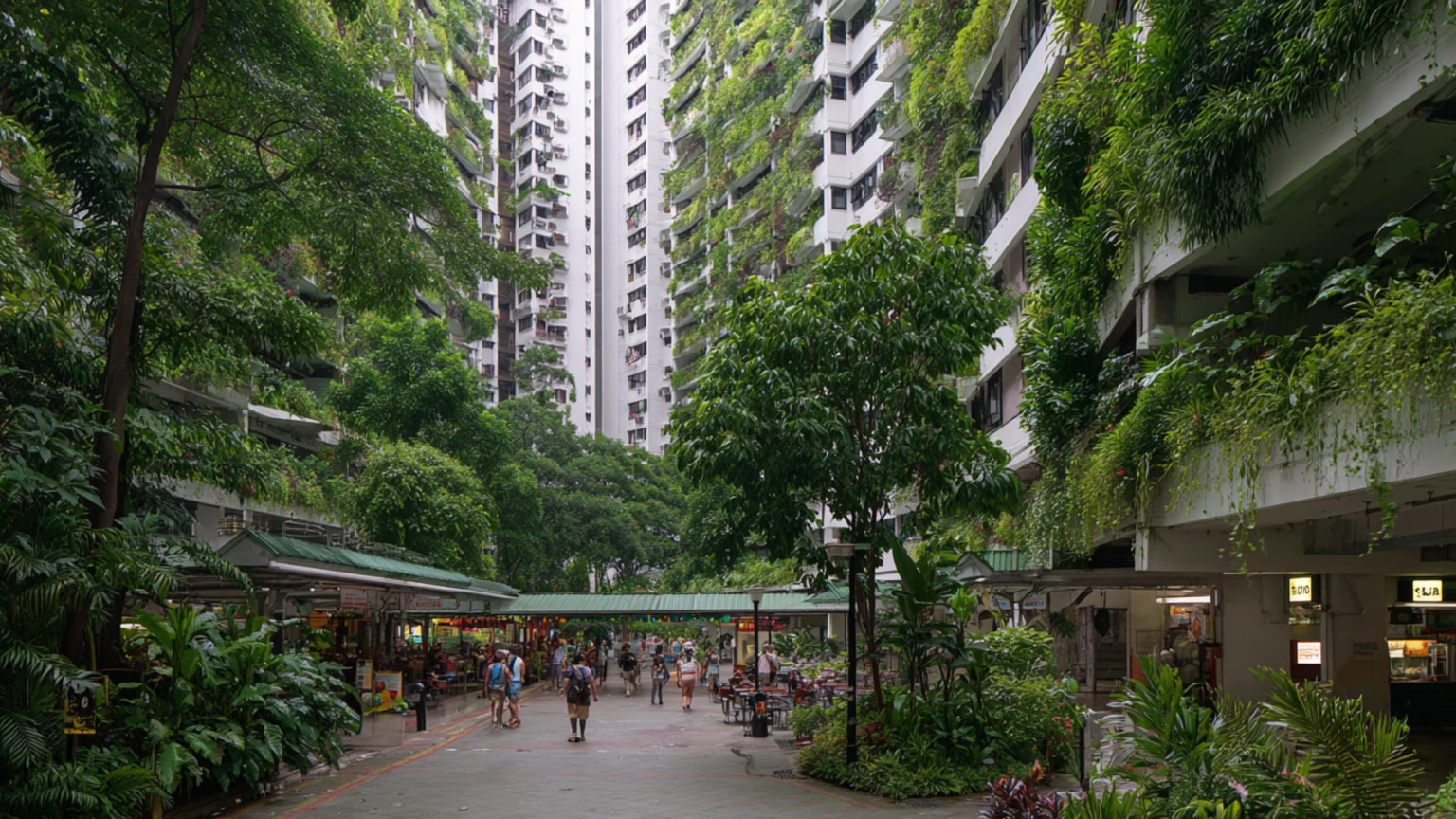
The train arrives clean. The trees are clipped but not mean. Water is managed. Housing towers rise with the confidence of a state that has never confused planning with shame. At the hawker centre, lunch remains one of the great democratic urban inventions: cheap enough to belong to the day, good enough to belong to memory. Singapore's deepest seduction is that it makes competence feel like climate control. The harder question is whether competence alone can make a city feel fully human.
⸻
1. The verdict in one sentence
Singapore is one of the world's most competent urban systems, but its order is purchased with a narrower range of civic and cultural freedom than a full habitat should allow.
⸻
2. Scorecard
| Criterion | Score |
|---|---|
| Daily life and human scale | 11 / 14 |
| Housing dignity and social access | 11 / 14 |
| Climate resilience and ecological intelligence | 10.5 / 13 |
| Health, safety and social floor | 11 / 12 |
| Civic competence and institutional trust | 9 / 10 |
| Work, learning and economic openness | 8.5 / 9 |
| Culture, street life and everyday pleasure | 6.5 / 9 |
| Beauty, memory and urban form | 5 / 8 |
| Freedom, pluralism and belonging | 3.5 / 7 |
| Global usefulness without self-destruction | 4 / 4 |
- Raw score:
80.0 / 100 - Shadow penalties:
Safety and exclusion: -2.0Migrant workers and dissidents live under a narrower civic and spatial bargain than the headline order implies.
- Adjusted score:
78.0 / 100 - Rank:
8 / 36 - Label:
Efficient but Thin
⸻
3. Best for
Singapore is best for people who prize safety, predictability, transit, public order, high-performing institutions and a city that rarely leaves the basics to chance. It is strong for families who want schools, healthcare and housing systems that are still recognizably systems; for professionals who need a global node that mostly converts power into resident benefit; and for those who want tropical life without tropical administrative chaos. It is weaker for dissidents, bohemians who need institutional slack, and anyone who believes public freedom should be as spatially obvious as public cleanliness.
⸻
4. The city's genius
Its genius is infrastructural seriousness carried all the way into daily life.
Few cities plan, build, maintain and adapt with Singapore's steadiness. The dataset basis notes are crisp: transit, safety, dense amenities and meticulous public order make car-light life easy; mass public housing, high homeownership and strong state capacity preserve access much better than in most wealthy global cities; tree cover, stormwater management, water security and heat adaptation are unusually serious for a tropical city-state; healthcare, sanitation and low violent crime create a thick social floor.
That explains the unusual cluster of strong numbers: 11 for daily life, 11 for housing, 10.5 for ecology, 11 for health, 9 for governance, 8.5 for economy and the full 4 for global usefulness. Singapore may be the clearest case in the table of a city whose strategic importance does not simply get siphoned upward into prestige. Trade, logistics, aviation, finance and diplomatic role are real, and the resident feels some of the benefit on the ground.
Even the oft-mocked cleanliness matters here. Order, in Singapore, is not merely a branding aesthetic. It is a way of lowering the tax that urban disorder places on ordinary time. The lifts work. The drains work. The stations work. For many residents, that is not thin technocracy. It is relief.
⸻
5. The city's wound
The wound is that the city asks too much obedience in exchange for that relief.
Freedom lands at 3.5 for good reason. The basis notes do not hedge: order comes with stricter speech, protest and political bounds than the highest-scoring pluralist habitats allow. Culture reaches only 6.5 because food is magnificent and multilingual, but independent subcultures and non-commercial looseness are thinner than in more disorderly great cities. Beauty sits at 5 because much of the built environment feels efficient before it feels memorable.
Then comes the penalty, which is the sharpest part of the city's review. Minus 2 for safety and exclusion is not an accusation against the visible public realm; it is a reminder that headline order is not equally distributed. Migrant workers and dissidents inhabit a tighter civic bargain. A city can be secure for the middle-class stroller and still narrower for those who build, clean and contest it.
If our model is too harsh anywhere, it may be on beauty. Singapore's lushness, its waterfronts and some of its housing-town landscapes carry more feeling than outsiders often grant. If it is too generous, it may be on housing, because the state's real achievement can obscure how sharply class and status still sort who gets what kind of urban ease.
⸻
6. Neighbourhood test
We would look first at Tiong Bahru, Queenstown, Joo Chiat, Bishan and the better parts of the old public-town fabric.
Tiong Bahru remains one of the clearest answers to the question of whether Singapore can feel grainy rather than merely managed: low-rise memory, food, shade, apartment life, a public realm that still permits some drift. Queenstown is important for a different reason. It tests the public-housing promise at a larger scale, where daily services, transit and ordinary domestic life can still sit near one another without luxury mediation. Joo Chiat offers texture, multicultural street life and a less abstract reading of beauty than the central business districts ever can. Bishan, for a family, is persuasive because parks, schools and transit align in a way that shows the benevolent side of the system.
Where would we read? Tiong Bahru. Where would we raise a child? Queenstown or Bishan. Where would we walk to test whether the city gives pleasure without requiring consumption? Through a hawker-centre district at dusk, where the smell of dinner still defeats theory for a while.
An honest aside belongs here. We may be slightly too ungenerous about culture if one counts food, multilingual domesticity and neighborhood ritual more heavily. But a great habitat also needs room for non-official ways of being interesting.
⸻
7. 2035 trajectory
Stable, with a risk of bifurcation.
Singapore is too competent to decline casually. It will continue to adapt to heat, maintain infrastructure, upgrade housing and convert global usefulness into resident order more effectively than most rivals. That is why the city stays in the top ten despite its thinner civic range. But by 2035 the central question will be whether excellence keeps broadening or whether the city becomes more sorted: polished, green, safe and increasingly stratified between those fully inside the bargain and those tolerated on worse terms.
The ingredients of bifurcation already exist in the penalty. If civic bounds stay tight, if migrant inclusion remains narrower than the headlines imply, and if culture remains over-managed, the city could become even more efficient and less alive. If, instead, Singapore allows a wider band of speech, dissent and subcultural looseness while preserving its public competence, it could become not just a model system but a fuller habitat.
The infrastructure challenge is mostly solved. The political one is not.
⸻
8. Final line
Singapore is a shaded hawker-centre table beneath towers and rain trees, where the state has mastered the city but not quite all the freedoms a city should contain.
Continue Reading
The View from Below: How London Mistook Skyscrapers for Density
London spent twenty years building upward in the name of the compact city. From the pavements of Shoreditch the arithmetic looks different: the tower privatises the panorama and socialises the silhouette.
The Los Angeles That Almost Learned to Walk
In 1930, a regional parks plan and an electric rail network could have made Los Angeles a polycentric, walkable, tram-linked metropolis. The city commissioned the plan, then put it in a drawer. This is the anatomy of a choice, not a fate.
Canals Under Pressure: Amsterdam and the Living City Review
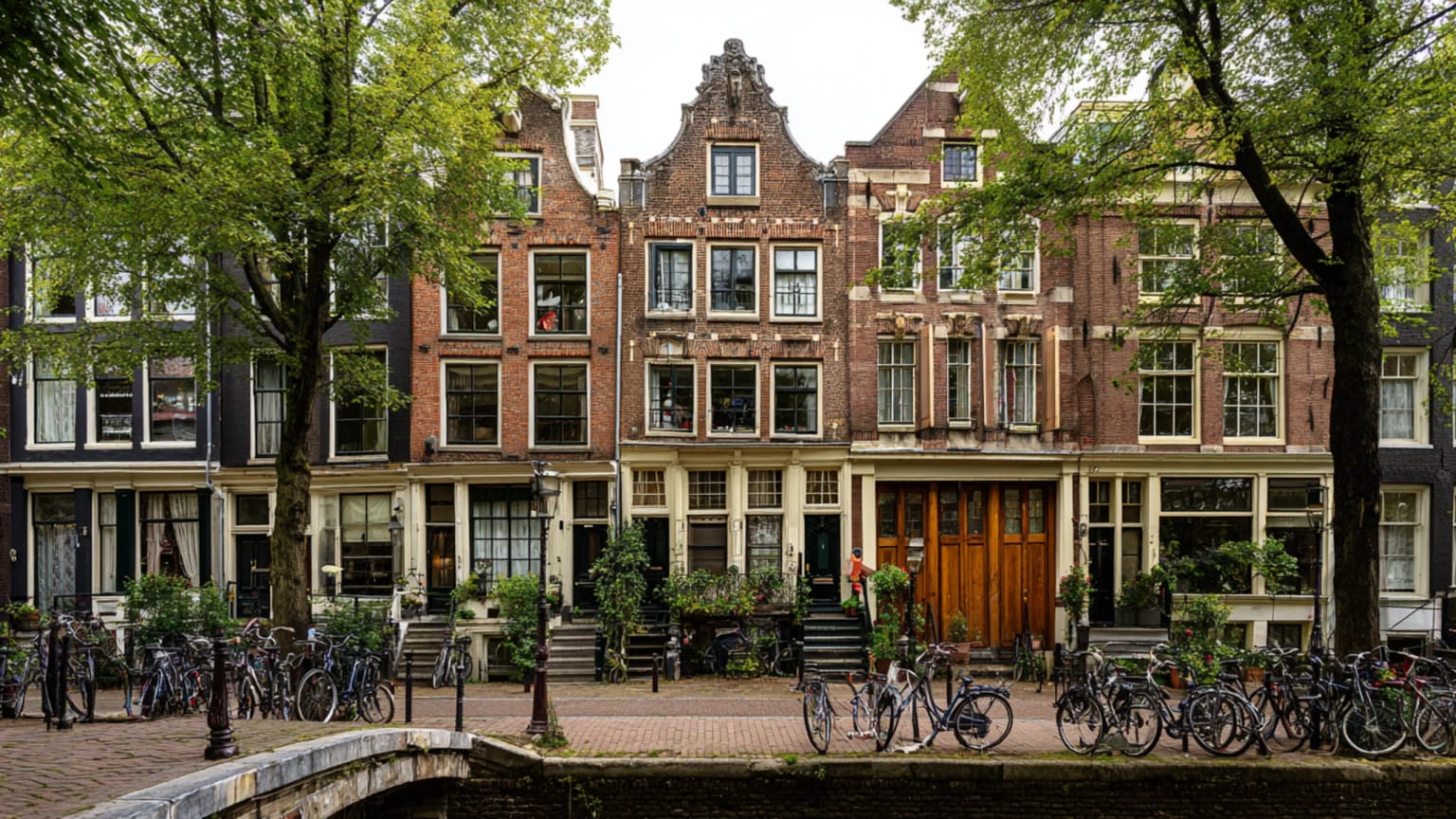
Amsterdam ranks 10th in The Living City Review 2026 with an adjusted score of 76.5. It remains one of Europe’s finest cities for daily life, but housing scarcity and tourism pressure have turned beauty into a harder civic bargain.