The Habitable Colossus: Tokyo and the Living City Review
Tokyo is enormous without becoming unreadable. That alone would be rare. It also remains less exclusionary than most superstar cities.

Key Insights
Essential takeaways from this chronicle
Tokyo ranks 4th with an adjusted score of 84.0 and the label Gold Habitat, showing that metropolitan size does not have to mean daily-life collapse.
Point 1 of 4Daily life reaches 13.5 out of 14, the highest in this batch, driven by rail, station-area density and the convenience ecology of mixed-use neighborhoods.
Point 2 of 4Housing scores 10.5 out of 14 because Tokyo remains far less exclusionary than most superstar peers, even with small homes and relentless demand.
Point 3 of 4The real drag sits in freedom at 5 out of 7 and ecology at 8.5 out of 13: conformity pressures and heat-flood exposure keep the megacity below the very top.
Point 4 of 4
The Habitable Colossus: Tokyo and the Living City Review
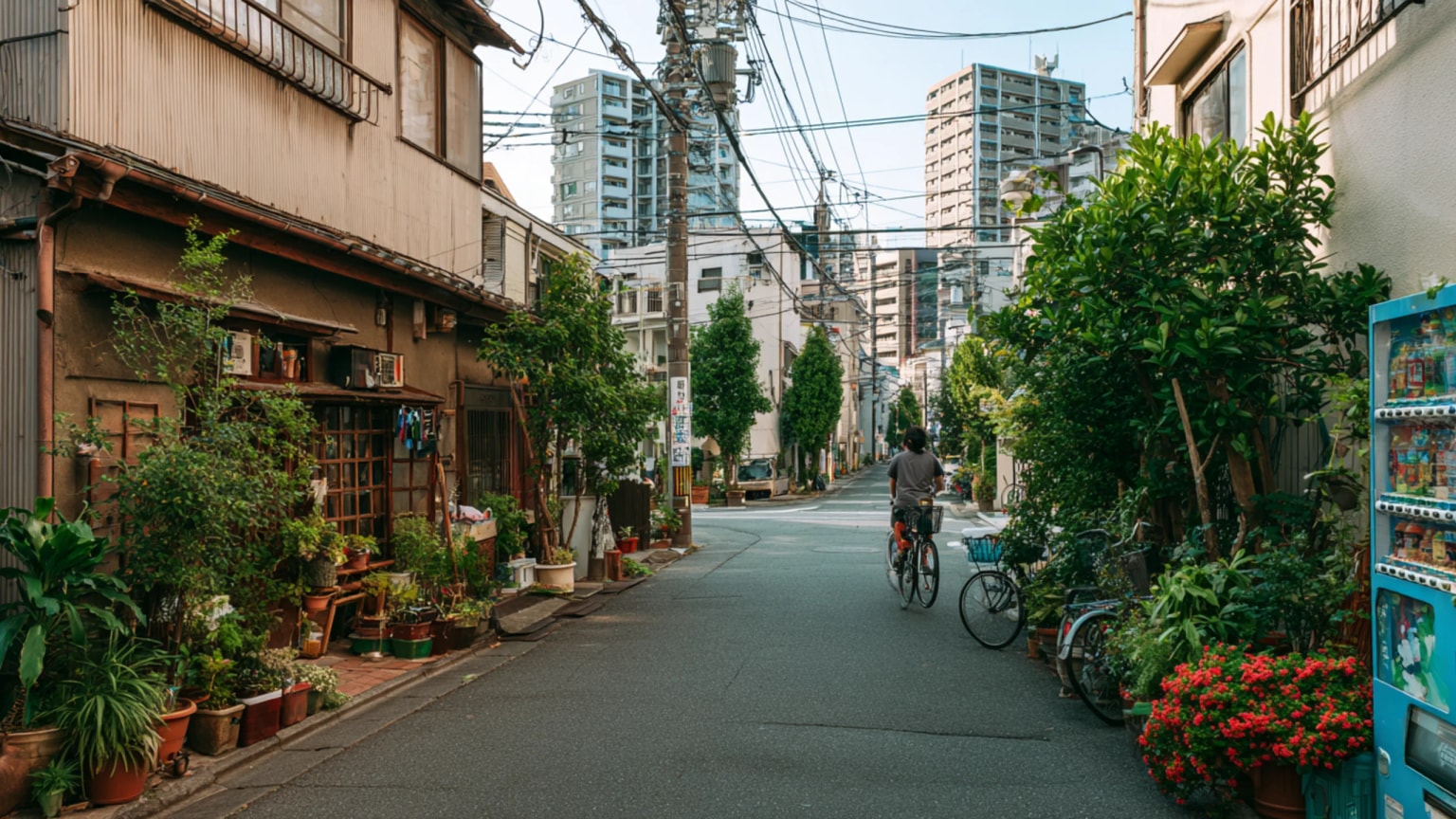
Escalator, platform, train, narrow shopping street, convenience store, small restaurant, apartment stair, lane, shrine fragment, vending machine, school route, another station. The metropolis does not ask to be understood all at once. It breaks itself into thousands of habitable pieces and then binds them together with rail. This is why Tokyo matters so much to our ranking. It proves that a city can be vast without becoming formless, intricate without becoming unlivable, and globally central without surrendering the weekday to pure performance.
⸻
1. The verdict in one sentence
Tokyo is the rare megacity that makes enormous complexity feel habitable, proving that scale need not abolish daily life.
⸻
2. Scorecard
| Criterion | Score |
|---|---|
| Daily life and human scale | 13.5 / 14 |
| Housing dignity and social access | 10.5 / 14 |
| Climate resilience and ecological intelligence | 8.5 / 13 |
| Health, safety and social floor | 10.5 / 12 |
| Civic competence and institutional trust | 8.5 / 10 |
| Work, learning and economic openness | 8 / 9 |
| Culture, street life and everyday pleasure | 9 / 9 |
| Beauty, memory and urban form | 6.5 / 8 |
| Freedom, pluralism and belonging | 5 / 7 |
| Global usefulness without self-destruction | 4 / 4 |
- Raw score:
84.0 / 100 - Shadow penalties applied:
none - Adjusted score:
84.0 / 100 - Rank:
4 / 36 - Label:
Gold Habitat
⸻
3. Best for
Tokyo is best for transit maximalists, students of density, solitary people who want company without intrusion, food obsessives, readers, night walkers, and those who want the advantages of a world city without the usual degree of housing cruelty. It is also good for people willing to live smaller in exchange for richer urban choice. It is less ideal for those who need easy social improvisation, maximal domestic space, or a culture that makes immigrant entry feel effortless.
⸻
4. The city's genius
Tokyo's genius is the subdivision of bigness into everyday legibility.
The dataset basis notes say it well: the rail network, station-area density, mixed-use neighborhoods and convenience ecology let residents live intricate lives without cars at megacity scale. That single sentence could almost stand as the city's civic constitution. So much of urban failure elsewhere comes from the mismatch between metropolitan size and ordinary access. Tokyo largely solves it through repetition. Neighborhood after neighborhood offers the same useful ingredients in slightly different proportions: transit, food, services, small streets, rental options, local ritual, late opening hours, and the quiet dignity of things being near one another.
That is why daily life climbs to 13.5, culture to a full 9 and global usefulness to 4 without feeling contradictory. Tokyo is perhaps the clearest example in the whole review of a city whose planetary role does not fully cannibalize its local rhythms. It is a top transport, knowledge and commercial node, yet the resident still encounters a remarkably fine-grained city.
Its housing score of 10.5 is crucial too. Homes are often small; no one should romanticize that. But the city remains far less exclusionary than most superstar peers because supply exists, building is comparatively permissive, and rental options are broad. Tokyo does not make housing easy. It makes it less impossible than cities of similar fame usually do.
It is also striking that Tokyo takes no shadow penalties at all. For a city of this scale, that is almost the hidden headline. Many global giants lose points after scoring because housing extraction, governance theatre or tourism distortion eat away at their apparent success. Tokyo's costs and constraints are real, but they do not yet amount to that kind of systemic subtraction.
⸻
5. The city's wound
Its wound is the difference between safety and freedom.
Tokyo is safe in ways many cities envy. Health reaches 10.5, governance 8.5, violent risk is low, and the social floor is thick by megacity standards. Yet freedom lands at 5 for a reason. The basis notes point to conformity pressures, gender gaps and a harder path for immigrants. Tokyo lets many people live alone, oddly and quietly, but not every form of difference is equally easy to carry. Pluralism exists; frictionless pluralism does not.
The ecology score of 8.5 names another limit. Tokyo is impressively prepared in disaster terms and serious about infrastructure, but heat and flood exposure are not theoretical. The city has reduced harm more capably than many rivals, yet it cannot engineer climate risk out of existence. Beauty, too, sits at 6.5 because Tokyo's power is atmospheric more than monumental. Those seeking the continuous civic composition of Paris or Vienna will not find it here.
If our model is too generous anywhere, it may be on housing, because small homes and work culture can make the city feel more exacting than the score suggests. If it is too harsh, it may be on beauty, because Tokyo's poetry lives in texture, not in facades arranged for foreigners to admire.
⸻
6. Neighbourhood test
We would begin in Kagurazaka, Kiyosumi-Shirakawa, Yanaka, Koenji and parts of Bunkyo.
Kagurazaka still shows how intimacy can survive near the center: slopes, lanes, small restaurants, bookish calm, rail close by. Kiyosumi-Shirakawa offers the better contemporary test, where warehouses, water, coffee and apartment life meet without losing everyday usefulness. Yanaka carries memory in a gentler key, one of the places where Tokyo's historical fragments still feel inhabited rather than staged. Koenji gives the necessary counterweight of music, looseness and small-scale cultural surplus. Bunkyo, for a family, remains persuasive because schools, parks, institutions and everyday transit align without too much urban drama.
Where would we read? Kagurazaka or Yanaka. Where would we walk at night? Almost anywhere near a station, but especially the smaller streets around Kiyosumi-Shirakawa or Koenji. Where would we raise a child? Bunkyo first, then a quieter pocket of Koto or Setagaya if one accepts a slightly wider metropolitan frame.
This is also where our freedom score deserves scrutiny. Tokyo can feel more tolerant in practice than 5 suggests if one's life fits the city's codes. The problem is that a great habitat should also be generous to those who do not.
⸻
7. 2035 trajectory
Stable, but climate and demography will make stability feel like hard labor.
Tokyo already has what most megacities lack: administrative competence at scale, transport discipline, broad housing supply and a daily-life fabric that resists chaos without sterilizing itself. Those strengths do not vanish easily. But by 2035 the city will be asked to absorb hotter summers, heavier rainfall, ageing residents and continuing pressure to remain globally useful while staying locally bearable.
Its future therefore depends less on whether it can build one more megaproject than on whether it can keep refining the neighborhood machine: cooling ordinary streets, protecting vulnerable residents, widening immigrant pathways, loosening some of the social rigidity that still narrows belonging. Tokyo does not need a new urban form. It needs to preserve the one it has while making it softer and more open.
That is a difficult brief, but at least it begins from strength rather than ruin.
⸻
8. Final line
Tokyo is a train door opening onto a side street that somehow belongs to a megacity and a neighborhood at once.
Continue Reading
The View from Below: How London Mistook Skyscrapers for Density
London spent twenty years building upward in the name of the compact city. From the pavements of Shoreditch the arithmetic looks different: the tower privatises the panorama and socialises the silhouette.
The Los Angeles That Almost Learned to Walk
In 1930, a regional parks plan and an electric rail network could have made Los Angeles a polycentric, walkable, tram-linked metropolis. The city commissioned the plan, then put it in a drawer. This is the anatomy of a choice, not a fate.
Canals Under Pressure: Amsterdam and the Living City Review
Amsterdam ranks 10th in The Living City Review 2026 with an adjusted score of 76.5. It remains one of Europe’s finest cities for daily life, but housing scarcity and tourism pressure have turned beauty into a harder civic bargain.