The Decade of Sustainable Transport: What 2026-2035 Must Deliver for Cities
The ceremony in New York was modest for something meant to transform how billions of people move. Transport ministers, UN officials, and transit advocates gathered to launch the first global framework for sustainable urban mobility—a decade-long push to rewire how cities function. The question is whether ten years is enough.

Key Insights
Essential takeaways from this chronicle
The UN Decade of Sustainable Transport (2026-2035), launched December 2025, is the first global framework for transforming urban mobility across all member states.
Point 1 of 5By 2050, 70 percent of people and 85 percent of economic output will be urban, making sustainable city transport the defining infrastructure challenge of the century.
Point 2 of 5Transport generates 25 percent of energy-related emissions and relies on fossil fuels for 95 percent of its energy—a dependency that must be broken within the decade.
Point 3 of 5The human cost is already staggering: 3,260 people die in road crashes every day, with pedestrians and cyclists bearing disproportionate risk in car-dominated cities.
Point 4 of 5The Decade prioritizes public transit, active mobility, and electric vehicles—but success requires cities to redesign streets, not just replace engines.
Point 5 of 5
Within three months, the corridor's travel times had dropped by 40 percent. Within a year, property values along the route had risen measurably. Within two years, the city was planning extensions, and other Latin American capitals were sending delegations to study the model.
What struck me was not the technology—buses are not exotic—but the politics. That corridor had taken twelve years to move from proposal to operation. Twelve years of studies, opposition, redesign, budget fights, and election cycles. The transformation that felt sudden to passengers had been glacially slow in the planning offices.
This is the challenge the United Nations confronts with the Decade of Sustainable Transport: not inventing solutions but accelerating their adoption. The technologies exist. The models are proven. What cities lack is not knowledge but speed.
⸻
The launch and the framework
On December 10, 2025, transport ministers, UN officials, and mobility advocates gathered at United Nations Headquarters in New York for the launch of the first-ever UN Decade of Sustainable Transport. The event marked the adoption of an Implementation Plan that outlines priorities, targets, and means of implementation through 2035.
The Decade emerged from recognition that transport is simultaneously essential and unsustainable. It enables economic activity, social connection, and access to services. It also generates approximately 25 percent of global energy-related greenhouse gas emissions, kills more than a million people annually in road crashes, and chokes cities with congestion and pollution.
The Implementation Plan identifies six focus areas: road safety, energy transition, public transport, active mobility, integrated planning, and financing. Each area includes specific targets—reducing road deaths by half, increasing public transit mode share, deploying charging infrastructure—and mechanisms for tracking progress across member states.
What makes the Decade significant is not its targets, which are ambitious but not unprecedented, but its breadth. Previous UN transport initiatives focused on specific issues: road safety, climate emissions, or accessibility. The Decade attempts to address transport as a system, recognizing that road safety depends on vehicle speeds, which depend on street design, which depends on land use planning, which depends on political priorities that shape all of the above.
The question is whether a UN framework can accelerate changes that happen city by city, street by street, council meeting by council meeting.
⸻
The arithmetic of urban movement
The stakes are defined by projections that are already becoming reality. By 2050, 70 percent of the global population will live in cities, up from 56 percent today. Urban areas will generate 85 percent of global economic output. The decisions cities make about transport will shape not just mobility but climate, health, equality, and the basic experience of daily life.
Current trajectories are unsustainable. Total passenger travel demand could increase three to four times by 2050 compared to 2000. Freight movement could more than triple. If this growth is accommodated through conventional car-centered development, the results are predictable: permanent congestion, unbreathable air, uninhabitable streets.
The transport sector relies on fossil fuels for 95 percent of its energy—a higher share than any other major sector. Electrification is accelerating, but the installed fleet turns over slowly. Even aggressive adoption scenarios show internal combustion engines dominating vehicle stocks for decades. The Decade cannot wait for the fleet to transform; it must reduce vehicle travel while transitioning the vehicles that remain.
The human cost is already staggering. Road traffic crashes kill approximately 1.19 million people annually—more than 3,260 every day. Pedestrians and cyclists account for more than half of deaths in many low- and middle-income countries, bearing the risk created by vehicles while receiving minimal infrastructure investment. Road crashes are the leading cause of death for children and young adults aged 5-29.
These statistics describe not natural phenomena but policy outcomes. Countries and cities that have prioritized safety—through speed management, separated infrastructure, and enforcement—have reduced deaths by 50 percent or more. The same results are achievable everywhere; what varies is political will.
⸻
The pillars of transformation
The Decade's focus areas describe complementary interventions that work best in combination.
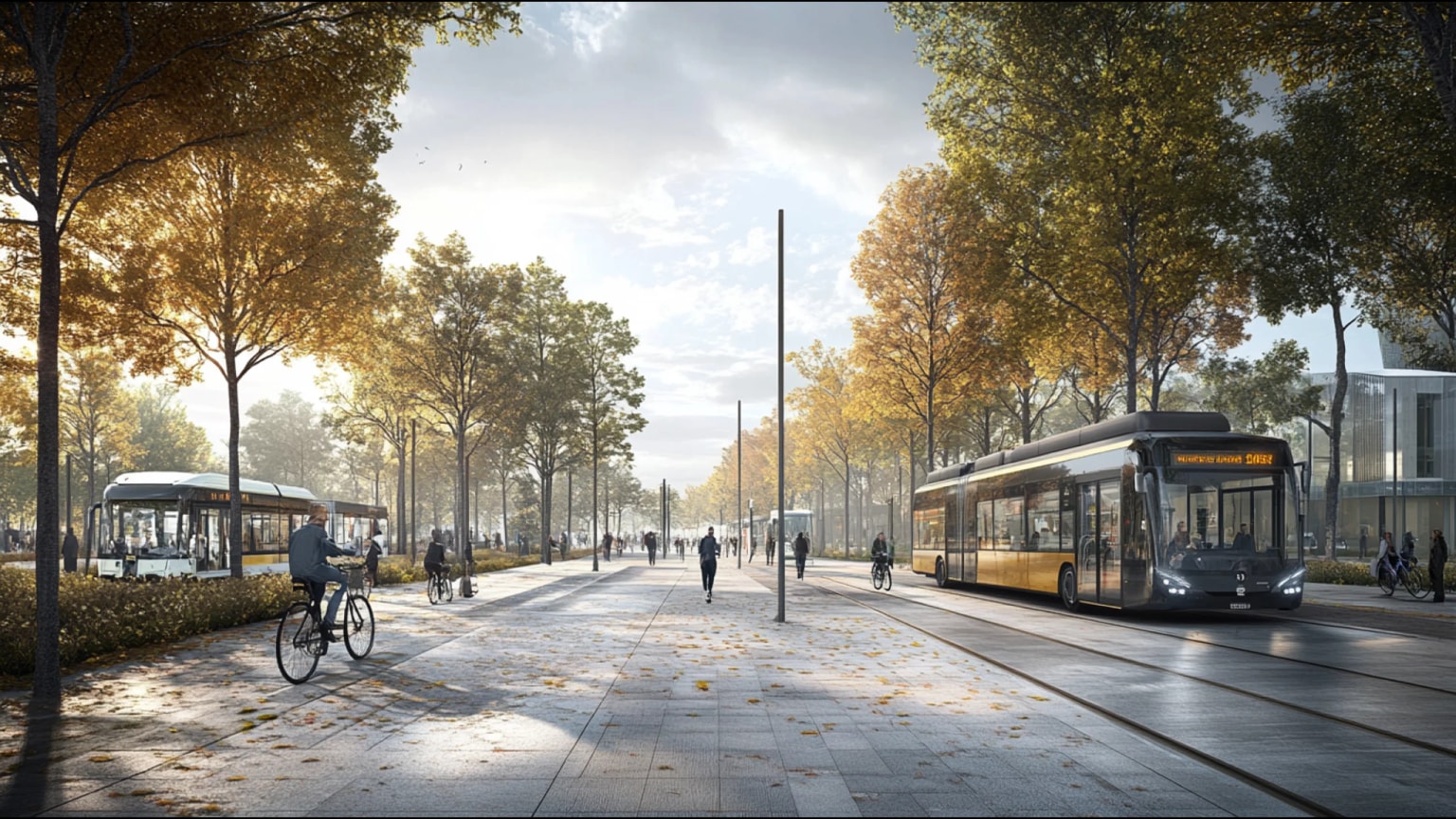
Public transport is the backbone. Buses, trams, metros, and commuter rail move more people in less space with lower emissions than private vehicles. A single bus lane can carry as many passengers per hour as multiple lanes of car traffic. A metro line can transform urban geography, making dense development viable without proportional increases in road capacity.
The challenge is not technical but financial and political. Public transport requires upfront capital investment that many cities struggle to finance. It requires operating subsidies that strain municipal budgets. It competes for street space with drivers who vote and park. It works best when integrated with land use planning, which means coordinating agencies that often operate in silos.
The Decade emphasizes bus rapid transit (BRT) as a cost-effective entry point—dedicated lanes, level boarding, and off-board fare collection can achieve metro-like performance at a fraction of the capital cost. Over 180 cities now operate BRT systems, with the most extensive networks in Latin America, where the model was pioneered.
Active mobility—walking and cycling—receives unprecedented attention in the Implementation Plan. These modes produce zero emissions, require minimal infrastructure compared to motorized transport, and provide health benefits that offset their relatively modest accident risk when properly protected.
The barrier is street design. Streets built for cars are hostile to pedestrians and cyclists. Changing this requires reallocating space from vehicles to people—a political conflict that plays out in every city considering bike lanes or pedestrian zones. The Decade calls for "systematic investment" in walking and cycling, but the systematicity must happen locally, street by street.
UNEP's Share the Road initiative documents case studies where active mobility investment has transformed neighborhoods. Copenhagen's cycling network, Bogotá's ciclovía, Paris's 15-minute city concept—these examples demonstrate what's possible, but they remain exceptions rather than norms.
Electric mobility addresses emissions from the vehicles that remain necessary. Electric cars, buses, and trucks eliminate tailpipe pollution and reduce lifecycle emissions when charged from clean grids. The transition is accelerating, with electric vehicle sales growing exponentially in many markets.
But electrification is not sufficient. Electric cars still cause congestion, still require parking, still create hostile environments for pedestrians and cyclists. A city that replaces its gasoline cars with electric cars but changes nothing else will still be car-dominated, still sprawling, still dangerous for those outside vehicles. The Decade's framing—emphasizing transit and active mobility alongside electrification—reflects this understanding.
⸻
What cities are already doing
The Decade builds on transformation already underway in cities that have chosen to prioritize sustainable mobility.
Paris has implemented its 15-minute city concept, reducing car traffic in the center while expanding cycling infrastructure and pedestrian zones. The Champs-Élysées, once dominated by vehicle traffic, is being transformed into a garden. Cycling trips have tripled since 2019.
Bogotá pioneered the ciclovía—closing major roads to cars every Sunday for cyclists and pedestrians—and built an extensive BRT network that serves millions daily. The city is now implementing a cable car system to connect hillside neighborhoods with limited road access.
Singapore manages car demand through congestion pricing, high registration fees, and certificate-of-entitlement systems that limit vehicle ownership. The revenue funds one of the world's best public transit systems, where mode share for private cars is below 30 percent despite high incomes.
Medellín built cable cars and escalators connecting informal hillside settlements to the transit network, treating mobility access as a tool for social integration. The interventions reduced travel times for residents who had been isolated by topography and poverty.
Amsterdam and Copenhagen demonstrate that cycling can be a primary mode even in wealthy cities, with protected infrastructure, traffic calming, and cultural acceptance that make bikes viable for commuting, shopping, and school trips.
These cities share common elements: political leadership willing to reallocate street space, investment in transit and active mobility infrastructure, and land use planning that reduces the need for motorized travel. None achieved transformation quickly; all faced opposition from car owners and businesses initially convinced that car access was essential.
What the Decade offers is a framework for accelerating adoption of these proven approaches—sharing knowledge, mobilizing finance, and creating political cover for local leaders to take on the car lobby.
⸻
The politics of street space
Behind every technical discussion of sustainable transport lies a political conflict: streets are finite, and space allocated to one mode is unavailable to others.
A lane of traffic can move approximately 2,000 cars per hour, carrying perhaps 2,500 people if occupancy is average. The same width dedicated to buses can move 10,000 people per hour. A protected bike lane can move 7,000 cyclists. A sidewalk can accommodate even higher pedestrian flows.
The arithmetic suggests that reallocating space from cars to other modes increases total throughput while reducing emissions and improving safety. But the losers—drivers who lose lanes, businesses that lose parking—are concentrated and vocal, while the beneficiaries are diffuse and often hypothetical (the cyclists who would use a lane that doesn't yet exist).
This dynamic explains why sustainable transport advances slowly even when the case is overwhelming. Every road diet, every bus lane, every pedestrian zone requires a political fight against interests that benefit from the status quo. The cumulative effect of losing these fights is cities that everyone acknowledges are dysfunctional but that no one has the power to change.
The Decade cannot resolve these local conflicts. What it can do is shift the context in which they occur—making sustainable transport a global norm rather than a local experiment, providing technical assistance and financing to cities attempting transformation, and documenting the benefits that accrue to cities that succeed.
⸻
The money problem
Sustainable transport requires capital investment that many cities cannot afford. A metro line costs billions of dollars. A BRT corridor costs hundreds of millions. Even cycling infrastructure, cheap by comparison, requires sustained annual spending that strains municipal budgets.
Current financing flows are inadequate. The World Bank estimates that cities in developing countries need $4.5 trillion in transport infrastructure by 2030—roughly ten times current investment levels. Climate finance has historically neglected transport, directing only 4-7 percent of adaptation and mitigation funding to the sector.
The Decade's Implementation Plan emphasizes financing mechanisms: multilateral development bank lending, green bonds, national urban transport funds, and land value capture. Each has potential; none is operating at the scale required.
Land value capture deserves particular attention. Transit investment increases property values along corridors—the phenomenon I witnessed with that BRT opening. Capturing a portion of this value through taxation or development agreements can help finance the infrastructure that created it. Hong Kong's MTR Corporation has built one of the world's best metro systems partly by developing property around stations. Cities that fail to capture land value subsidize private landowners while struggling to fund public transit.
The financing challenge is ultimately a priorities challenge. Countries spend trillions on road construction and maintenance, on fossil fuel subsidies, and on other policies that entrench car dependence. Redirecting a fraction of these expenditures could transform urban mobility. The Decade's value may lie in making this reallocation politically possible.
⸻
Ten years is not much time
The honest assessment is that a decade may not be enough. Urban transport systems have enormous inertia. Infrastructure lasts generations. Land use patterns, once established, constrain mobility options for decades. Political systems often respond to crises rather than anticipating them.
But ten years is not nothing. Cities have transformed rapidly when conditions aligned. Bogotá built its BRT network in less than three years. Paris implemented major cycling infrastructure in under five. The COVID-19 pandemic demonstrated that street reallocation can happen almost overnight when political will exists.
The Decade's value lies in creating urgency where none existed. Transport transformation has often been treated as a nice-to-have—desirable but deferrable, a project for the next administration or the next generation. The Decade reframes it as urgent: a ten-year window to get on track for 2050 targets that cannot be met if cities continue current trajectories.
Whether this reframing changes outcomes will depend on what happens in individual cities, individual councils, individual streets. The UN can provide frameworks and financing, but it cannot redesign the avenue outside your window. That remains a local fight, fought locally, by people who believe sustainable mobility is worth fighting for.
⸻
The view from the BRT platform
I rode that Latin American BRT line again recently, years after the opening ceremony. The system had expanded—new corridors, new stations, integration with conventional buses. The dedicated lanes were crowded with articulated buses, and the platforms were busy with passengers who had incorporated the system into their daily routines.
Alongside the corridor, things had changed too. Bike lanes had appeared, connecting the BRT stations to surrounding neighborhoods. Cafés and shops had colonized spaces that had been vacant when the line opened. The street felt more like a place and less like a conduit.
None of this was inevitable. The same corridor could have remained congested, polluted, hostile. The transformation required political decisions sustained across administrations, investment in infrastructure that took years to show returns, and willingness to reallocate space from cars to people who were not yet using alternatives.
The UN Decade of Sustainable Transport is a bet that these decisions can be accelerated—that the knowledge from cities that have transformed can flow to cities considering transformation, that finance can follow political will, that ten years can be enough.
I think of the passengers waiting on that BRT platform, checking phones, planning their days around a system that didn't exist a few years ago. For them, sustainable transport is not a policy debate but an infrastructure reality—a bus that comes every few minutes, a lane that never clogs, a trip that works.
The Decade is an attempt to make that reality available to everyone, in every city, before 2035. Whether it succeeds is a story still being written, in council chambers and finance ministries and streets that could become corridors or could remain parking lots.
The buses are waiting. The question is whether the lanes will be built for them.
⸻
Sources (Selected)
- United Nations (2025). UN Decade of Sustainable Transport 2026-2035: Implementation Plan. New York: United Nations Department of Economic and Social Affairs.
- UNEP (2024). Urban Mobility: Decarbonizing Transport in Cities. Nairobi: United Nations Environment Programme.
- World Bank (2024). Transport Financing for Sustainable Development. Washington: World Bank Group.
- ITDP (2024). The BRT Standard. New York: Institute for Transportation and Development Policy.
- WHO (2024). Global Status Report on Road Safety. Geneva: World Health Organization.
- UN-Habitat (2024). World Cities Report 2024. Nairobi: United Nations Human Settlements Programme.
- ESCAP (2024). Sustainable Urban Transport Index. Bangkok: United Nations Economic and Social Commission for Asia and the Pacific.
- SLOCAT (2025). Transport and Climate Change Global Status Report. Brussels: SLOCAT Partnership.
- C40 Cities (2024). Deadline 2030: How Cities Will Get the Job Done. London: C40 Cities Climate Leadership Group.
- WRI Ross Center (2024). Sustainable Urban Transport. Washington: World Resources Institute.
This essay draws on UN Transport Decade documentation and sustainable mobility research from 2024-2025. For city-level case studies, see ITDP, WRI Ross Center, and C40 Cities resources.
Continue Reading
The View from Below: How London Mistook Skyscrapers for Density
London spent twenty years building upward in the name of the compact city. From the pavements of Shoreditch the arithmetic looks different: the tower privatises the panorama and socialises the silhouette.
The Los Angeles That Almost Learned to Walk
In 1930, a regional parks plan and an electric rail network could have made Los Angeles a polycentric, walkable, tram-linked metropolis. The city commissioned the plan, then put it in a drawer. This is the anatomy of a choice, not a fate.
Canals Under Pressure: Amsterdam and the Living City Review
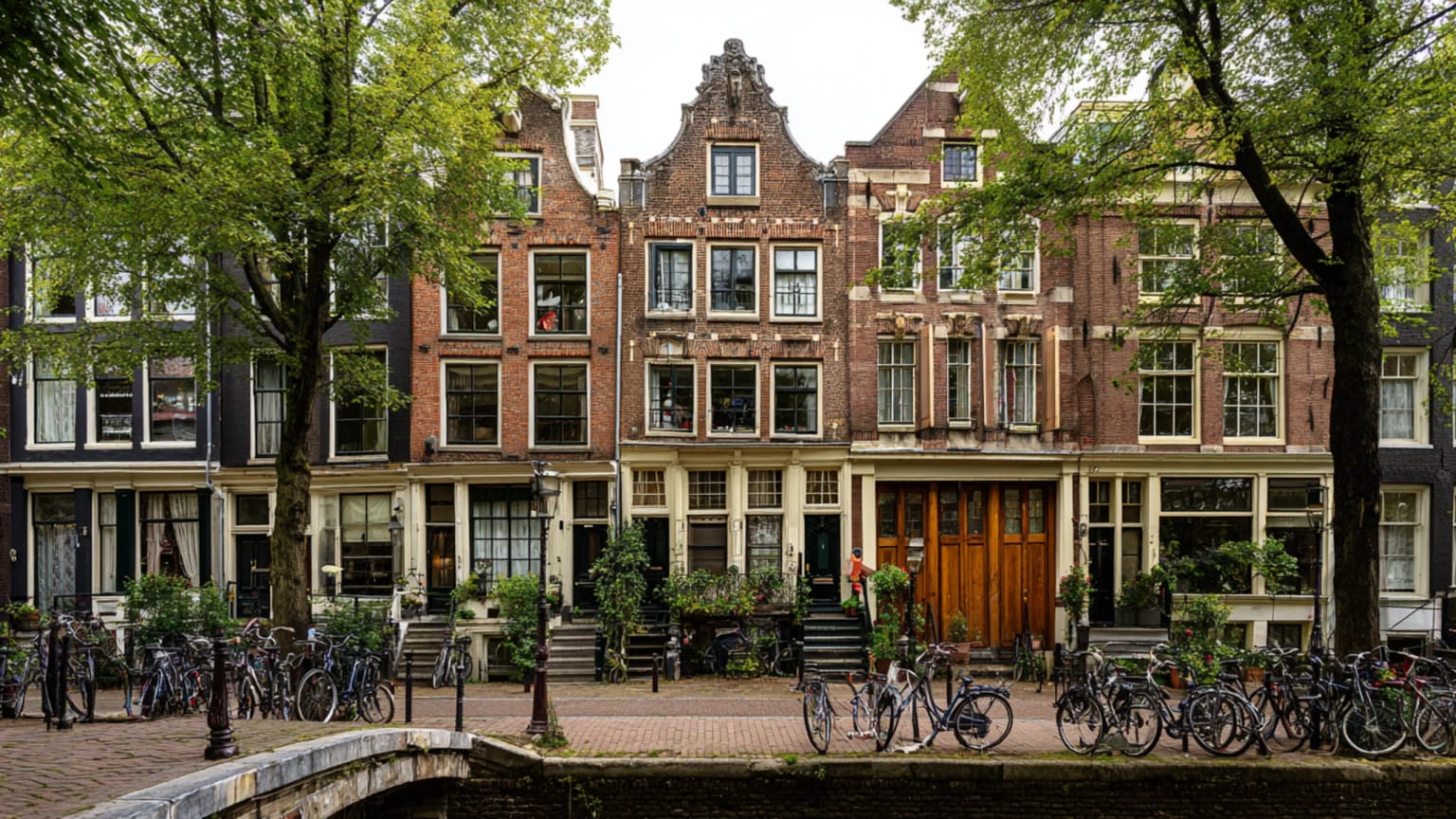
Amsterdam ranks 10th in The Living City Review 2026 with an adjusted score of 76.5. It remains one of Europe’s finest cities for daily life, but housing scarcity and tourism pressure have turned beauty into a harder civic bargain.