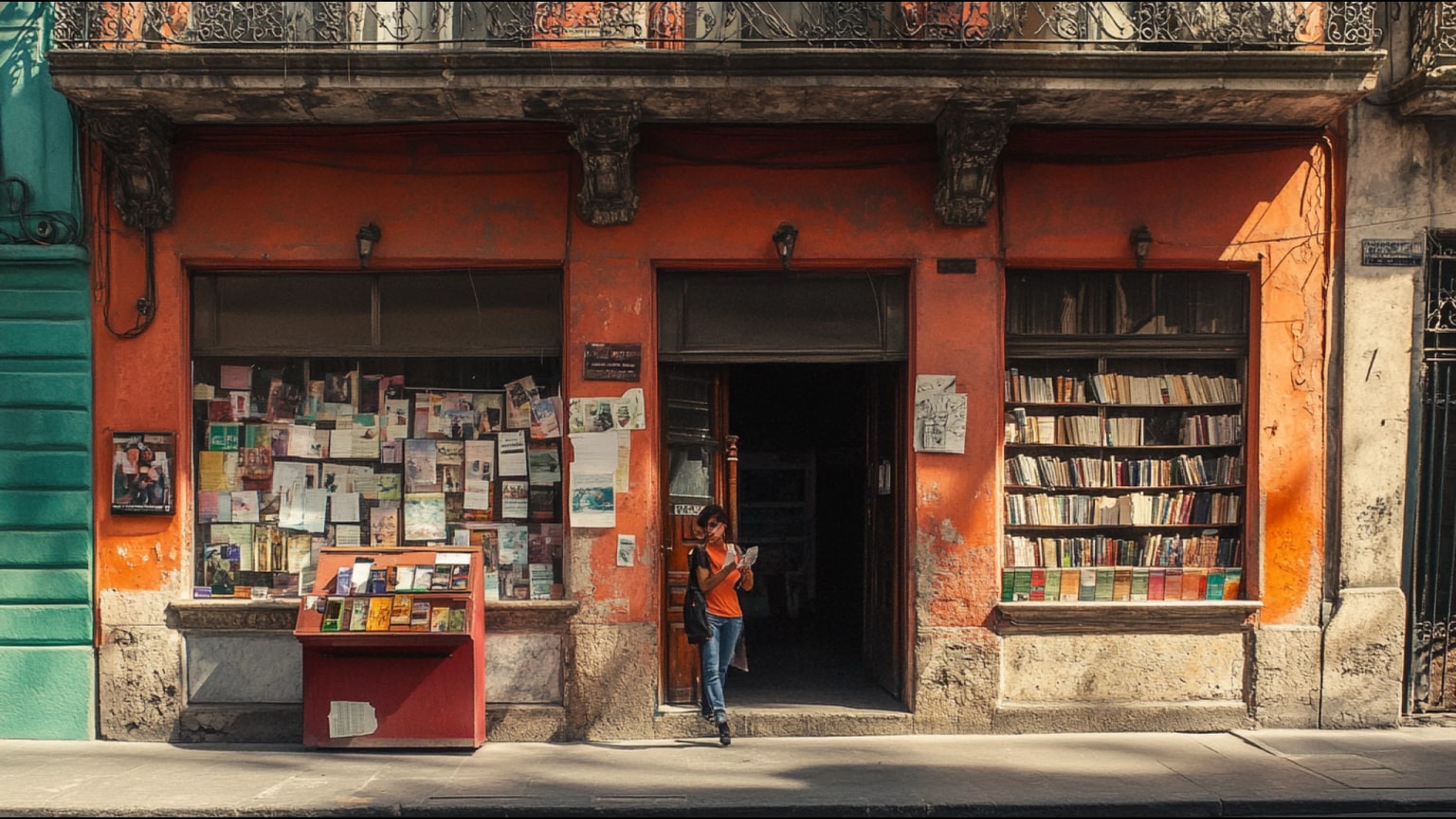
Buenos Aires and Mexico City: The Flaneur as Archivist of the Present
Colonial residue, republic-building, migration, modernization, violence, amnesia, elite fantasy, popular improvisation -- in Buenos Aires and Mexico City, these all sit together in uneasy simultaneity. The walker does not merely look. He deciphers.

Key Insights
Essential takeaways from this chronicle
Borges mapped Buenos Aires through memory and invention, transforming peripheral barrios into literary spaces and locating the city's truth not in spectacle but in repetition and trace -- the streets "where nothing is happening."
Point 1 of 4Monsivais developed the chronicle as Mexico City's native flaneur form -- cataloguing the mega-city's daily life as real-time archiving of what was always already disappearing, reading crowds, rituals, mass culture, and public life as layered text.
Point 2 of 4Both cities layer colonial, republican, modernist, and neoliberal urban forms in visible strata, making the walker a reader of temporal sediment -- the city is an archive that keeps revising its own catalog.
Point 3 of 4Villoro's concept of "horizontal vertigo" names a city that cannot be mastered by overview -- a city whose truth emerges through partial, cumulative passages rather than sovereign visual command.
Point 4 of 4
Where the European inheritance begins to strain
This is where the European inheritance begins to strain. The classical flaneur, whatever his ambiguities, belongs to a modernity in which the city presents itself as surface, commodity, crowd, spectacle, and speed. In Buenos Aires and Mexico City, those elements exist in abundance, but they are never alone. Colonial residue, republic-building, migration, modernization, violence, amnesia, elite fantasy, popular improvisation, and architectural erasure all sit together in uneasy simultaneity. The walker does not merely look. He deciphers.
Borges and the streets where nothing happens
Borges understood this almost immediately. Although his international reputation rests heavily on metaphysical fiction, his Buenos Aires writing -- especially the early poems -- reveals an attachment not to the city-center spectacle but to quieter neighborhood streets, patios, corners, and marginal zones. A widely read essay on walking Buenos Aires through Borges quotes the crucial line from "The Streets": his soul is in the streets of Buenos Aires, particularly in the neighborhood streets "where nothing is happening." That phrasing is not anti-urban. It is anti-spectacular. Borges locates the city's truth not in display but in repetition and trace.
This is decisive.
The Buenos Aires flaneur does not pursue novelty as his highest good. He moves instead toward recurrence, toward the places where history has congealed so thoroughly into ordinary matter that one must develop a specialized attention to notice it. The city becomes labyrinthine not because it is physically incomprehensible, but because every apparently simple street contains more time than the eye first admits.
Borges makes that condition metaphysical, of course, because he was Borges and could hardly help himself. But the urban insight remains sound. Buenos Aires is a city of overlays: criollo memory, immigrant arrival, suburban expansion, political rupture, literary self-mythologizing, fading grandeur, and the quiet persistence of neighborhood structure against metropolitan abstraction. The walker becomes a reader of residues.
Mexico City and the chronicle of simultaneity
Mexico City pushes this condition further still.
There, the city's sheer scale would already be enough to defeat any naive visual flanerie. But scale is not the real difficulty. The real difficulty is historical density. The city rests on indigenous foundations, colonial transformation, republican and revolutionary layering, lake-bed instability, modernist ambition, informal expansion, and endless self-revision. It is not merely large. It is sedimentary.
This is why the Mexican chronicle matters so much. Scholars of the Latin American chronicle repeatedly stress that the form emerged as a hybrid mode capable of joining reportage, essay, literature, memory, and civic reading in cities too socially complex for one register alone. Carlos Monsivais became one of the supreme exponents of this tradition, a writer whose chronicling of Mexico's social and cultural life made him one of the country's foremost interpreters of the contemporary. Studies and monographs on Monsivais emphasize exactly this: he read the pulse of his country and refined a poetics of the chronicle adequate to the city's complexity.
Monsivais matters because he transforms flanerie into civic interpretation. He is not a gentleman stroller. Thank heaven. He is a reader of crowds, rituals, mass culture, demonstrations, kitsch, and public life as layered text. If the old flaneur hid in the crowd to preserve his observational freedom, Monsivais turns the crowd itself into the thing to be read.
Horizontal vertigo
Juan Villoro extends that intelligence in a more personal register. Reviews of Horizontal Vertigo describe the book as a compendium of memoir, observation, history, and aphorism organized around the experience of living in Mexico City -- its fears, illusions, ceremonies, characters, and horizontal sprawl. The title itself refers to a fear generated by a city shaped not by vertical aspiration but by seismic and historical conditions that encourage outward extension.
This is a magnificent urban concept: horizontal vertigo. It names a city that cannot be mastered by overview, a city whose truth emerges through partial, cumulative passages rather than sovereign visual command.
So the Latin American transformation of the flaneur is double. In Buenos Aires he becomes a reader of repetition and invisible structure; in Mexico City he becomes an archivist of simultaneity, a decoder of social text too layered for pure observation.
The politics of what has been erased
There is also a political implication here. Cities in Latin America often bear the marks of what has been erased -- indigenous pasts, displaced poor, authoritarian violence, speculative redevelopment, elite fantasies of order. The walker who attends to the city seriously cannot remain morally innocent. The streets are manuscripts with deletions still visible. To walk attentively is to notice not only what is present, but what had to disappear for this present to occur.
That is why the Latin American flaneur is best understood not as a transplant from Paris but as a new civic intelligence: part archaeologist, part essayist, part witness. He still depends on drift and contingency. But his drift is historical. He is reading the present for the pressure of absent things.
This makes Buenos Aires and Mexico City indispensable to any broader philosophy of walking. They show that the city is not just a stage of modernity. It is an archive that keeps revising its own catalog. The flaneur survives here only by becoming literate in time.
This essay is part of "Under Other Suns," Atlas Urbium's series on the flaneur beyond Paris. Read the full series: Madrid, Lisbon, Buenos Aires and Mexico City, New Orleans.
Continue Reading
The View from Below: How London Mistook Skyscrapers for Density
London spent twenty years building upward in the name of the compact city. From the pavements of Shoreditch the arithmetic looks different: the tower privatises the panorama and socialises the silhouette.
The Los Angeles That Almost Learned to Walk
In 1930, a regional parks plan and an electric rail network could have made Los Angeles a polycentric, walkable, tram-linked metropolis. The city commissioned the plan, then put it in a drawer. This is the anatomy of a choice, not a fate.
Canals Under Pressure: Amsterdam and the Living City Review
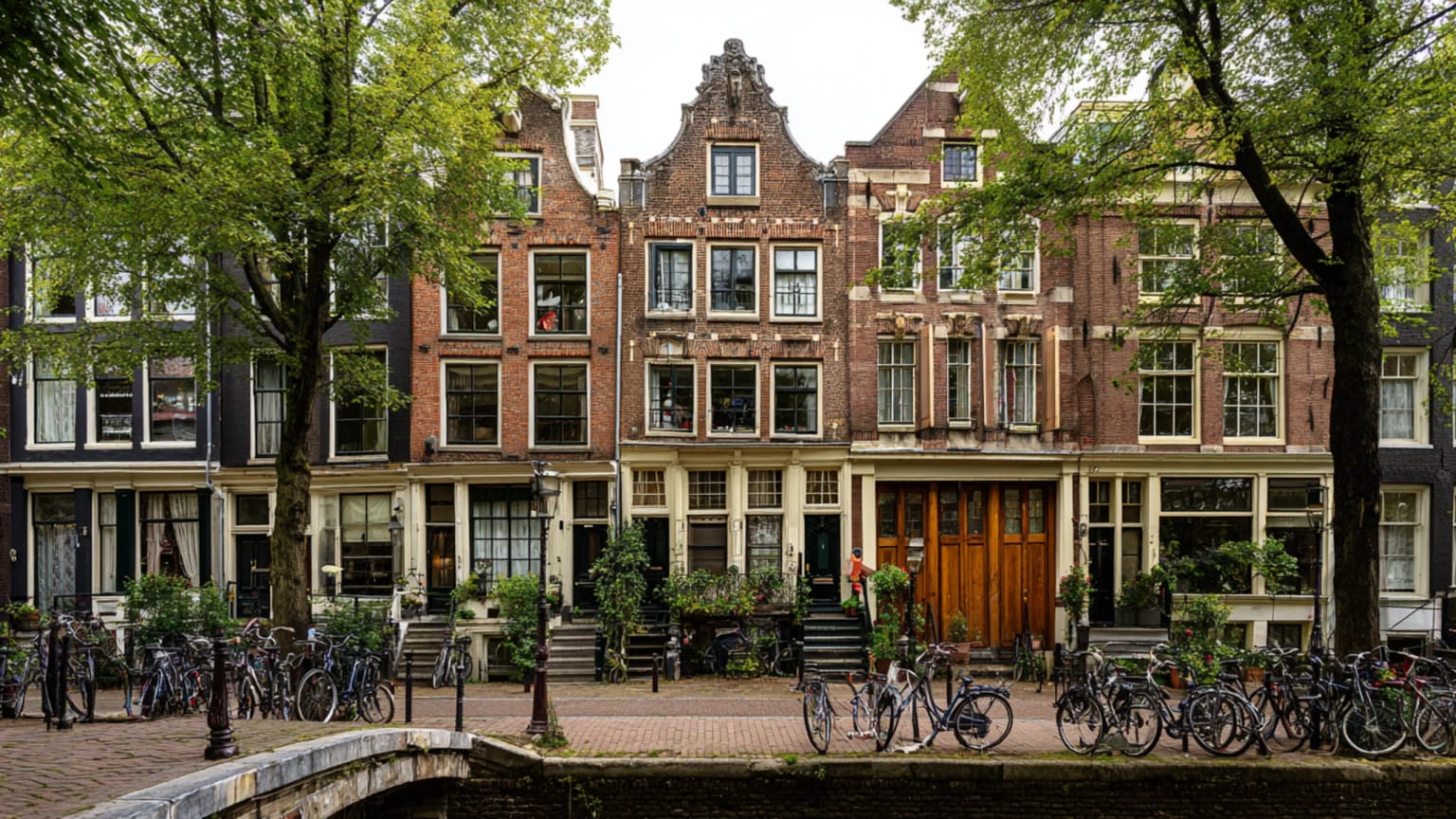
Amsterdam ranks 10th in The Living City Review 2026 with an adjusted score of 76.5. It remains one of Europe’s finest cities for daily life, but housing scarcity and tourism pressure have turned beauty into a harder civic bargain.